


Original Horse Sketch
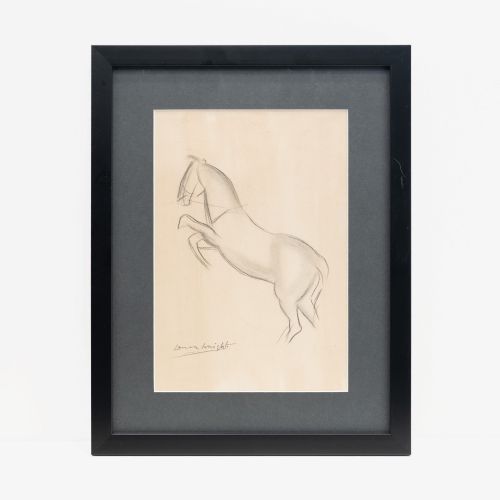
An original horse sketch captures equine movement through direct strokes on paper, offering immediate character that finished paintings sometimes miss.
Original Horse Sketch
An original horse sketch comprises hand-drawn studies on paper, capturing the anatomy and movement of horses through direct observation.
The selections span from early eighteenth century depictions to twentieth century modernist interpretations, reflecting changing artistic approaches over time.
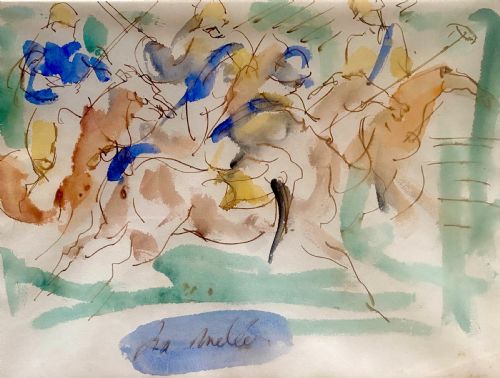
Common formats include framed drawings and paintings utilising paper supports, varying from intimate pencil studies to larger watercolour compositions.
Assessing Quality in Equestrian Works
The surety of line and the accuracy of equine anatomy separate master studies from routine exercises.
Works by recognised hands or those with documented provenance carry greater weight among collectors.
Condition of the paper and the preservation of delicate media like pastel or chalk influence the overall appeal.
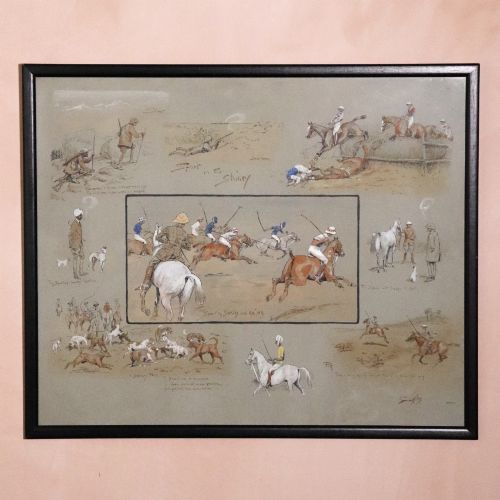
Several horses captured mid-gallop share wall space with top-hatted gentlemen attending nineteenth century race meetings.
Dame Laura Knight·John Rattenbury Skeaping·Cecil Charles Windsor Aldin·Michael Lyne·Fred Lawson·Sir Alfred Munnings
The Original Horse Sketch Glossary
- Pastel
- A dry drawing medium consisting of powdered pigment and a binder. It creates velvety tones on coloured paper.
- Chalk
- An opaque drawing material used for quick gestures and tonal shading. It is often combined with pencil in studies.
- Watercolour
- A paint consisting of pigment suspended in a water-soluble vehicle. It provides transparent washes on paper supports.
- Provenance
- The chronology of the ownership or location of a historical object. It helps confirm authenticity and attribution.
- Equestrian
- Pertaining to horses, horse riding, or horse racing. This subject matter dominates traditional sporting art.
Original Horse Sketch: Frequently Asked Questions
How do I care for works on paper?
Keep drawings out of direct sunlight to prevent the fading of pencil, chalk, and watercolour pigments. Maintaining stable humidity levels protects the paper from degradation.
Ensure framing is professionally sealed to keep out dust and atmospheric pollutants while allowing adequate space between the glass and the artwork.
Are these works always signed?
Signatures appear on many pieces, often placed discretely in the corner by the artist, but unsigned preliminary studies remain common in this category.
Attribution for unsigned works relies on style, technique, and period characteristics, sometimes supported by historical provenance.
What is the difference between a sketch and a painting?
Sketches prioritise immediate line work, gesture, and preliminary observation, using media like pencil, chalk, or ink on paper. They reveal the artist's working process.
Paintings generally involve layered colour and more finished detail, though many equestrian works blur this distinction by combining watercolour and ink.
How can I tell the period of a drawing?
Paper type, framing style, and artistic conventions offer primary clues to the era in which a piece was created. Early works often show distinct watermarks and paper ageing.
Stylistic shifts, such as the move towards twentieth century modernism or expressionism, help differentiate between Edwardian and mid-century examples.