
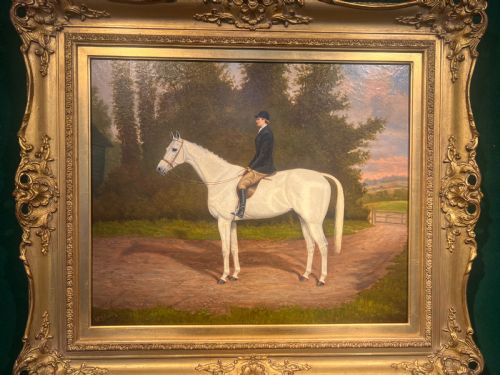
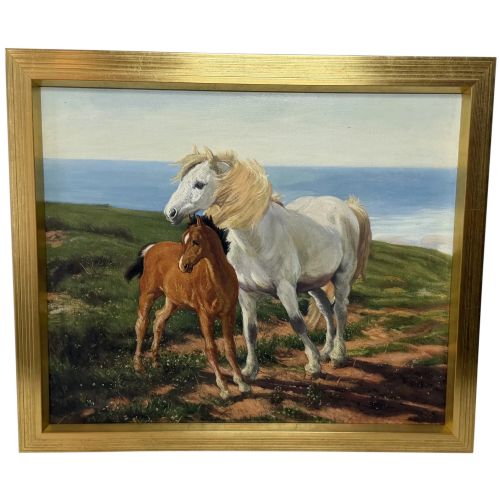


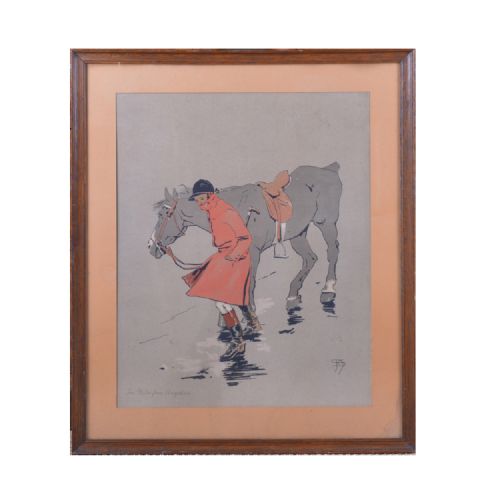
Framed Grey Equestrian Picture
A framed grey equestrian picture brings the enduring spirit of the turf and the stable right onto your wall with genuine historic character.
Framed Grey Equestrian Picture
A framed grey equestrian picture centres on the distinct presence of horses, ranging from portraits of individual animals to scenes of the hunt and racing. These works capture notable subjects like the grey arab stallion, heavy horses, or mares with foals.
The selections span distinct periods from the Regency era through the Victorian period, and onwards into Edwardian sporting art and mid-century modern pieces. You encounter subjects rendered with the direct observation characteristic of British school traditions.
Forms vary from finished oil paintings on canvas to pastels on coloured paper, delicate paintings on silk, original watercolours, and period prints. Each framed artwork presents a specific glimpse into equine history through varied artistic mediums.
How they were made
Makers utilised traditional oil on canvas and watercolour pigments applied to paper or coloured grounds to build depth and texture within each scene. Pastel is also employed to capture the soft coat of a grey stallion or racehorse.
Selected works incorporate specialised techniques such as painting directly on silk or producing period chromolithographs from original compositions. Protective framing using wood and glass preserves these delicate paper and canvas surfaces.
Several horses captured in these works clearly possessed stronger opinions about the hunt than their riders did.
What varies in quality
Quality rests upon the sureness of the hand behind the brush or pastel stick, distinguishing spirited, anatomically convincing depictions from stiffer renderings. The directness of the artist's observation defines the distinction.
The preservation of the original paper, canvas, or silk surface alongside the suitability of the framing contributes to the enduring integrity of the piece. Works bearing clear signatures by established practitioners carry distinct art historical weight.
William Albert Clarke·John Rattenbury Skeaping·Basil Nightingale·Clifton Tomson·Vernon Stokes·Frank Algernon Stewart
The Framed Grey Equestrian Picture Glossary
- Chromolithograph
- A multicoloured print produced through a specialised planographic stone printing process. This technique allows for rich reproduction of original watercolours.
- Pastel
- A dry drawing medium composed of powdered pigment and a binder, frequently applied to paper. It delivers soft tones well suited to capturing horse coats.
- Regency
- An architectural and artistic period spanning the early nineteenth century, known for refined classical elegance. Sporting art from this time often depicts prominent horses and grooms.
- Watercolour
- A paint consisting of pigment suspended in a water-based solution, typically worked on paper. It offers transparent washes of light and colour.
- Victorian Sporting
- Nineteenth-century art focused on field sports, hunting, and equine subjects. These works emphasise the energetic action of the hunt.
Framed Grey Equestrian Picture: Frequently Asked Questions
What periods do these equestrian pictures cover?
The selections span from the Regency period and the Victorian era into Edwardian sporting art, the 1910s, 1920s, and mid-century modern works.
This broad chronological range allows you to find pieces reflecting changing artistic interpretations of horses across different centuries.
What mediums were used for these artworks?
Artists employed oil on canvas, watercolours, pastels on coloured paper, paintings on silk, and original prints or chromolithographs.
Each medium provides a distinct texture and visual weight, preserved behind glass within period wood frames.
How do I care for a framed equestrian picture?
Keep the artwork out of direct sunlight to prevent the fading of watercolours, pastels, and printed pigments on paper or canvas.
Ensure the framing and glass remain intact to protect delicate silk or paper surfaces from atmospheric moisture and dust.
How do I identify a hunting scene from a portrait?
Portrait works focus directly on specific animals, such as a grey arab stallion or a mare with a foal, often in a quiet landscape. Scenes like hunt gatherings or racing moments depict multiple figures, hounds, and dynamic movement across open countryside.