


Jockey and Racehorse Artwork
Jockey and racehorse artwork captures the speed and tradition of the turf through oil paintings, prints, and pastels.
Jockey and Racehorse Artwork
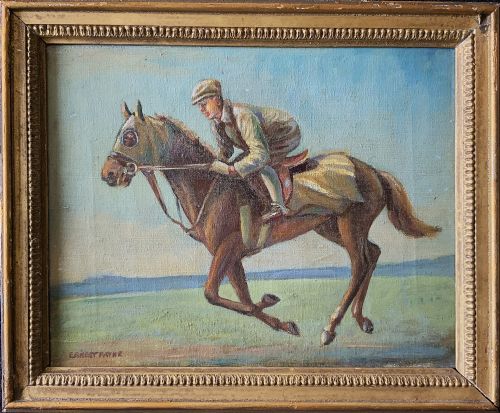
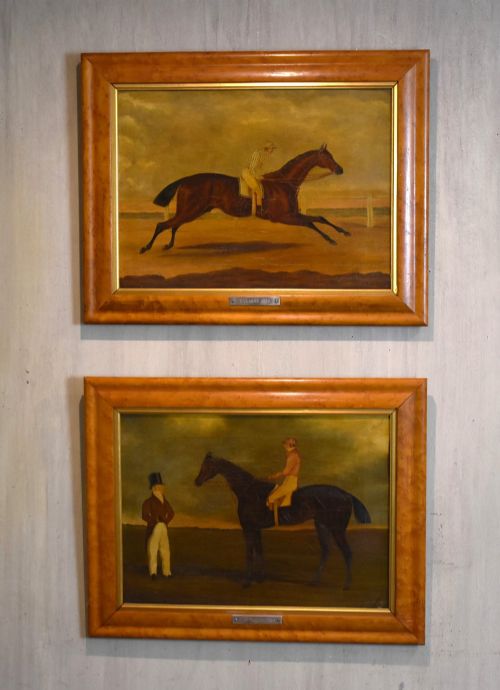
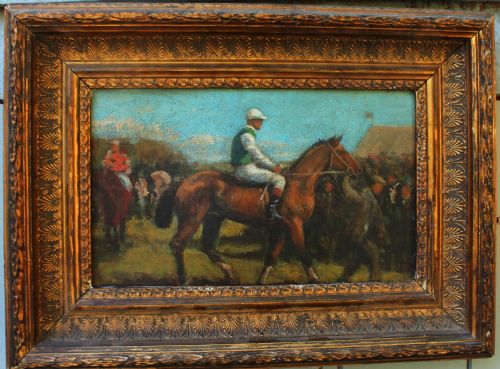
Jockey and racehorse artwork encompasses visual representations of thoroughbreds, riders, and racecourse scenes spanning the Georgian, Victorian, and twentieth-century periods. These works record famous horses, named jockeys, and specific historic races through varied artistic interpretations.
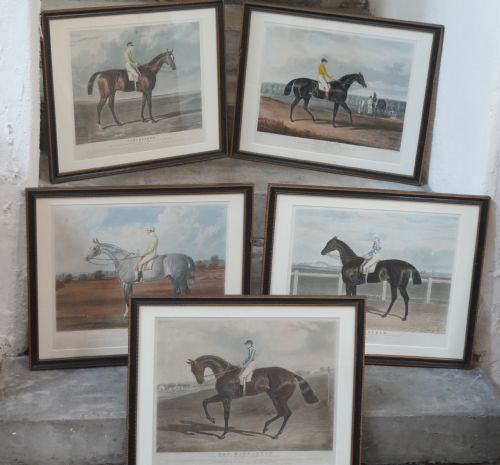
The selections available here range from detailed nineteenth-century oil paintings to mid-century pastel drawings and printed engravings. Buyers frequently encounter nineteenth-century sporting art and Victorian equestrian pieces alongside twentieth-century studies.
Oil paintings on canvas and framed paper prints dominate the forms, capturing subjects like royal thoroughbreds and notable race day moments. Each piece documents the historical record of equestrian sport through the hands of period artists.
Markers of quality
Quality rests upon the anatomical accuracy of the horse and the distinct characterisation of the jockey, separating skilled observation from rigid formula. Works by named artists with verified exhibition histories or direct contemporary documentation command greater attention.
The preservation of the original canvas, paper support, and ink or oil pigment dictates the visual strength of the piece. Untouched surfaces and period framing enhance the historical integrity of these equestrian works.
Listings feature works spanning the Georgian, Victorian, and mid-twentieth-century periods, executed in oil paint, ink, pastel, and watercolour.
Ernest Payne·John Frederick Herring Snr·Alfred Munnings·John Rattenbury Skeaping·Alfred Wheeler·John Atkinson·Isaac Cullin·John Parker Davis·Frank Giggs
The Jockey and Racehorse Artwork Glossary
- Aquatint
- A variant of etched printmaking that produces broad tonal areas resembling watercolour washes. It was frequently utilised in the nineteenth century to reproduce sporting scenes.
- Equestrian realism
- An artistic approach focused on the precise anatomical portrayal of horses and accurate depictions of racing equipment. This style prioritises documentary fidelity over romantic interpretation.
- Engraving
- A printmaking method where an artist cuts lines directly into a metal plate with a sharp tool. The resulting impressions capture fine detail in racehorse prints.
- Sporting art
- A genre dedicated to the depiction of field sports, horse racing, and hunting. It holds a distinct place in British visual culture from the Georgian era onwards.
Jockey and Racehorse Artwork: Frequently Asked Questions
How do I date a racing painting?
Dating relies upon artist signatures, period framing styles, and the specific attire or racing silks worn by the jockey. Historical records of the named horse also provide a precise timeline for the composition.
Material analysis of the canvas and underlying paper support offers further confirmation of the period of creation.
Are these works original art?
The selection includes both unique oil paintings and pastel drawings alongside period prints and engravings. Each listing specifies the exact medium used by the creator.
Original oil studies provide singular hand-painted records, whereas prints offer multiple impressions of popular racing subjects from the era.
How should I display antique horse art?
These works require placement away from direct sunlight to protect sensitive paper supports and oil pigments from fading. Stable indoor humidity prevents warping in wooden panels and gilt frames.
Selecting a wall space with balanced ambient light allows the fine details of the jockey silks and horse musculature to remain visible.
What subjects appear in these works?
The artworks portray named racehorses with their jockeys, specific race meetings, and paddock scenes. Many pieces record famous victors of historic races alongside their owners and trainers.
Common compositions capture horses before the start of a race or charging down the final furlong.