
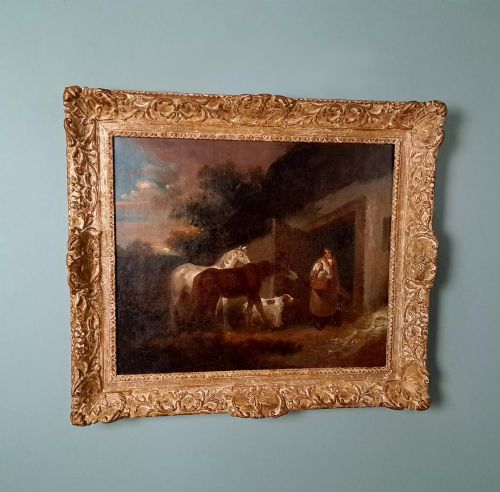
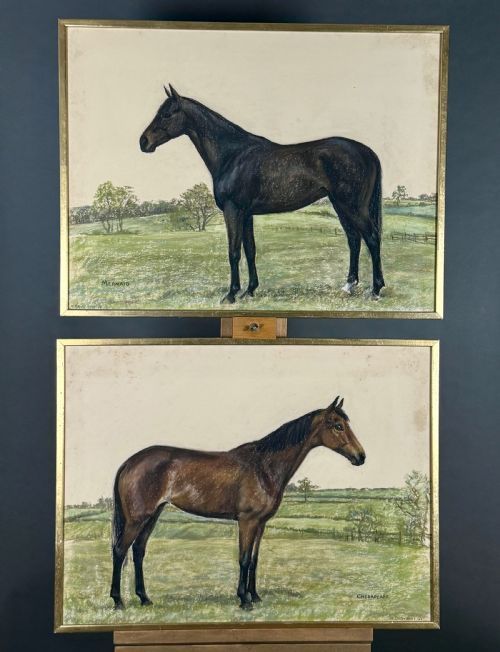
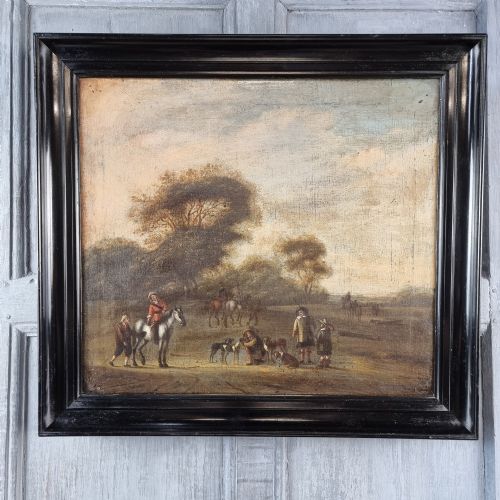
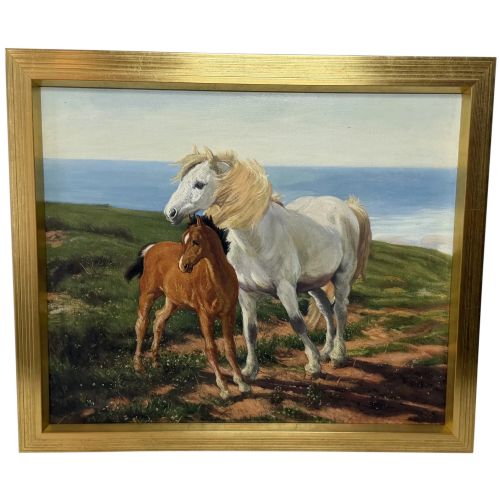


Original Horse Landscape Painting
These original horse landscape painting works capture rural scenes and working animals across centuries of British and European art.
Original Horse Landscape Painting
An original horse landscape painting combines scenic countryside views with equestrian subjects, ranging from working shire horses to hunting scenes and racing moments.
Buyers searching for this phrase encounter pieces spanning from the Georgian era through the Victorian period and into the mid-twentieth century.
Materials and Methods
Artists relied primarily on oil paint applied to stretched canvas, wooden panels, or board, allowing for rich texture and deep colour blending.
Watercolour paint on paper was utilised extensively for lighter, more luminous atmospheric effects in rural and village settings.
Pastels and monochrome washes appear in select works, capturing fine details in equestrian studies and preparatory sketches.
Several shires and carthorses earned permanent artistic retirement after a hard day hauling hay.
Assessing Quality
Anatomy and movement distinguish superior equestrian depictions, where the musculature and posture of the animal show precise observation by the artist.
The harmony between the landscape and the horse determines overall balance, with finer works integrating the animal naturally into the rural environment.
Brushwork confidence and light management separate accomplished academic or named works from simpler, naive provincial pieces.
William Joseph Shayer Senior·George Morland·John Ferneley Senior·John Linnell·Arthur Longley Vernon·Charles James Lauder·John Atkinson·William Manners·Gabriel Dauchot·David Cox
The Original Horse Landscape Painting Glossary
- Oil on Canvas
- A traditional painting medium where pigmented oil paint is applied to a woven fabric support stretched across a wooden frame. This technique allows for rich colour saturation and visible brushwork texture.
- Watercolour
- A paint consisting of pigment suspended in a water-soluble vehicle, typically applied to paper. It produces transparent layers and luminous washes ideal for landscape skies and light.
- Pastel
- A dry painting medium in the form of a stick, consisting of pure powdered pigment and a binder. It creates soft, velvety textures suited for intimate animal studies.
- Equestrian
- Pertaining to horses, horse riding, or horse depiction in art. It defines works focusing heavily on the animal's form and partnership with humans.
- Pastoral
- A genre of art depicting rural life, countryside views, agricultural labour, and domestic animals in peaceful settings. These scenes often romanticise traditional farming communities.
Original Horse Landscape Painting: Frequently Asked Questions
What subjects appear in horse landscape paintings?
These artworks typically portray working farm horses, hunting scenes, coaching inns, and animals resting in rural or village settings.
Many pieces also capture historic transport methods, including horses pulling carts or navigating country lanes and rivers.
How do I date an antique horse painting?
Dating relies on stylistic clues, clothing of figures in the landscape, framing techniques, and the medium used by the artist.
Signatures, dates inscribed verso, and stretcher construction provide further physical evidence of the period of creation.
Are these paintings executed on canvas or board?
The evidence shows a significant number of works painted on stretched canvas or wooden panels, particularly for oil mediums.
Watercolour and pastel works are predominantly executed on heavy paper or card supports.
Where were most of these artists trained?
Many painters belonged to regional British schools or trained within academic traditions focused on sporting and pastoral art.
Their works reflect direct observation of rural life across English and Scottish counties during the nineteenth and early twentieth centuries.