



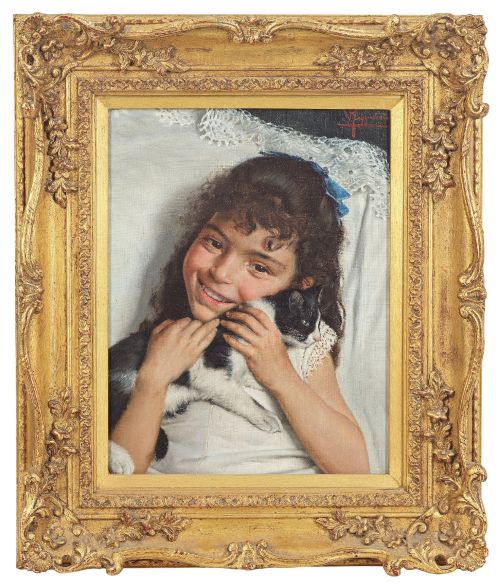
Original Gilt Framed Canvas
An original gilt framed canvas brings together oil paint and carved wood to hold light within a room.
Original Gilt Framed Canvas
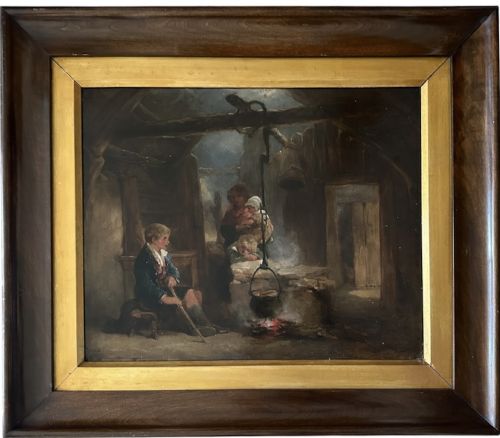
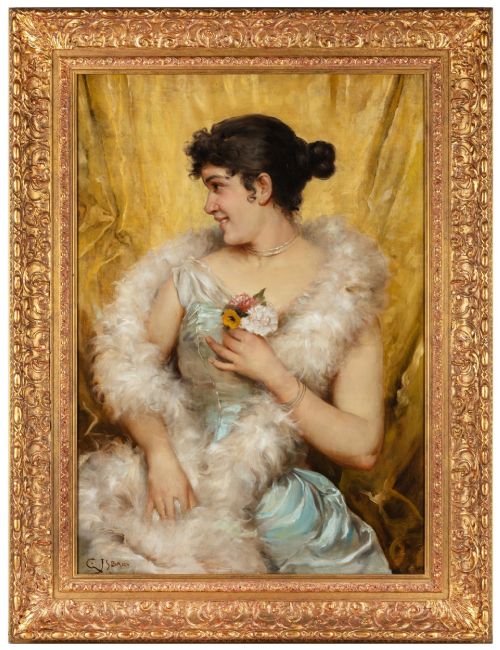
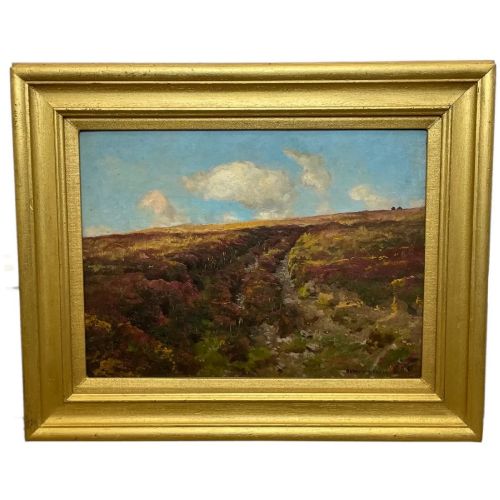
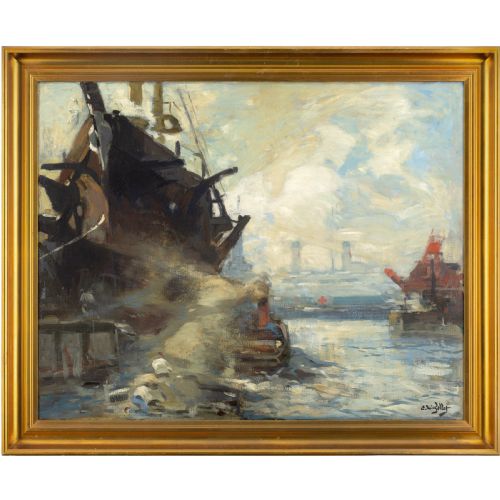
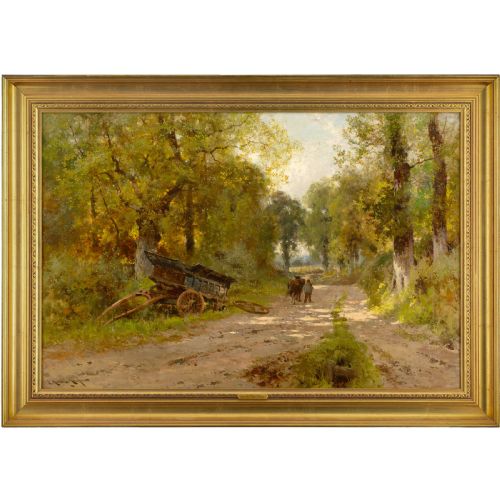
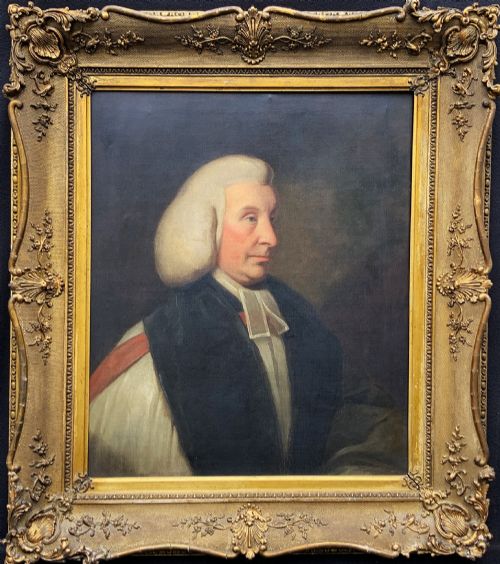
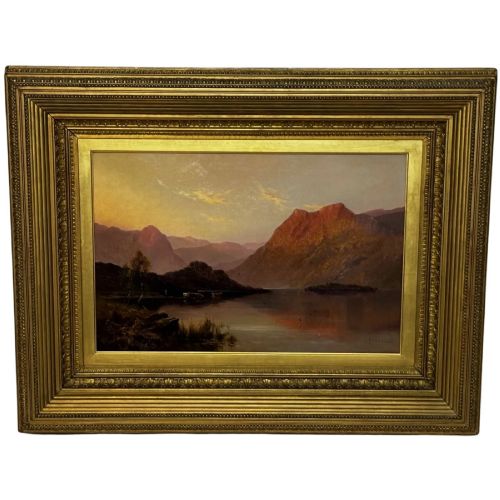
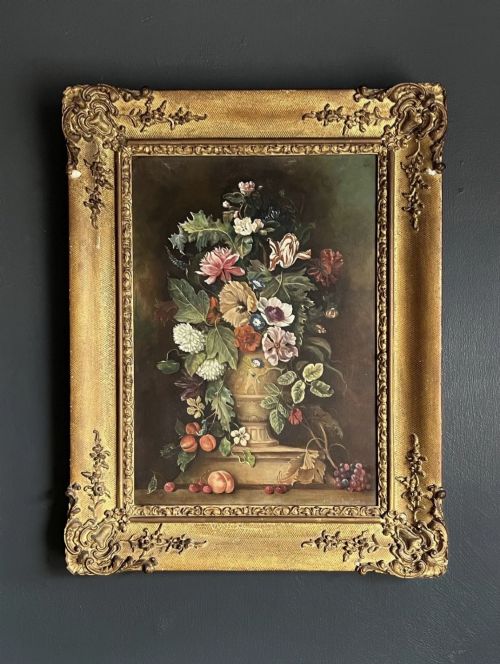
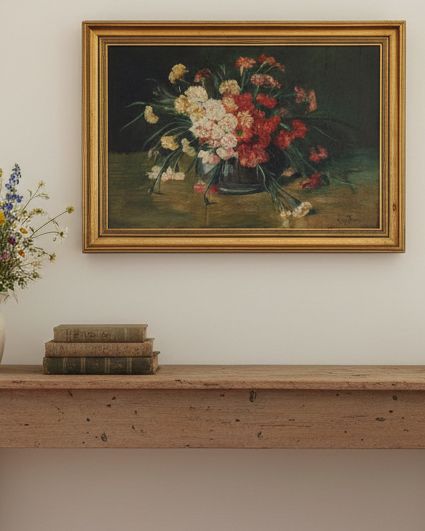
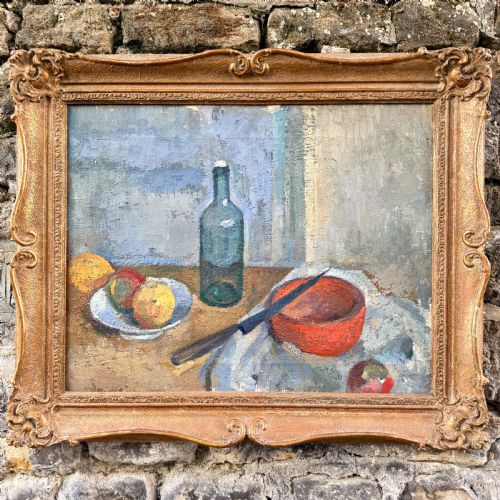
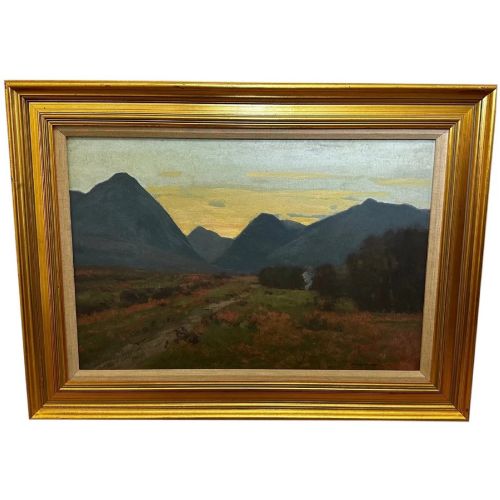
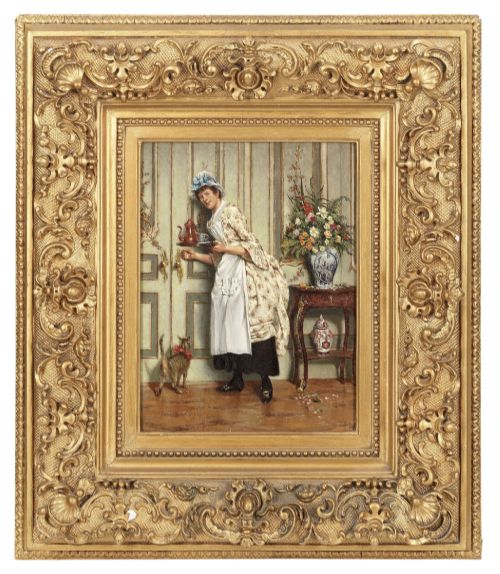
When you search for an original gilt framed canvas, you are looking at oil paintings created across the nineteenth and twentieth centuries, often housed in their period surrounds. The version you are most likely to meet on this page is a nineteenth-century landscape or portrait bearing the marks of Victorian realism or pastoral observation. These works span domestic interiors, coastal views, and flower studies, each stretched over wooden frames and bound by gilded surrounds.
The materials record a traditional method of image-making, where pigment suspended in oil meets woven textile supported by timber. The frames themselves rely on wooden mouldings coated in gesso before receiving layers of gold leaf or metallic finish. This combination of canvas, oil, wood, and gilt creates a unified object where frame and picture operate as a single design.
How they were made
Artists painted primarily with oil on stretched canvas, building layers of pigment to achieve depth in portraits and landscapes. The underlying support consisted of woven plant fibre stretched tightly across wooden stretcher bars to maintain tension over decades.
The enclosing surrounds combined timber frames with applied gesso, a plaster-like mixture carved or moulded to receive the final gilt surface. Artisans applied thin sheets of metal or metallic powder to the prepared gesso, creating the reflective borders that define these works.
Listings feature oil on canvas works housed in giltwood frames spanning the eighteenth, nineteenth, and twentieth centuries.
What varies in quality
The standard of a piece rests in the surety of the brushwork and the depth of the oil medium. Stronger works display confident handling of light and form, whether capturing the texture of fabric in a portrait or the atmosphere of a coastal view.
Frame craftsmanship also dictates quality, distinguishing hand-carved gesso ornamentation from simpler moulded plaster. When the gilding retains its original warmth and complements the palette of the canvas, the entire object achieves greater visual harmony.
Arthur Wardle·Alfred Fontville de Breanski·John Opie·David Bates·Vittorio Reggianini
The Original Gilt Framed Canvas Glossary
- Gesso
- A plaster mixture applied to wooden frames as a smooth base for gilding. It allows artisans to carve intricate relief patterns before applying gold leaf.
- Giltwood
- Timber that has been coated in gold leaf or a metallic substitute. This material forms the bright borders characteristic of traditional picture frames.
- Stretcher
- The wooden frame that holds the canvas taut. Traditional versions often feature corner keys used to adjust the tension of the fabric.
- Impressionism
- A style of painting focused on light and unblended brushstrokes. Artists working in this manner sought to capture fleeting moments in landscapes and domestic scenes.
Original Gilt Framed Canvas: Frequently Asked Questions
How do I clean a gilt frame?
Dust the surface gently with a soft, dry brush to remove particles without disturbing the delicate metallic finish. Avoid using water or chemical cleaners, which can strip the gilding and damage the underlying gesso.
For stubborn grime, consult a professional conservator rather than attempting wet cleaning at home. Preserving the original surface requires restraint and appropriate conservation materials.
Can I re-stretch an old canvas?
Adjusting the original wooden stretchers should be done with caution, as vintage timber becomes brittle over time. Many pieces retain their original tension through wedged corners that allow minor adjustments.
If the canvas sags significantly, a specialist can secure the fabric safely without altering the relationship between the painting and its frame.
Where should I hang these paintings?
Keep oil paintings away from direct sunlight and excessive humidity to protect both the canvas and the gesso frame. Stable indoor temperatures prevent the wood from warping and the oil paint from cracking.
Position the work at eye level on an interior wall where the gilt can catch indirect ambient light during the day.
How do I identify the period?
Examine the materials of the stretcher, the weave of the canvas, and the construction style of the frame. Nineteenth-century works often feature hand-planed timber and specific nailing patterns that differ from later production.
Signatures, exhibition labels, and written inscriptions on the reverse provide further clues to the date of creation and the artist's identity.