
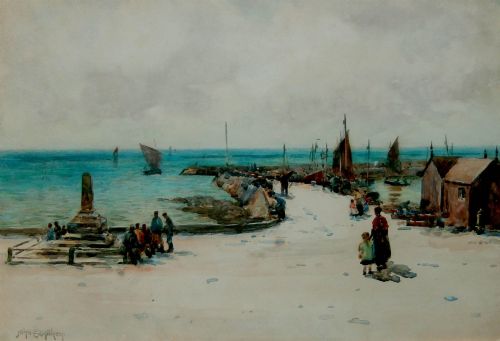

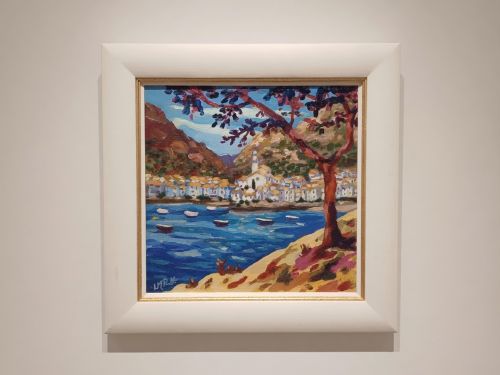
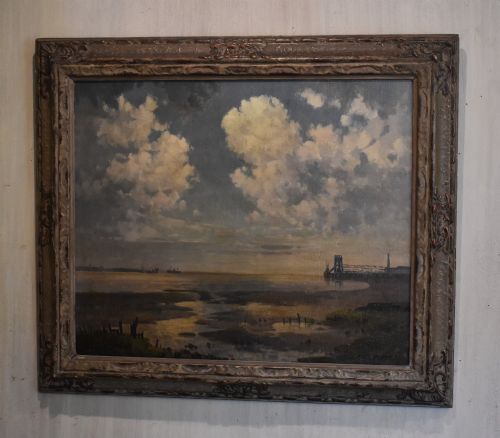
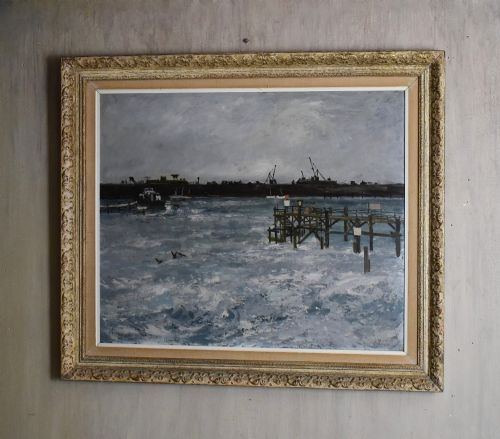
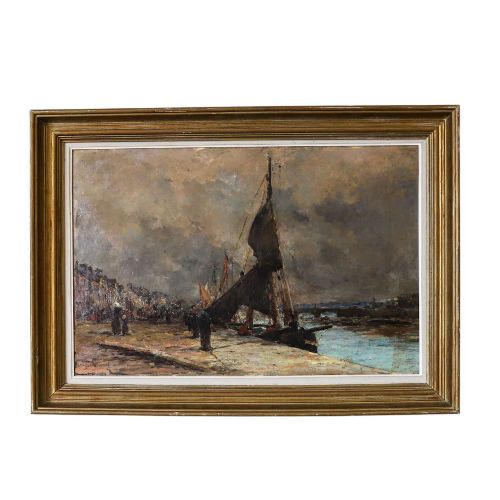
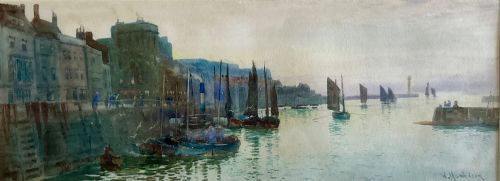
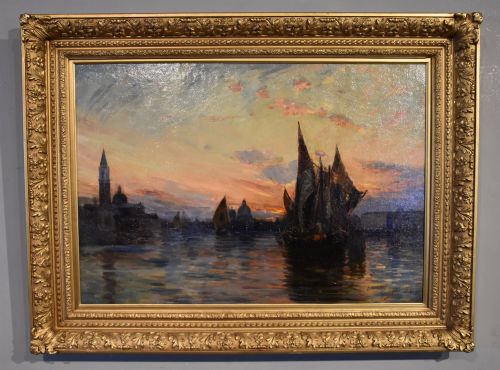
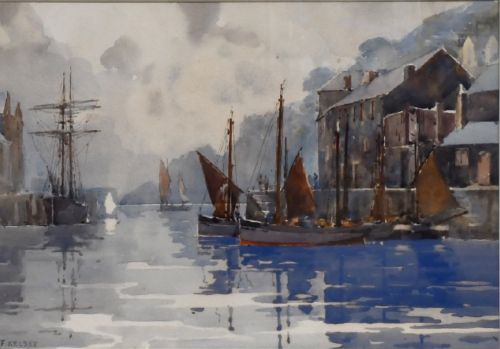


Original Framed Harbour Landscape
When you search for an original framed harbour landscape, you are looking at coastal views preserved in paint and glass.
Original Framed Harbour Landscape
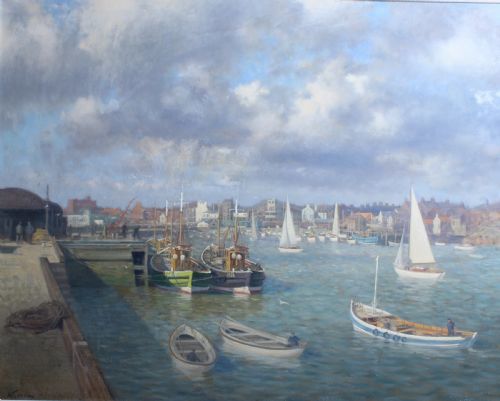
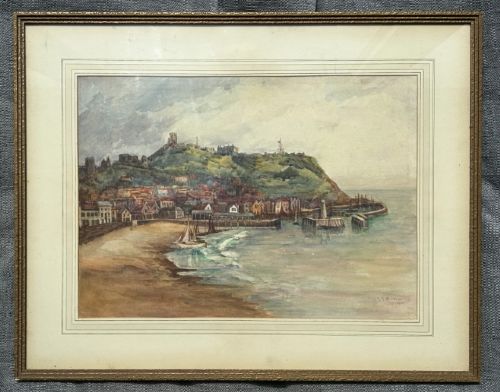
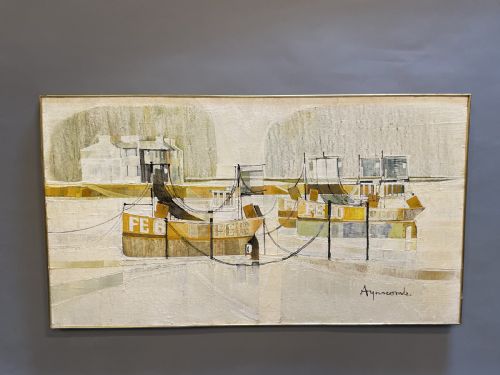
An original framed harbour landscape captures the working coastal scenes, tidal inlets and fishing ports of Britain and Europe through the brush of artists working from the nineteenth century to the mid-twentieth century.
You are most likely to meet watercolours on paper and oil paintings on canvas or board, presented within period wooden and gilt frames that complement the maritime subject matter.
The selections span Victorian and Edwardian depictions of Cornish harbours alongside later mid-century interpretations influenced by impressionism and post-impressionism.
How they were made
Artists painted these scenes utilising oil paint or watercolour applied to canvas, wooden board or prepared paper, often capturing the changing light of coastal tides directly from observation.
Works on paper were commonly protected beneath glass within mounted timber frames, while oil paintings on canvas relied on stretchers and heavy wooden or gilt mouldings to maintain structural tension.
Common framing materials include traditional wood, glass and gilt finishes designed for maritime art.
What varies in quality
The distinction between standard works and finer examples rests in the confidence of the brushwork and the artist's ability to render the atmospheric effects of light upon water.
The relationship between the painting and its frame influences the overall integrity of the piece, as period frames chosen specifically for the artwork enhance the composition.
John E. Aitken·William Banks Fortescue·Peter Brannan·William Matthison·Gyrth Russell·Frank W. Scarborough
The Original Framed Harbour Landscape Glossary
- Watercolour
- A paint consisting of pigment suspended in a water-soluble vehicle, traditionally applied to paper to create luminous coastal scenes.
- Gilt frame
- A wooden picture frame coated with gold leaf or metallic paint, frequently utilised for nineteenth and early twentieth-century oil paintings.
- Impasto
- A technique where paint is laid on an area of the surface in very thick layers, standing out visibly from the canvas.
- Seascape
- A work of art that depicts the sea, ships and coastal harbours as the primary subject matter.
Original Framed Harbour Landscape: Frequently Asked Questions
How do I hang a heavy oil painting?
Ensure your wall fixings are secured directly into wall studs or utilise appropriate cavity anchors rated for the weight of the wooden frame. Heavy oil paintings require robust picture wire and strong screw eyes attached securely to the stretcher bars.
Position the centre of the picture at average eye level to create a balanced display. Check that the wall space avoids direct sunlight to protect the pigments from fading over time.
Are watercolours sensitive to light?
Works on paper executed in watercolour utilise pigments that react to prolonged exposure to direct sunlight. Position these pieces away from bright windows to preserve the delicate tones of the harbour scenes.
Using conservation-grade glass with UV-filtering properties offers additional protection against fading. Regular rotation of pieces displayed in brightly lit rooms helps maintain their original appearance.
How do I clean a framed painting?
Dust the wooden or gilt frame gently with a soft, dry brush to remove surface particles. Avoid applying liquid cleaners directly to the frame or the painted surface.
Paintings protected behind glass can be wiped carefully with a microfibre cloth dampened slightly with water. Consult a professional conservator if the canvas itself requires cleaning or attention.
How can I tell the period of a frame?
Examine the construction methods visible on the reverse of the wooden moulding, including corner joins and fixings. Period frames often feature hand-carved compo ornamentation or distinct gilt layers that differ from modern reproductions.
The backing boards, nails and paper tape used to seal the frame provide additional clues regarding its age. Match these physical traits with the stylistic era of the artwork contained within.