






Original Fishing Boat Painting
An original fishing boat painting captures the working coast through nineteenth and twentieth century British and European marine art.
Original Fishing Boat Painting
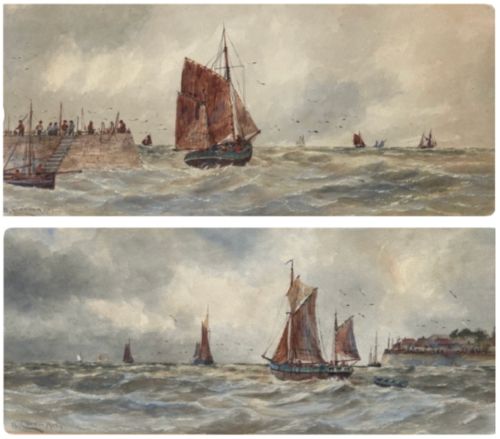
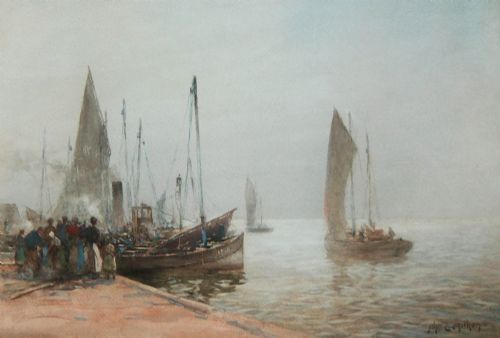
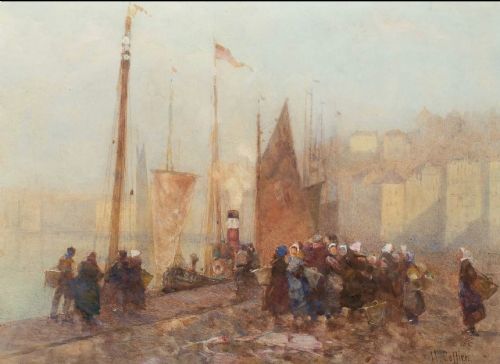
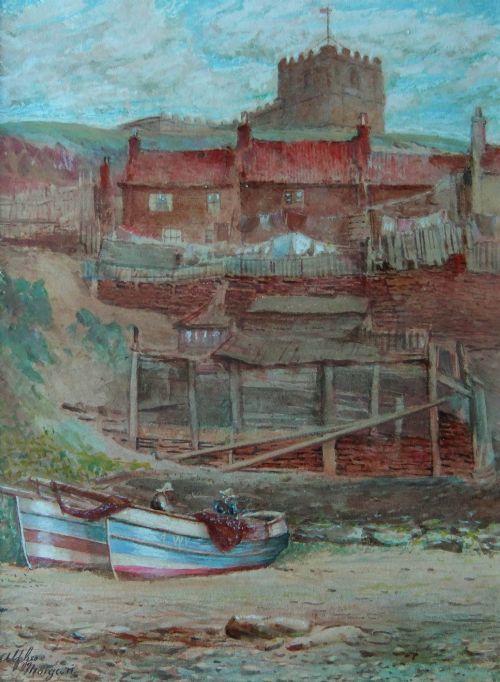
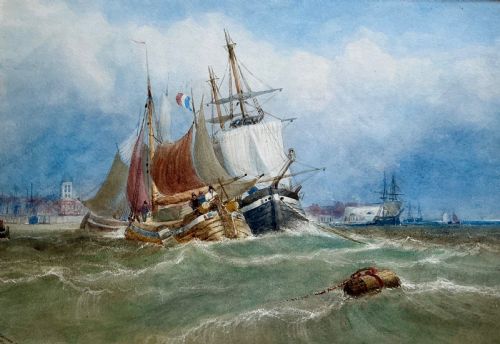
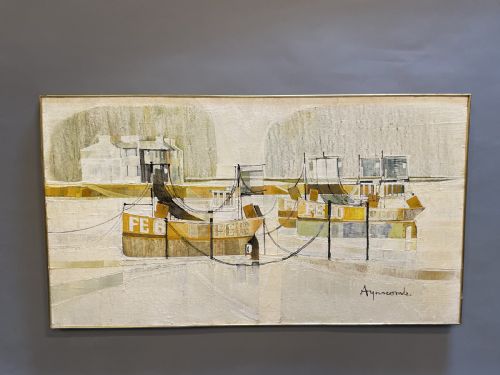
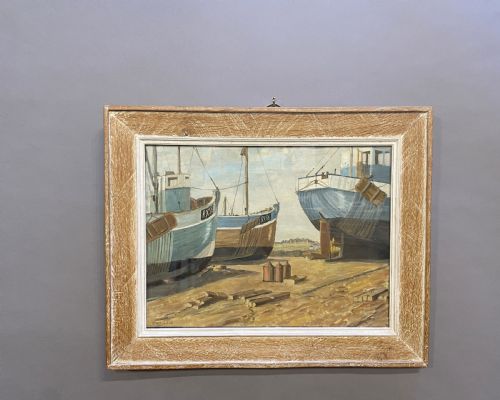
An original fishing boat painting depicts coastal vessels, harbour scenes and maritime views from the nineteenth and twentieth centuries. These artworks record working craft such as cobles and luggers operating around British, Dutch and French shores.
Buyers encounter framed watercolours and oil paintings on canvas, board or card, reflecting Victorian marine art, Edwardian illustration and mid-century British impressionism. Many pieces document specific ports including Whitby, St Ives, Scarborough and Filey.
The selection spans detailed academic records of coastal trade and looser impressionist sketches of boats at low tide or in choppy seas. Each piece offers a direct view into historical maritime communities through the eyes of contemporary artists.
How They Were Made
Artists painted on stretched canvas, wooden panels, thick card or watercolour paper using traditional pigment preparations. Watercolours often incorporated bodycolour or gouache for opaque highlights on paper, whilst oils provided rich texture on canvas and board.
Plein air sketching directly on beaches and harbour walls captured transient light and weather conditions before studio completion. Brushwork ranged from tight, descriptive rigging details to rapid, textured impasto applied with palette knives.
Listings feature works created across paper, wood panel, card, and canvas using watercolour and oil pigment.
What Varies in Quality
Quality rests upon the artist's command of marine anatomy, spatial depth and atmospheric light over water. Superior works convey the heavy roll of the sea and correct rigging details with confident, purposeful brushstrokes.
Condition and preservation affect value, particularly the stability of pigments on paper and the absence of heavy retouching on canvas. Stronger compositions balance the dramatic movement of coastal weather with accurate topographical rendering.
James Orrock·William Cannon·James E Aitken·Hector Caffieri·Alfred G Morgan·Henry Barlow Carter·Edward Matthew Elliott·Charles Napier Hemy·William Lee Hankey·Tom Clough·Thomas Bush Hardy·John Bell·Frederick William Hattersley·Sam Bough·Antonio Godoy·Fred Mayor·Henri Ottman·Frank Rousse·Robert Leslie Howey·John W Gilroy·Maurice Sijs·Gustave De Bréanski·E K Redmore·Louis Van Staaten·W Tetley
The Original Fishing Boat Painting Glossary
- Coble
- An open traditional fishing boat with a flat bottom and high bow, commonly seen in North East England coastal scenes.
- Impasto
- Paint applied thickly to a canvas or board, leaving visible brush or palette knife marks that catch the light.
- Gouache
- An opaque water-based paint used alongside watercolour pigments to add solid highlights and dense colour to paper works.
- Marine Art
- Artwork focused primarily on the sea, ships, boats, harbours and coastal landscapes.
- Provincial School
- Regional artists and local academies documenting specific domestic ports and coastal industries.
Original Fishing Boat Painting: Frequently Asked Questions
How do I identify the coastal location in a painting?
Many works include artist inscriptions, titles written on the reverse, or distinct architectural landmarks such as local abbey ruins and pier structures. Historical harbour layouts and specific boat types like Yorkshire cobles also point toward particular regional ports.
Studying contemporary shipping registries and local coastal histories helps match topography to the artist's known sketching grounds.
What is the difference between watercolour and oil marine paintings?
Watercolour pieces utilise translucent washes on paper to capture bright coastal light, coastal haze and open sky. Oil paintings on canvas, board or panel offer richer texture, deeper tone and greater durability.
Watercolours require protective framing behind glass, whereas oils tolerate open display on a stretcher or within a traditional gilt frame.
How should I frame and display vintage marine art?
Mount watercolours with acid-free materials and protect them behind conservation glass to prevent fading from direct sunlight. Oil paintings on canvas or panel suit traditional wooden frames that support the period aesthetic without dampening the canvas.
Keep pieces away from damp exterior walls and direct heat sources to preserve the substrate and pigment stability.
How can I tell the Victorian period from the mid century?
Victorian and Edwardian works often feature tight academic detail, romantic atmospheric skies and traditional sailing craft in calm or stormy seas. Mid-century paintings tend toward simplified forms, broader brushwork and a brighter palette influenced by modern impressionism.
Examining framing materials, canvas stamps and backing boards provides additional clues to the exact decade of creation.