
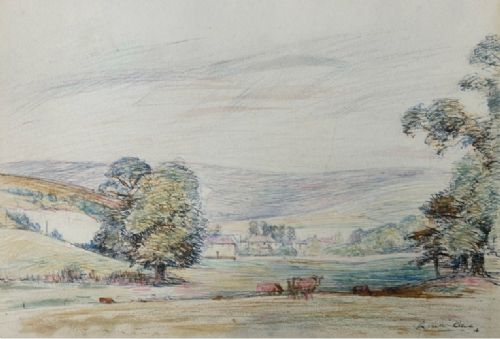
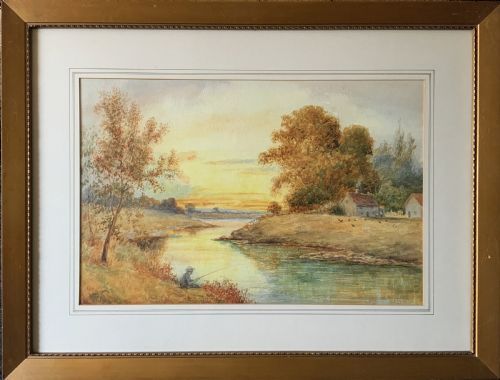
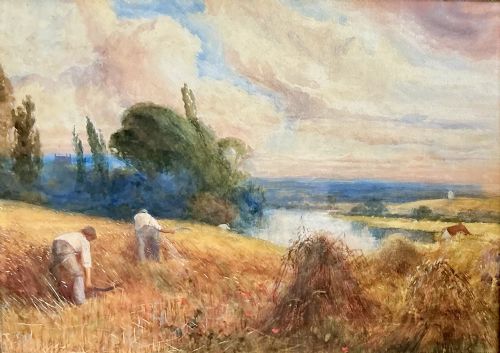


Original Countryside Watercolour
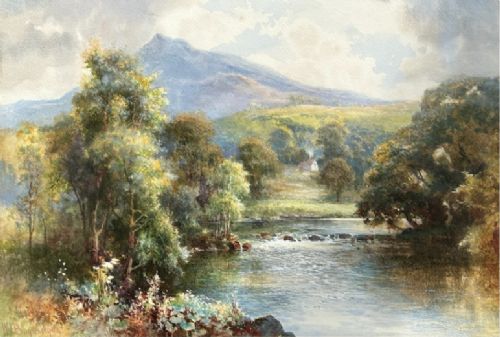
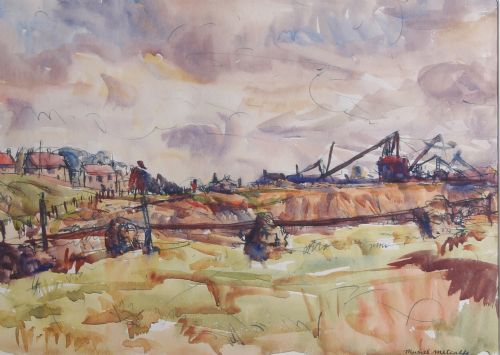
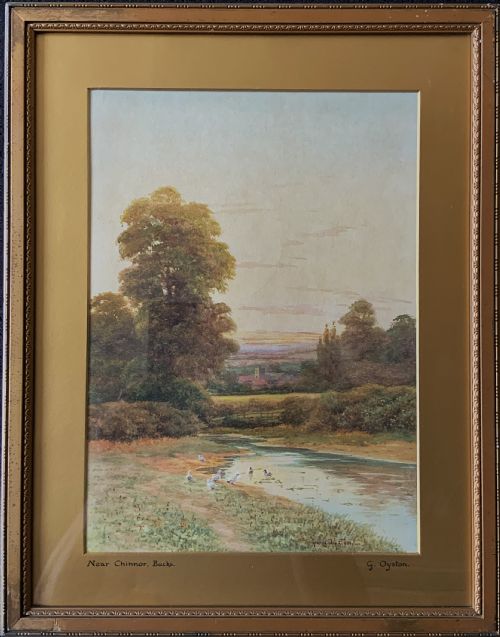
When you search for an original countryside watercolour, you are looking at pastoral views and rural scenes captured directly on paper by artists of past centuries.
Original Countryside Watercolour
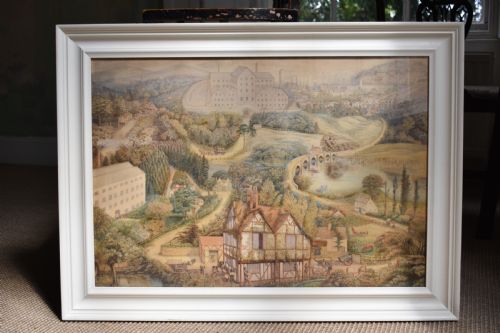
An original countryside watercolour brings rural landscapes, riversides and country cottages directly into interior spaces through historic works on paper. These paintings span the Victorian era, Edwardian period and early twentieth century, capturing pastoral life across England, Wales and Scotland.
The version most commonly encountered on this page is the nineteenth century or early twentieth century British landscape painting, often signed by the artist. These pieces frequently depict rural daily life, agricultural work, and recognizable countryside regions from Yorkshire to Dorset.
Subject matter ranges from quiet river valleys and coastal harbours to dramatic northern dales and thatched cottages beside streams. Each piece serves as a direct window into historical rural topography and traditional British landscape art.
Materials and Techniques
Artists painted these scenes using watercolour pigment and watercolour paint applied to absorbent paper support sheets. Preliminary sketching was frequently carried out in graphite before pigment application to establish composition and perspective.
Many surviving examples retain their period wooden framing and protective glass covering, which helped preserve the delicate paper and pigments over generations. Touches of bodycolour or gilt occasionally highlight specific elements within the wider composition.
Several artists preferred painting rural sheep mid-stride, preserving forever the leisurely pace of nineteenth-century countryside traffic.
Distinguishing Quality
Quality in these watercolours depends upon the precision of brushwork, atmospheric depth, and the artist's ability to capture natural light within a rural setting. Superior examples display confident handling of pigment and balanced composition rather than rigid adherence to formulaic scenery.
The preservation of the paper surface and the vibrancy of the original watercolour pigments also dictate the standing of a piece. Works that retain their original tonal gradations without excessive fading or discoloration represent the finest examples of the genre.
George Oyston·Henry Charles Fox·Fred Lawson·William Hoggatt·Robert Winchester Fraser
The Original Countryside Watercolour Glossary
- Watercolour
- A painting method in which the paints are made of pigments suspended in a water-based solution. These works are traditionally executed on paper supports.
- Graphite
- A form of carbon used for initial underdrawing beneath watercolour pigment. Artists utilised this material to outline composition lines before applying paint.
- Gilt
- Gold leaf or gold-coloured pigment applied to frames or details within art. This finish adds decorative enhancement to period mountings.
- Bodycolour
- Watercolour paint mixed with white pigment to make it opaque. This technique adds highlights and solid areas of colour to transparent washes.
- Provenance
- The chronological record of ownership and origin for a work of art. Documentation helps establish the authenticity and history of a painting.
Original Countryside Watercolour: Frequently Asked Questions
What subjects appear in these paintings?
Common subjects include pastoral fields with livestock, rural cottages, river valleys, and coastal harbours across Britain. Artists frequently recorded agricultural labour such as haymaking and harvesting.
Views often feature specific regional landmarks, country lanes, and mountainous terrain from Wales, Yorkshire, and the southern counties.
How do I identify the period of a watercolour?
Period identification relies on costume details in figures, architectural styles of depicted buildings, and framing materials. Signatures and dates inscribed by the artist on the front or back offer direct chronological evidence.
Stylistic movements, from Victorian naturalism to early twentieth-century British impressionism, also point toward specific decades of creation.
Why are these works painted on paper?
Paper provided a portable, lightweight surface that allowed artists to travel easily into the countryside for plein air painting. The absorbent nature of the paper stock absorbed transparent washes of pigment effectively.
This medium suited the rapid recording of changing light and weather conditions across rural landscapes.