




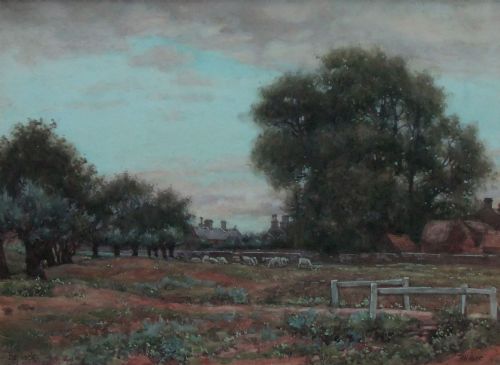

Framed Sheep Watercolours
Framed sheep watercolours capture pastoral life through delicate pigments on paper, offering buyers a serene window into historical rural scenes.
Framed Sheep Watercolours
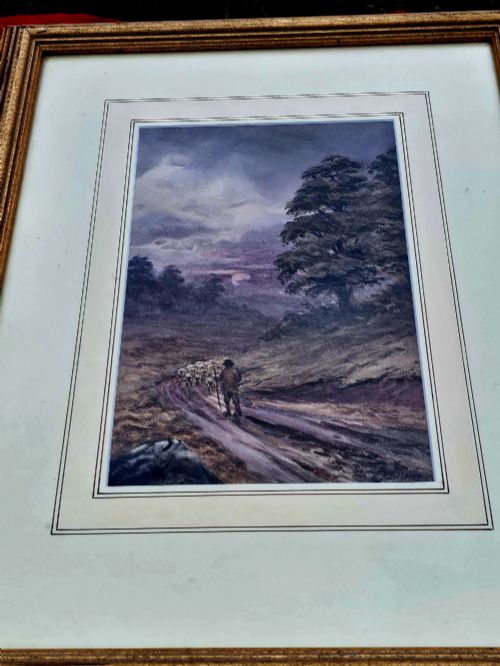
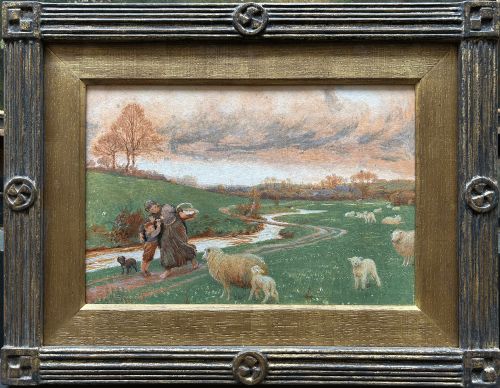
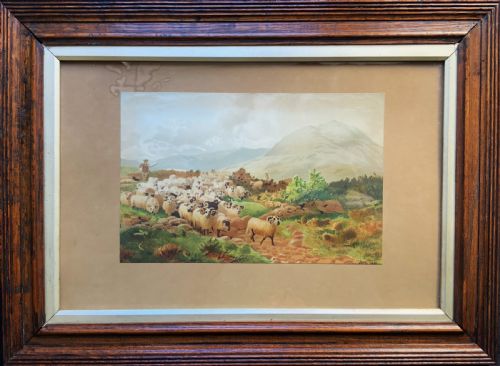
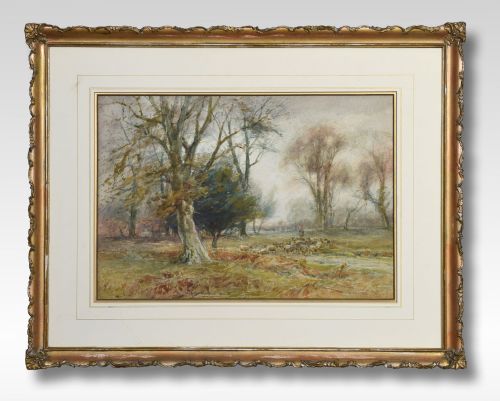
When you search for framed sheep watercolours, you encounter British and English school paintings that span the nineteenth century into the early twentieth century. These works frequently depict flocks, drovers, and shepherds traversing moorlands, valleys, and coastal downs. Victorian and Edwardian pastoral scenes dominate the selection available on this page, reflecting a widespread artistic fascination with rural existence.
The subjects range from intimate studies of sheep grazing near cottages to expansive landscapes where herds move across Welsh or southern English terrain. Painters of this genre worked directly on paper, capturing shifting light and atmospheric weather conditions above the animals. Most examples survive protected behind glass within traditional wooden and gilt frames.
How they were made
Artists applied water-soluble pigments onto paper supports, often building up translucent washes to render sky, water, and distant hills. Detail was introduced using finer brushwork for the fleece of the sheep, the faces of drovers, and surrounding vegetation. Paper was typically stretched before painting to prevent warping as the moisture dried.
Finished watercolours were housed beneath glass to prevent airborne dust and moisture from degrading the delicate pigments. Contemporary or later framers enclosed these works using wood mouldings, frequently incorporating gold leaf or gilt finishes to complement the pastoral warmth of the paintings.
Drover dogs occasionally sneak into the margins of these watercolours, keeping stubborn sheep moving toward market.
What varies in quality
The distinction between ordinary and exceptional works rests upon the artist's command of light, composition, and anatomical accuracy of the animals. Master painters rendered the movement of flocks and the texture of wool with distinct economy and precision, whereas lesser hands produced stiff, formulaic groupings. Stronger pieces convey genuine atmosphere and topography rather than generic rural scenery.
The condition of the paper and the preservation of the original pigments also dictate the standing of a piece. Prolonged exposure to sunlight diminishes delicate hues, leaving watercolours faded and flat, while well-preserved examples retain their original tonal depth and contrast.
EJ Letheren·Frederick Walker·F.J. Snell·Cornelius Pearson·Henry Charles Fox·Basil Bradley·A. Winter Shaw·Henry Birtles·Charles James Adams·Edmund George Warren·Jessie Hall·John D. Walker·JS Cooper·Wycliffe Egginton·T. Sidney Cooper RA
The Framed Sheep Watercolours Glossary
- Watercolour
- A painting method in which the paints are made of pigments suspended in a water-based solution. The paper serves as a luminous ground that shines through translucent layers of colour.
- Gilt wood
- Wood coated with a thin layer of gold leaf or gold paint. This finish frequently characterises the traditional frames protecting nineteenth-century and Edwardian paintings.
- Pastoral
- A genre of art depicting the rural life of shepherds and farm animals in an idealized or picturesque landscape. These scenes emphasise tranquility and harmony between man, beast, and nature.
- Drover
- A person who drives herds of livestock, such as sheep or cattle, to market across long distances. They appear frequently as central figures in nineteenth-century British landscape paintings.
Framed Sheep Watercolours: Frequently Asked Questions
How do I date a watercolour?
Dating relies primarily on artist signatures, biographical records, and stylistic conventions visible within the composition. Framers' labels and handwritten notes on the reverse of the paper also provide chronological clues.
Material characteristics such as the texture of the paper and the construction of the wooden frame assist in narrowing down the era of production. Comparing the subject matter to documented works by the same hand confirms the period.
Where should I hang these paintings?
These works require placement away from direct sunlight to prevent the watercolour pigments from fading over time. Interior walls with stable humidity and temperature protect both the paper and the wooden frame from warping.
Viewing them at eye level in rooms with gentle ambient lighting allows the subtle washes and fine brushwork to be appreciated fully. Avoid damp spaces such as unheated kitchens or bathrooms.
What styles are common?
Victorian pastoral and Edwardian traditional styles predominate among these rural watercolours. Artists of the English school focused heavily on naturalistic depictions of countryside topography and agricultural labour.
Idyllic interpretations of rural life reflect the nineteenth-century appreciation for untamed landscapes and traditional farming methods. The compositions balance the vastness of the terrain with the detailed rendering of livestock.
How are sheep depicted?
Sheep appear variously as scattered grazing flocks, tightly clustered groups driven to market, or solitary figures dotting expansive hillsides. Artists used them to introduce scale, movement, and a sense of human stewardship into the natural landscape.
The rendering ranges from quick, impressionistic brush marks in distant herds to highly detailed studies of wool and posture in the foreground.