
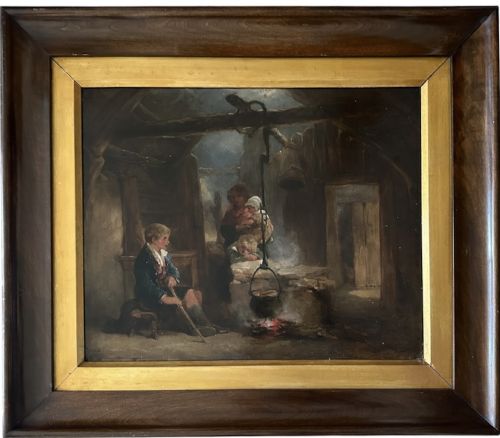
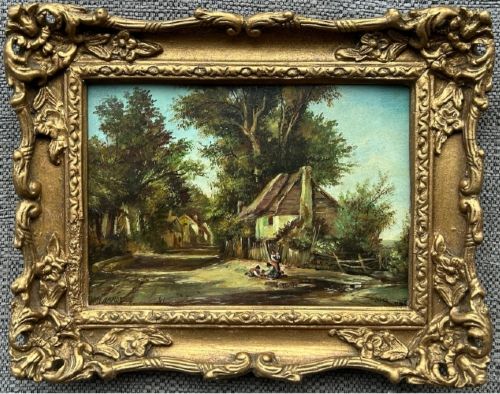
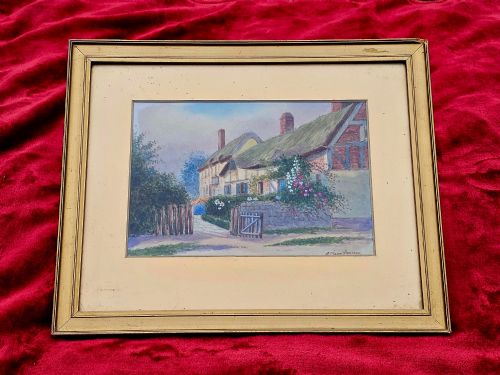
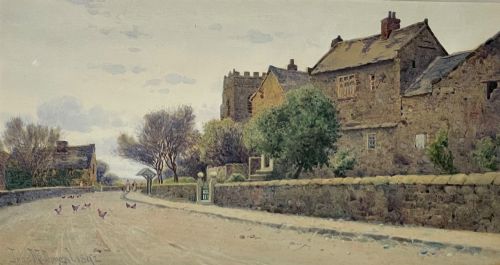

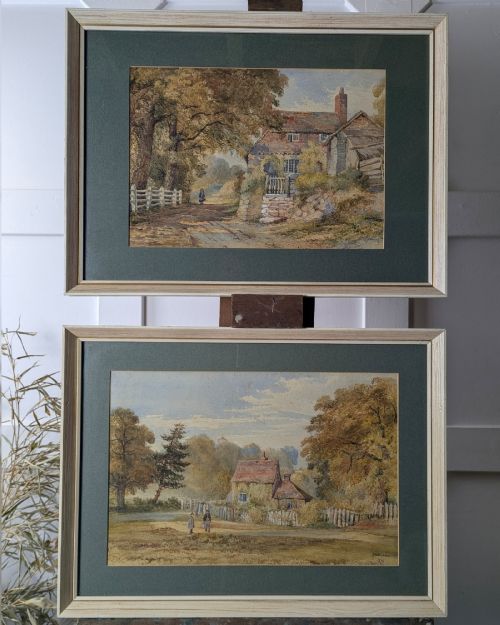
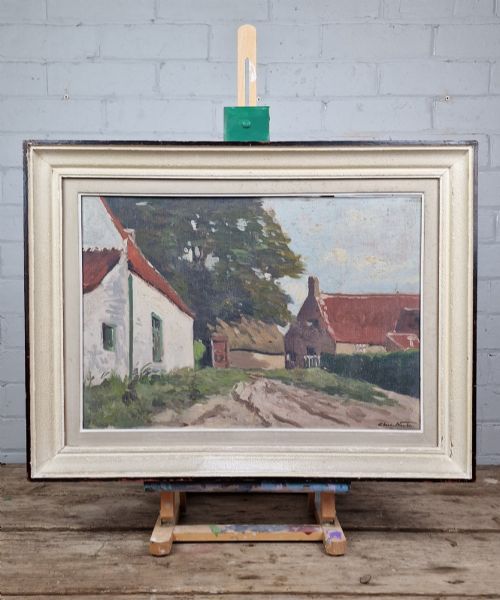
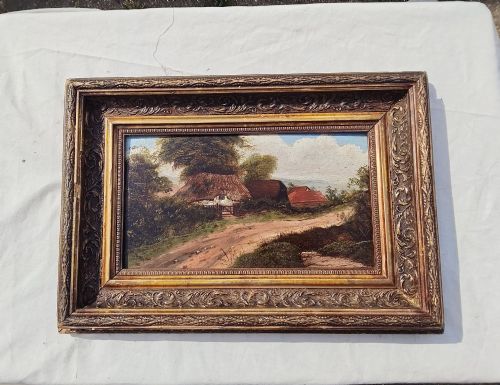
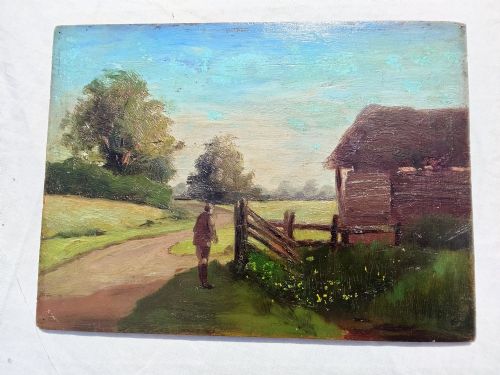
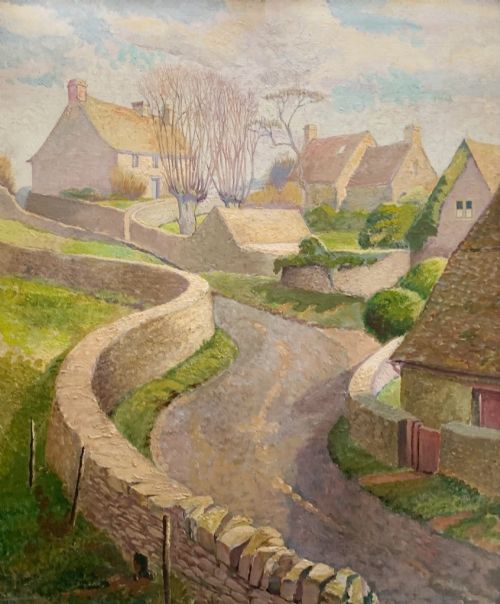
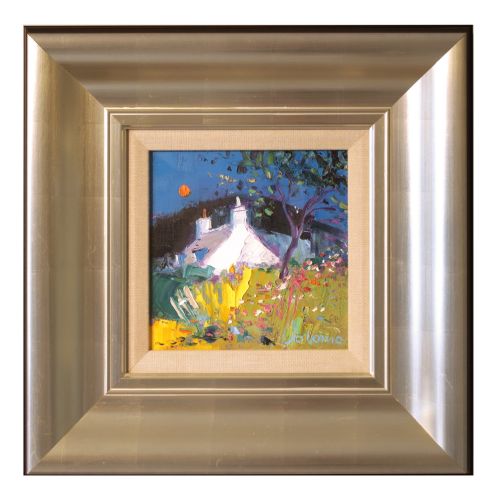
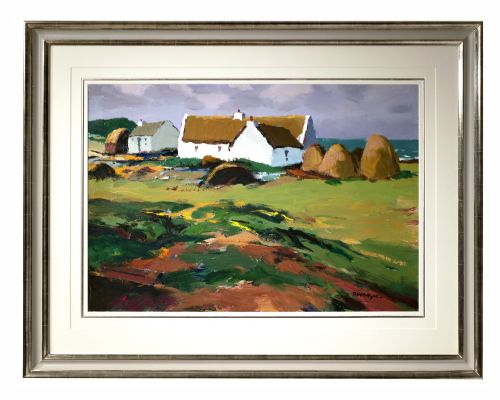
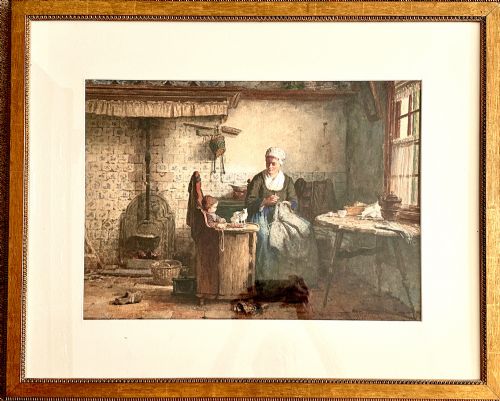
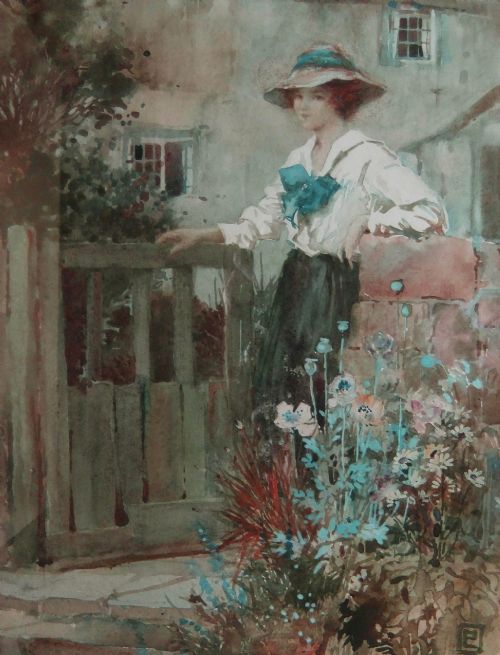
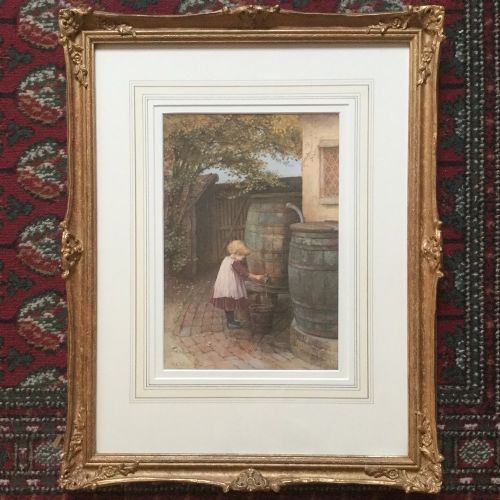
Original Cottage Artwork
Original cottage artwork captures rural life through watercolours and oil paintings from the nineteenth and twentieth centuries, offering buyers a window into historic country scenes.
Original Cottage Artwork
Original cottage artwork encompasses paintings and watercolours depicting rural houses, gardens, and village landscapes. These pieces span the Victorian era, the Edwardian period, and mid-century modern movements.
Buyers frequently encounter works executed on paper, card, panel, and canvas, often housed within period gilt wood frames. The subjects range from English thatched cottages to Scottish crofts and continental farmyards.
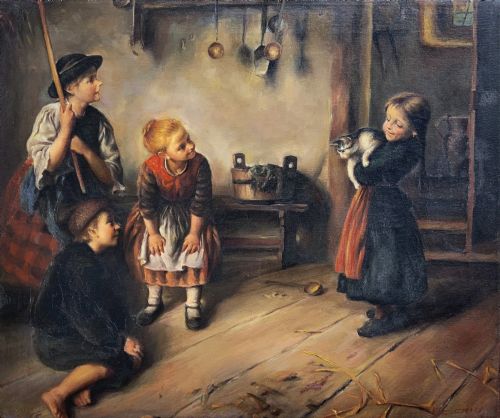
Creators worked within diverse traditions including British Impressionism, Post-Impressionism, and Dutch genre painting. Each piece records a distinct interpretation of pastoral life across the nineteenth and twentieth centuries.
Materials and Techniques
Artists applied oil paint and watercolour onto flexible supports such as canvas and paper, or rigid surfaces like wood panels and cardboard. These traditional mediums defined the texture and luminosity of each rural scene.
Paintings on canvas and panel rely on rich oil pigments to build depth in landscape foliage and cottage masonry. Watercolours utilise transparent washes on paper to capture the soft light of rural gardens and riverscapes.
Listings feature works executed in oil paint and watercolour across wood, paper, and canvas supports.
Evaluating Quality
The sophistication of brushwork and pigment handling distinguishes master compositions from standard topographical sketches. Skilled artists deploy confident strokes and nuanced colour palettes to create atmospheric depth in foliage and light.
The harmony between the artwork and its period frame influences the overall integrity of the piece. Well-preserved works maintain the original relationship between the painted surface and its protective mount or gilt housing.
William Howard Hardy·A. Marie Parsons·John McDougal·Robert A. Nottingham·Charles Houben·John Lowrie Morrison OBE·Donald McIntyre·Hendrik Valkenberg·Percy Lancaster·Charles Edward Wilson·John Horace Hooper·Mario Pinetti·Reginald Grange Brundrit·Fred Lawson·William Hoggatt·William Greaves·Theresa Stannard·Robert Finley McIntyre·Helena Maguire·Linnie Watt·Owen Bowen·Ernest Higgins Rigg·Kershaw Schofield
The Original Cottage Artwork Glossary
- Watercolour
- A painting method where fine pigment is suspended in water-soluble binders on paper. This medium produces translucent washes suited to delicate landscape details.
- Oil on Canvas
- Pigments bound in drying oils applied to stretched woven fabric. This technique allows for rich texture and enduring colour depth.
- Gilt Wood
- Timber carved and coated with a thin layer of gold leaf or metallic gilt. These frames frequently accompany nineteenth-century paintings.
- Impressionism
- An artistic style focusing on accurate depiction of light and fleeting visual moments. Practitioners prioritise visible brushstrokes over rigid academic finish.
- Panel
- A flat piece of wood used as a rigid support for oil paintings. Artists frequently utilised wooden boards before the widespread adoption of stretched canvas.
Original Cottage Artwork: Frequently Asked Questions
How do I date an old cottage painting?
Examine the materials, support medium, and framing style for period indicators. Signatures and biographical dates of the artist also provide a reliable chronological window.
Purchasing records or exhibition labels on the reverse can offer further historical context regarding the creation date.
Are watercolours more fragile than oil paintings?
Watercolour paintings on paper require protection from direct sunlight to prevent fading. Glazing with glass is essential to guard the delicate pigments against moisture.
Oil paintings on canvas or panel possess greater durability but still benefit from stable indoor humidity levels.
What is the difference between oil on canvas and oil on panel?
Canvas provides a woven textile texture that flexes slightly with atmospheric changes. Wooden panels offer a completely rigid surface that prevents cracking in the paint layer.
Both supports were widely used across different periods depending on the artist's preference.
How should I frame historic artwork?
Retain original period frames whenever possible to preserve the historical integrity of the piece. Conservation framing techniques protect the artwork from acidic backing boards.
Ensure that adequate space remains between the glass and watercolour paper to prevent condensation damage.