



Original Cornwall Artwork
Original Cornwall artwork brings together coastal watercolours, oils and pastels that capture the light and harbours of the West Country.
Original Cornwall Artwork
Original Cornwall artwork captures the distinct light, harbours and coastal life of the region through paintings, watercolours and drawings created across the nineteenth and twentieth centuries.
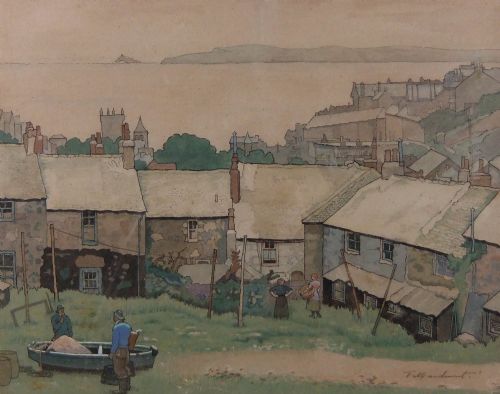
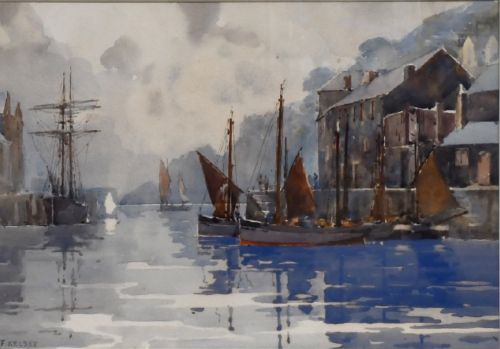
Buyers seeking original Cornwall artwork most frequently encounter traditional watercolours and oil paintings depicting local scenes such as St Ives, Polperro and Newlyn.
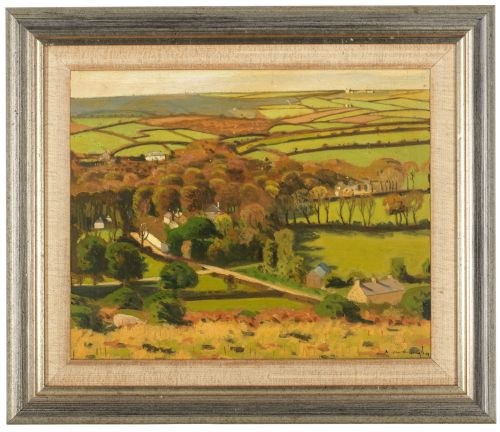
The selections span distinct artistic movements including the Newlyn School, St Ives School and British Impressionism, documenting maritime activity and rural village scenes.
How They Were Made
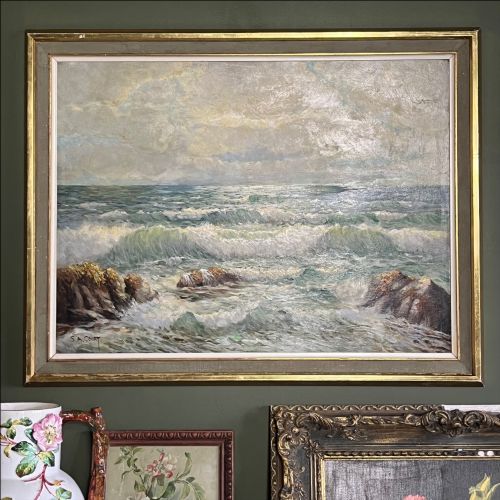
Artists painted en plein air using oil paint on canvas or wood panels, alongside watercolours and pastels applied to paper.
Works were finished with protective glass and framed in wood or gilt wood to preserve the delicate pigments and paper supports.
Artists often returned to the same Cornish harbour rocks year after year, simply waiting for the tide to turn.
What Varies in Quality
Quality rests upon the artist's ability to render the specific atmospheric coastal light and movement of the water rather than relying on formulaic composition.
Materials and preservation dictate longevity, with works retaining vibrant pigments and original framing commanding greater distinction among collectors.
Sidney A Court·William Banks Fortescue·Robert Morson Hughes·Thomas Maidment·Frank Kelsey·George F Pennington·Denis Mitchell·Edward Matthew Elliott·Charles Napier Hemy·Richard Harry Carter·Gyrth Russell·George Turland Goosey·Joseph Farquharson·Frederick Stuart Richardson·Jack R Mould·William Lee Hankey·S J Lamorna Birch·Arthur Joseph Meadows·John Baragwanath King·Henry Scott Tuke
The Original Cornwall Artwork Glossary
- En plein air
- Painting outdoors to capture natural light and transient effects directly from the subject. This method defined much of the observational work produced in Cornish coastal colonies.
- Newlyn School
- An artist colony established in the late nineteenth century focused on realist portrayals of local fisherfolk and rural life. Practitioners worked closely with nature in the fishing village of Newlyn.
- St Ives School
- A twentieth-century grouping of artists in Cornwall embracing modernist abstraction alongside traditional landscape painting. The movement transformed the coastal town into an international art centre.
- Watercolour
- Pigments suspended in a water-based solution applied to paper supports. It permits rapid sketching of coastal weather and changing tides.
Original Cornwall Artwork: Frequently Asked Questions
What periods do these paintings cover?
The available selection spans from the late eighteenth century through the Victorian and Edwardian eras into mid-century modernism.
Most pieces date from the late nineteenth century to the mid-twentieth century during the height of the Newlyn and St Ives art colonies.
How do I identify a Newlyn School painting?
Newlyn School works typically depict realistic scenes of local fisherfolk, harbour activities and coastal life painted with naturalistic observation.
These pieces often date from the late Victorian period and utilise oil paint or watercolour to capture everyday Cornish village subjects.
Are these works painted outdoors?
Many artists worked en plein air directly on the Cornish coast to capture the shifting light and sea conditions.
This direct observation distinguishes coastal landscapes created on location from studio reproductions.
How should I frame and display them?
Paintings on canvas and framed watercolours require placement away from direct sunlight to prevent fading of the pigments and paper supports.
Traditional wood and gilt frames suit the period aesthetic of these maritime scenes.