




Original Architectural Oil Painting
When you search for original architectural oil painting, you enter a world of painted facades, cathedrals and street scenes captured across diverse centuries.
Original Architectural Oil Painting
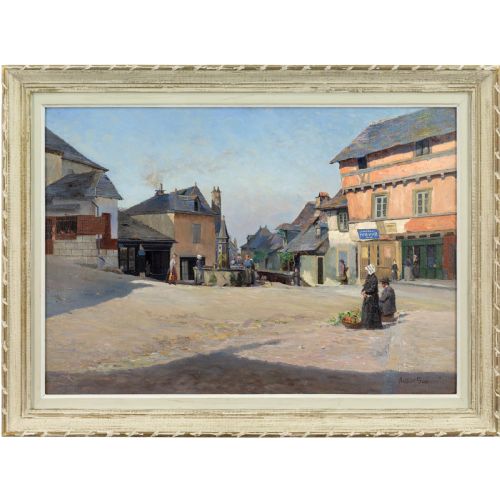
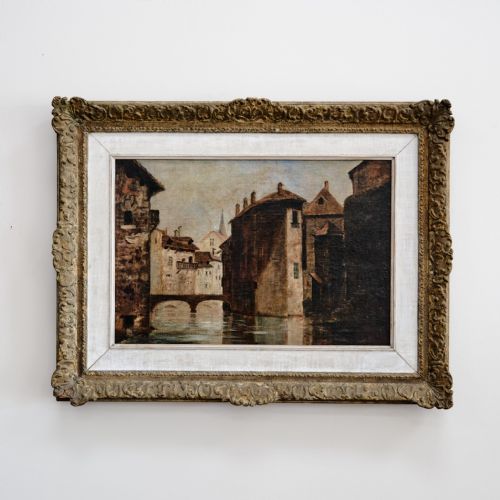
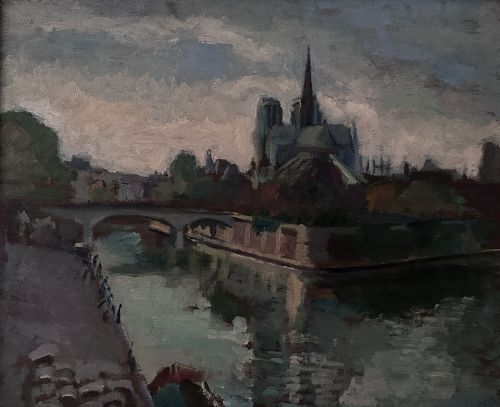
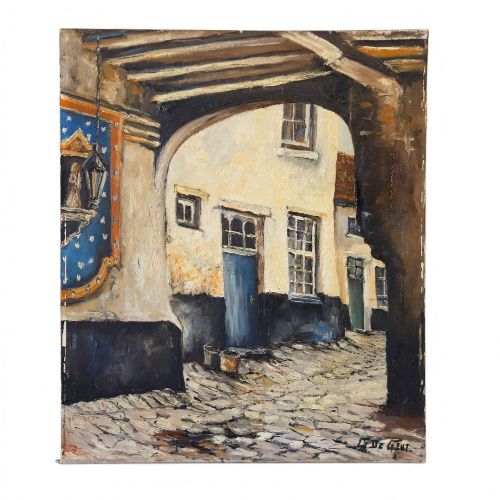
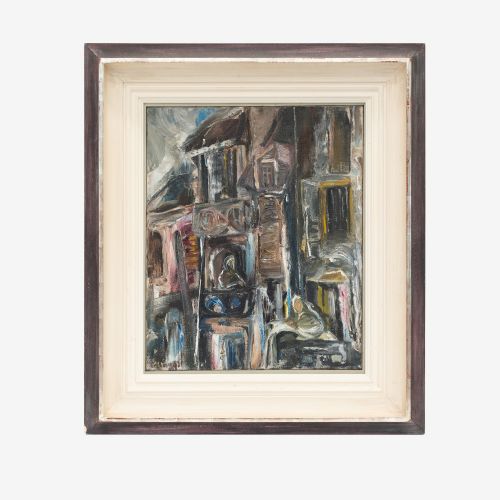
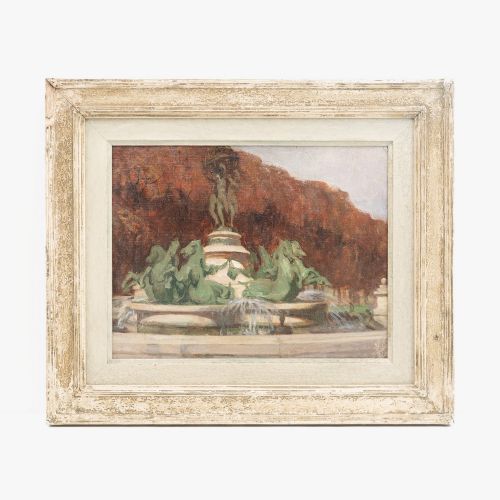
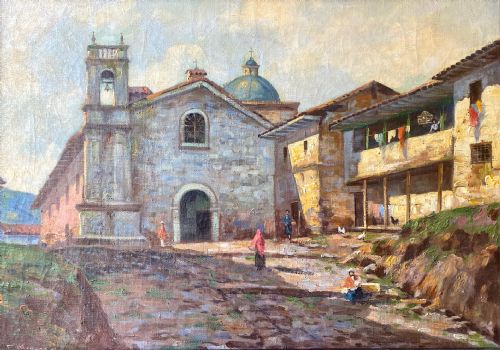
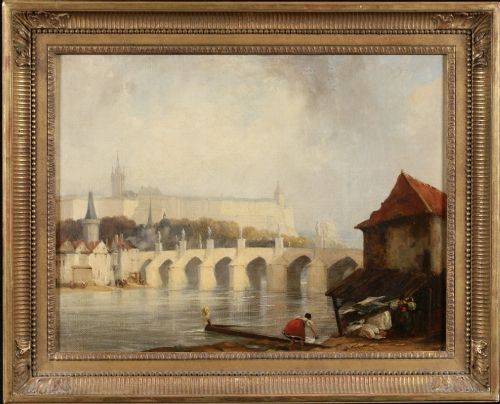
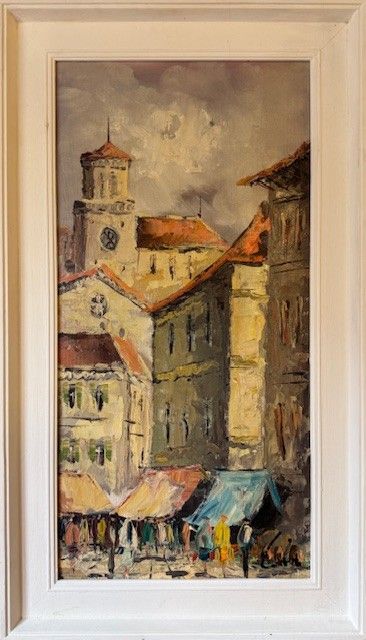
An original architectural oil painting captures buildings, street scenes, cathedrals and urban vistas through the medium of oil paint. Buyers searching this phrase look for works that record specific structures or townscapes, ranging from nineteenth-century English water towers and Welsh castles to Parisian riverbanks and continental squares. Most pieces encountered on this page date from the nineteenth and twentieth centuries, spanning periods from early Victorian views to mid-century impressionist and expressionist interpretations.
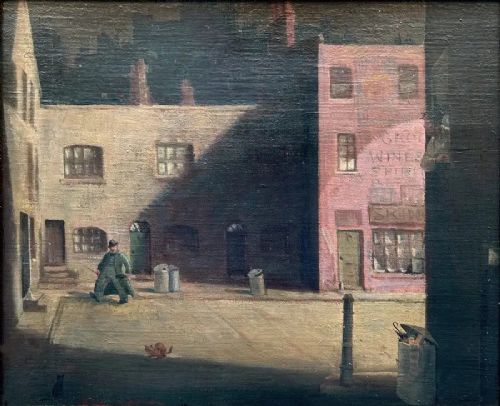
The subjects vary widely in scale and perspective, encompassing intimate board studies of quiet courtyards alongside large canvas panoramas of bustling city thoroughfares. Works often depict specific named locations, such as Prague Castle, Notre Dame or Durham Cathedral, providing both an artistic composition and a historical record of built environments. Collectors find variations in style from post-impressionist brushwork to precise Victorian recording, each reflecting the period's approach to representing brick, stone and mortar in oil.
Materials and construction
These works are executed primarily in oil paint applied to surfaces such as stretched canvas, wooden board, panel or gesso grounds. Artists built up layers of pigment to capture light falling upon stone facades, bridges and streets, sometimes employing impasto technique to give texture to architectural elements. Frames fashioned from wood or giltwood frequently accompany the paintings, protecting the edges of the canvas or board.
Support materials vary by period and intent, with nineteenth-century pieces often favouring heavy canvas or prepared wooden boards, while mid-century works frequently utilise panel or alternative board supports. The application of oil allows for subtle blending of tones to depict shadows in archways and sunlight on public squares, complemented occasionally by framing elements in carved or gilded wood.
Several artists braved rain and traffic to paint bustling European street corners directly onto portable wooden boards.
Judging the range
Quality in these works rests upon the precision of perspective, the handling of light on built surfaces, and the depth of the composition. Stronger examples demonstrate a confident command of architectural proportions and atmospheric depth, whereas lesser works may exhibit flat rendering or hesitant handling of urban perspective.
The reputation of the artist and the distinctiveness of the palette also separate the works. Paintings that convey the atmosphere of a specific location through considered brushwork and harmonious colour stand apart from routine topographical recording.
Arthur Gué·Francisco Sancha·Lilian Colbourn·Alexander Jamieson·Ron Folland·Cornelis Christian Dommersen·E A Minardo·Frederick Tully Lott·Lewis J Wood·A A Finch·Phillip Krevoruck·Armand Guillaumin·Job de Vogel·Samuel Sidley·Ernest Cox·Henry Sanders·Emanuele Cappello·Franz Reder Broili·George Fall
The Original Architectural Oil Painting Glossary
- Canvas
- A closely woven fabric stretched across a wooden frame to serve as a support for oil painting. It provides a slightly flexible surface that holds pigment well.
- Impasto
- Paint applied thickly to a surface, standing out in relief from the plane. This technique adds tactile dimension to architectural details like stone walls and heavy masonry.
- Giltwood
- Wood that has been coated with gold leaf or a gold-coloured finish. Antique frames made of this material often accompany nineteenth-century canvases.
- Board
- A rigid flat substrate used instead of canvas for painting. Artists frequently utilised board for smaller plein-air architectural studies.
- Post-Impressionism
- An art movement following impressionism where artists extended boundaries through vivid colours and distinct brushstrokes. Works in this style often interpret cityscapes with heightened emotional resonance.
Original Architectural Oil Painting: Frequently Asked Questions
Where were architectural paintings usually displayed?
These works traditionally hung in domestic parlours, studies or formal reception rooms, reflecting the owner's travels or civic pride. Urban scenes and cathedral views brought the scale of public monuments into private spaces.
Today, they suit living rooms, hallways or libraries, where their perspective adds depth and architectural interest to interior walls.
How do I identify the period of a painting?
Dating relies on stylistic clues, framing methods, and the condition of the canvas or board support. Victorian works often show meticulous detail, while mid-century pieces lean towards expressionist or abstract interpretations of cityscapes.
Signatures, inscriptions on the reverse, and recorded dates help narrow the decade of creation when available.
Are these works always painted outdoors?
Many architectural studies began as plein-air sketches executed on location on small wooden boards. Finished canvases were frequently completed in the studio using these initial observations and drawings.
This combination of direct observation and studio work allowed artists to capture both the immediate light of a street scene and the composed grandeur of a cathedral.
How should I frame an unframed painting?
Selecting a frame depends on the period and style of the artwork, with nineteenth-century pieces often pairing well with ornate wooden profiles. Mid-century abstracts and expressionist street scenes frequently benefit from simpler, clean-lined mouldings.
Consulting a professional framer ensures the canvas or board receives adequate support without obscuring edges or signatures.