






Original Abstract Canvas
An original abstract canvas brings mid-century energy to a room, offering bold compositions and expressive brushwork rooted in the modernist era.
Original Abstract Canvas
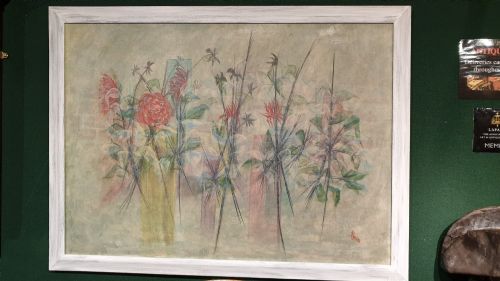
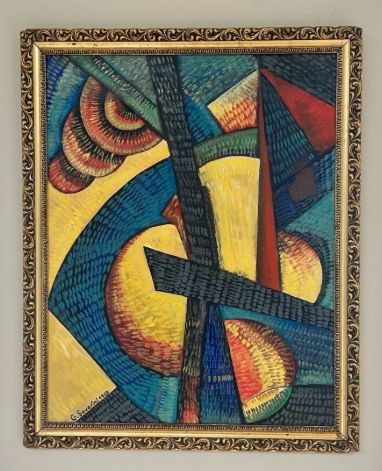
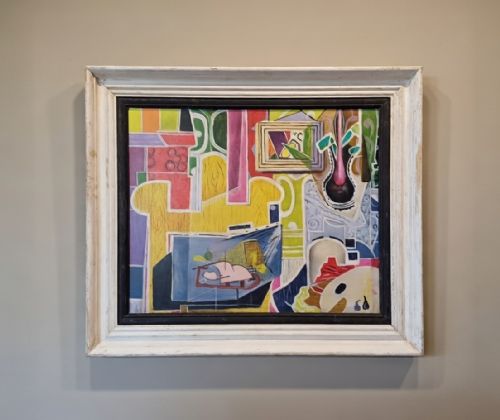
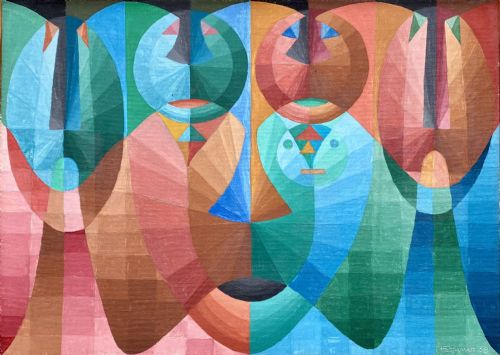
When you search for an original abstract canvas, you are looking at mid-century paintings spanning from the 1930s through the 1960s. These works range from French modernist landscapes and St Ives school compositions to geometric op art and abstract expressionism.
You are most likely to meet oil paintings on canvas or board, often housed in gilded wood frames. The subjects stretch from abstracted still lifes and cityscapes to pure geometric abstraction and figurative studies.
How they were made
Artists applied oil paint and acrylic directly onto canvas, board, hardboard, or loose canvas supports. Thick impasto techniques added physical texture to the surface, creating depth within the composition.
Many works are housed in original wood or gilded wood frames that complement the modernist aesthetic. The materials reflect the mid-century period's experimental approach to fine art painting.
Some mid-century canvases hide surrealist figures and secret odalisques beneath layers of abstract paint.
What varies in quality
Quality rests in the strength of the composition and the confidence of the brushwork. Works by recognised artists with documented exhibition histories or association with movements like the St Ives school command greater interest.
The integration of the painting with its period frame also influences the overall standard. A well-preserved surface with rich oil application and clear provenance distinguishes the finest examples.
Denis Mitchell·William Littlejohn·William McCance·Antonio Ferri·Burr Singer·William Ernst Burwell·Edward Burra
The Original Abstract Canvas Glossary
- Impasto
- A technique where paint is laid on an area of the surface in very thick layers, usually thick enough that the brush or painting-knife strokes are visible.
- St Ives School
- An artist community based in Cornwall that exerted a major influence on British modern art during the mid-twentieth century.
- Op Art
- A style of visual art that uses optical illusions, often presented in black and white or vibrant geometric patterns.
- Hardboard
- A type of fibreboard engineered from wood fibres, utilised frequently as a sturdy painting support during the mid-century period.
Original Abstract Canvas: Frequently Asked Questions
How do I hang a canvas safely?
Ensure your wall fixings match the weight of the wood frame and canvas. Use picture wire rated well above the painting's actual weight.
Keep the piece away from direct sunlight and damp walls to protect the oil paint and canvas over time.
What periods do these paintings cover?
The listings predominantly feature works from the 1930s, 1940s, 1950s, and 1960s. This spans pre-war modernism through post-war abstract expressionism and op art.
Stylistic shifts during these decades moved from muted cubist influences towards vibrant, dynamic geometric compositions.
How do I clean an oil painting?
Dust the canvas very gently with a soft, dry artist's brush to remove surface particles. Avoid using any water, moisture, or household cleaning products.
Consult a professional conservator if the paint surface or gilded wood frame requires deeper restoration.
Are all pieces signed by the artist?
Many paintings feature direct signatures, dates, or inscriptions on the canvas or reverse. Some works are attributed to specific artistic manners or bear signatures after known painters.
Unsigned pieces are judged entirely on stylistic markers, materials, and period characteristics.