


Midcentury Oil Painting
A midcentury oil painting brings direct twentieth-century expression into a room through canvas, board, and pigment.
Midcentury Oil Painting
A midcentury oil painting captures subjects ranging from portraits and animals to landscapes, cityscapes, and still lifes. These works emerge from the nineteen-fifties and nineteen-sixties under styles that include impressionism, realism, abstract, and traditional realism.
Buyers meet Scottish, Dutch, Flemish, and British school works alongside European studies. Canvas and wood panel serve as the primary supports for these framed and unframed wall art pieces.
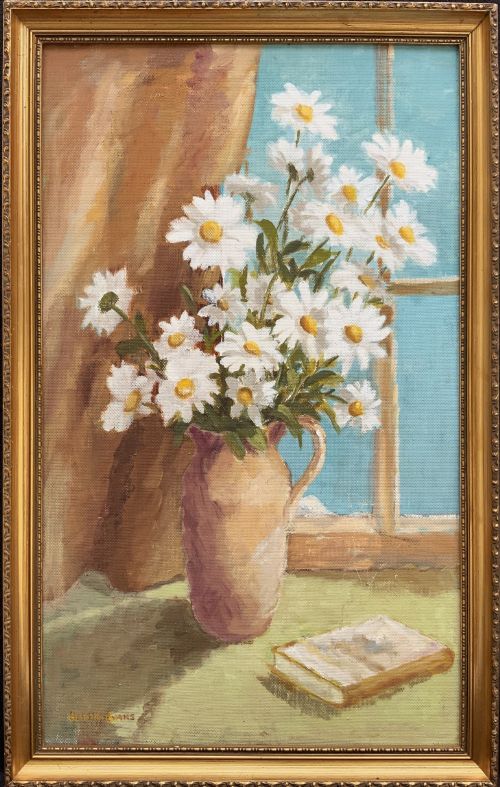
The most common formats on this page are large still life floral compositions, autumn farming landscapes, and portraiture. Painters of the era record everyday subjects, animals such as cats and lions, and urban scenes from Paris.
Materials and construction
Artists apply oil paint directly onto stretched canvas or wooden board supports. Impasto techniques appear frequently in landscape works, building thick, textured layers of pigment that catch the light.
Many works retain wood frames, occasionally decorated with gilt finishes. The combination of oil paint on canvas or panel provides durable stability across decades.
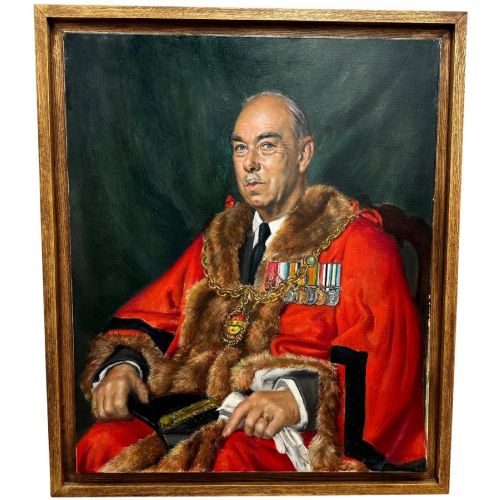
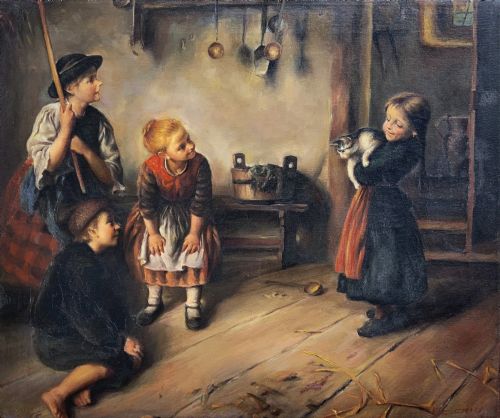
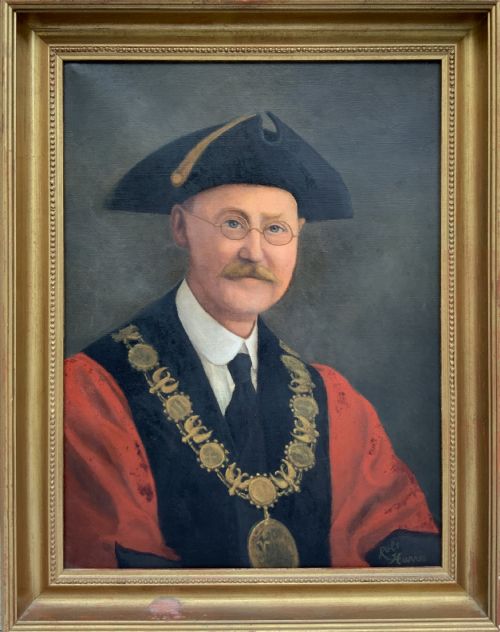
Cats, lions, and sheep join mayors and tribeswomen on the canvas.
Judging quality in twentieth-century works
Quality rests in the handling of brushwork and composition, particularly where impressionist or abstract styles shape the subject. Expressive impasto application and tonal depth elevate certain landscapes and portraits above standard decorative output.
The integration of the frame with the painting alters the overall presence of the piece. Signed works and attributed pieces by named painters command stronger artistic interest.
Bernard Hailstone·William Ernst Burwell
The Midcentury Oil Painting Glossary
- Impasto
- Paint applied in thick layers that stand out from the canvas surface. This technique allows the physical marks of the brush or palette knife to remain visible.
- Board
- A rigid wooden or composite sheet used as a painting support instead of woven fabric. Painters often select board for smaller studies and panel works.
- Gilt
- A thin layer of gold leaf or gold-coloured paint applied to surface decoration. Frames frequently feature gilt elements to complement the oil painting within.
- Genre painting
- Artwork depicting scenes from ordinary life, typically involving people engaged in common activities. Dutch examples appear often in midcentury collections.
- Impressionism
- A style focused on accurate depiction of light in its changing qualities rather than fine detail. Midcentury impressionist works utilise visible brushstrokes to convey atmosphere.
Midcentury Oil Painting: Frequently Asked Questions
What subjects appear most often in midcentury oil paintings?
Still life compositions of flowers, fruit, and jugs dominate the selection alongside pastoral and farming landscapes. Portraits of mayors, tribal figures, and animals such as cats and lions also feature.
Cityscapes of Paris and river views complete the typical range of subjects found in these twentieth-century works.
How do I distinguish between an abstract and an impressionist work?
Impressionist pieces retain recognizable forms like flowers, rivers, and buildings while prioritising light and loose brushwork. Abstract works move away from literal representation to focus on colour, shape, and form.
Both styles employ oil paint on canvas or board within the same decades.
Are these paintings supplied with frames?
Many listings include wood frames, and some incorporate gilt details. The presence of a frame depends on the individual piece.
Buyers encounter both framed paintings and works presented on panel or canvas alone.
Which regions produced these paintings?
The works originate from British, Scottish, Dutch, Flemish, and broader European schools. Regional styles influence the choice of subject matter, from Scottish river landscapes to Flemish riverscapes.
Artists across Europe worked within the impressionist and realist traditions during this period.