




Orientalist Wood Carving
Orientalist wood carving brings together intricate geometric patterns and detailed regional craftsmanship, offering functional tables, mirrors and seating rooted in nineteenth and early twentieth century design.
Orientalist Wood Carving
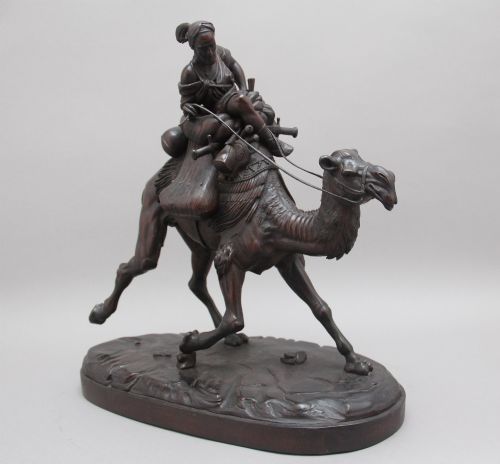
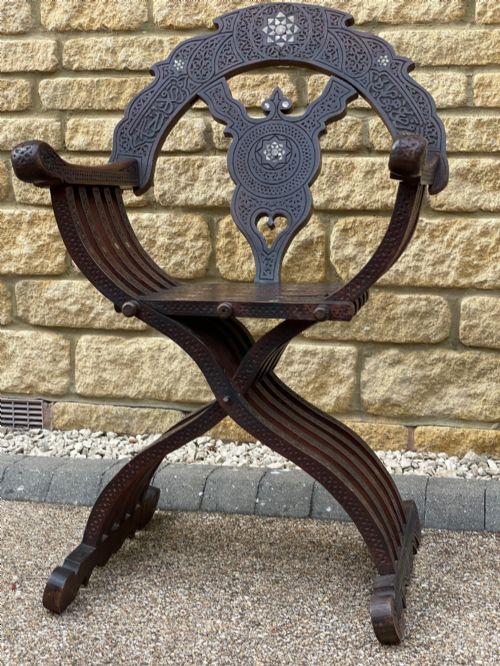
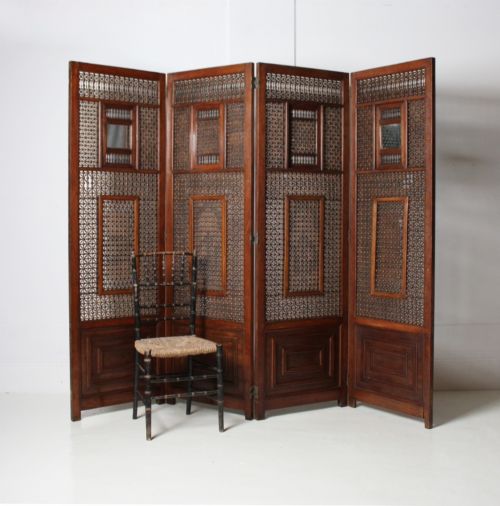
Orientalist wood carving encompasses a diverse range of furniture and decorative objects produced primarily during the nineteenth and early twentieth centuries, reflecting global design influences from North Africa, the Middle East and South Asia. Buyers seeking these pieces encounter a rich variety of functional items including side tables, occasional tables, armchairs, folding chairs, hall benches and multi-panel room dividers.
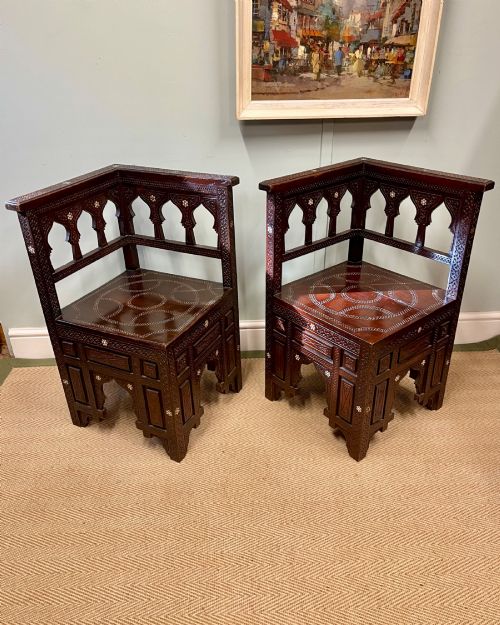
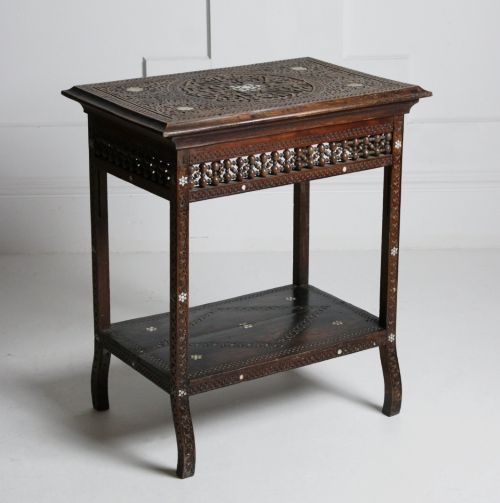
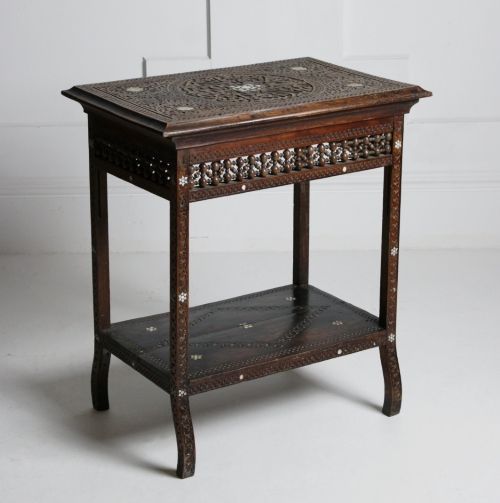
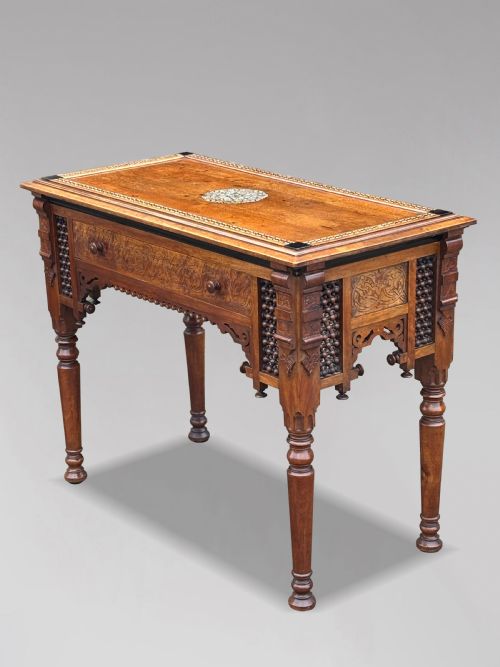
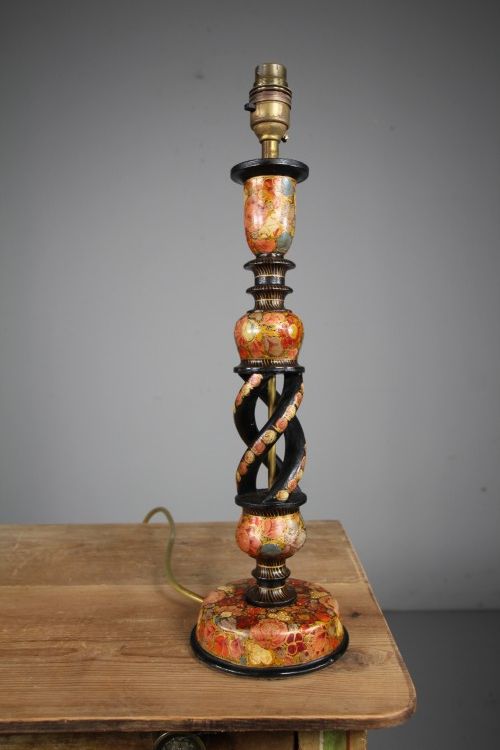
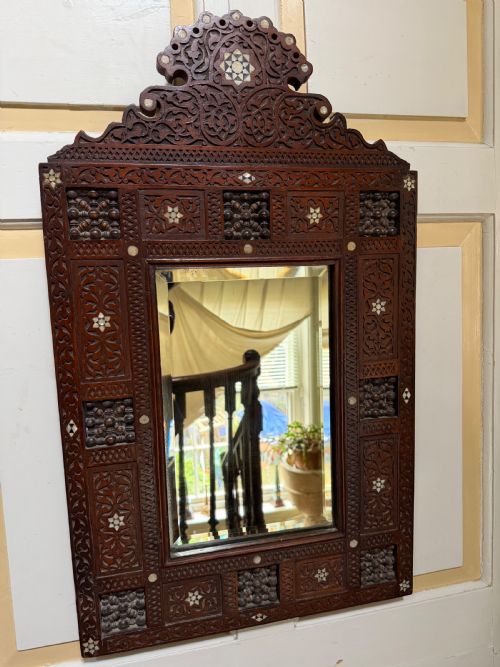
The material expression of orientalist wood carving on this page leans heavily towards regional specialisms, featuring items such as Syrian Damascus mother of pearl inlaid mirrors, Kashmiri tall table lamps, and corner tables displaying distinct Moorish Revival and Anglo-Indian characteristics. Side tables and mirrors dominate the selection, often incorporating regional architectural elements like mashrabiya turned panels.
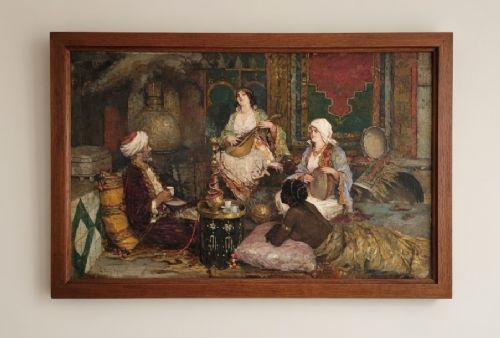
Makers and retailers of the period, notably Liberty and Co, reinterpreted these overseas traditions for British and European interiors, producing matched pairs of octagonal occasional tables, corner chairs and stools. Alongside these commercial pieces, collectors find singular works including Islamic calligraphy carved wooden plaques and figural lamps from the wider nineteenth century.
Materials and Technique
The construction of these pieces relies upon dense hardwoods such as walnut and general tropical hardwoods that provide a stable base for intricate surface manipulation and deep relief work. Artisans utilised hand-carving techniques to shape complex geometric motifs, floral elements and architectural screens directly into the timber.
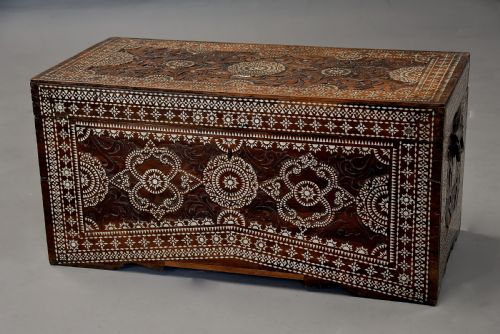
Surface embellishment defines the technique, employing extensive inlay work using mother of pearl, bone and brass wire to create luminous contrast against the dark wood grain. These contrasting materials are meticulously cut and embedded into channels within the hardwood, often reinforced by turned mashrabiya lattice elements assembled from individual wooden spindles.
Listings feature items spanning the Victorian era through the early twentieth century, utilising walnut, hardwood, mother of pearl, brass, bone, and glass.
Distinctions in Quality
Quality in these carvings is determined by the precision and depth of the hand-carved detail, where crisply defined geometric patterns and deeply undercut foliage distinguish superior examples from softer, shallower execution. The complexity of the regional motifs and the crispness of the turned spindle work indicate the level of artisan skill involved in production.
The integrity and completeness of the inlay work separate the finest examples from standard pieces, specifically regarding the retention of mother of pearl, bone, and brass elements without significant loss or modern replacement. Furthermore, the structural cohesion of multi-panel room dividers and the quality of the underlying hardwood influence the overall standing of an item.
Gabriel Viardot·Liberty and Co·Gabriel Puig Roda
The Orientalist Wood Carving Glossary
- Mashrabiya
- An architectural element consisting of turned wooden spindles arranged in intricate lattice grids, commonly utilised in window screens and furniture panels to filter light and air. This technique is frequently seen in room dividers, mirrors and chair backs within nineteenth century regional furniture.
- Mother of Pearl
- The iridescent internal layer of mollusc shells, harvested and cut into thin geometric plates for inlay work. In these pieces, it creates luminous contrast against dark hardwood surfaces.
- Moorish Revival
- An architectural and decorative style popular during the nineteenth century, drawing inspiration from North African and Spanish Islamic design. It is characterised by horseshoe arches, intricate geometric inlay and dense surface carving.
- Anglo-Indian
- A descriptive term for furniture and objects produced in India during the British period, combining traditional local carving techniques with European forms. These items often feature dense floral or geometric hardwood carving.
- Etarge
- A small set of decorative open shelves or a tiered side cabinet used for displaying ornaments. Pieces of this form frequently incorporate regional inlay and carving styles.
Orientalist Wood Carving: Frequently Asked Questions
How were mashrabiya panels used?
Mashrabiya panels consist of intricate lattices made from turned wooden spindles, originally designed for domestic windows to provide ventilation and shade while maintaining privacy. In nineteenth-century furniture, these panels were incorporated into room dividers, mirror frames, and chair backs.
Their inclusion adds architectural depth and authentic regional character to tables, screens, and seating.
How do I care for inlaid wood?
Inlaid wooden furniture requires stable environmental conditions to prevent the wood from expanding or contracting, which can cause delicate bone or mother of pearl elements to loosen. Keep pieces away from direct heat sources and sudden changes in humidity.
Dust gently with a dry, soft cloth and avoid applying liquid polishes that might seep into the carved recesses or damage the inlay adhesives.
How do I identify Moorish Revival pieces?
Moorish Revival pieces from the late nineteenth century are typically identified by dense surface carving, geometric star patterns, and architectural elements such as cusped arches. They often utilise dark hardwoods combined with contrasting mother of pearl or brass wire inlay.
Many examples were retailed through prominent houses like Liberty and Co, reflecting the period's fascination with Middle Eastern and North African design.