


Orientalist Ceramic Art
Orientalist ceramic art captures distant lands through detailed figures, decorative vases, and character busts created in European studios.
Orientalist Ceramic Art
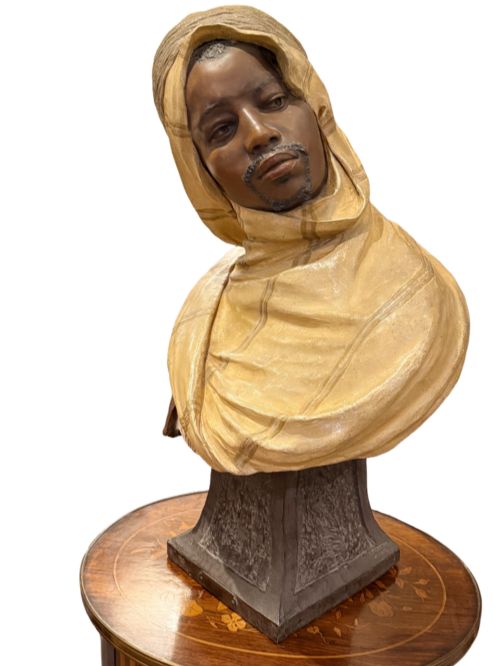
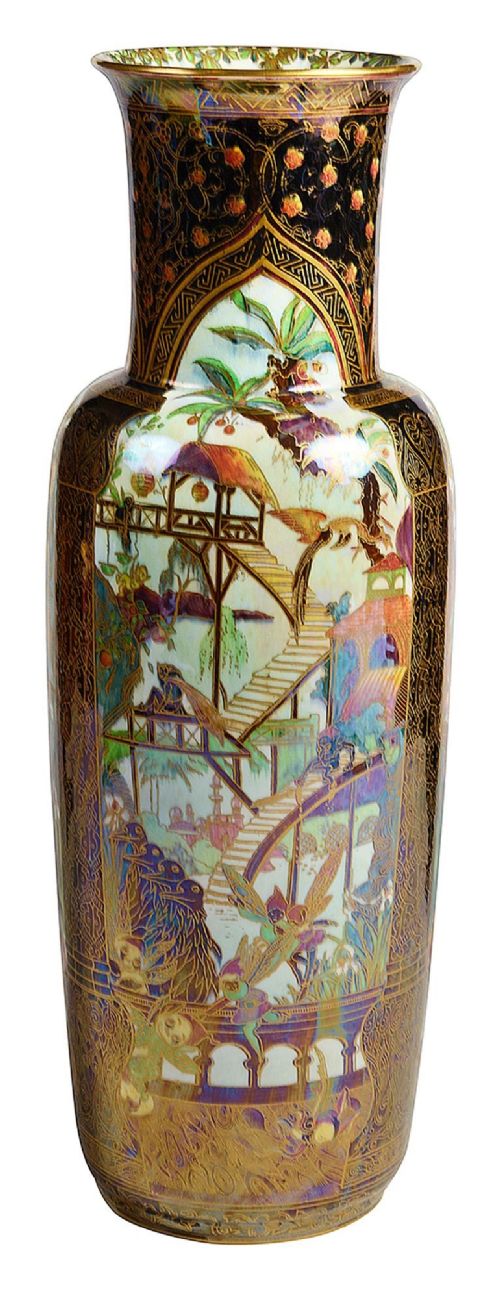
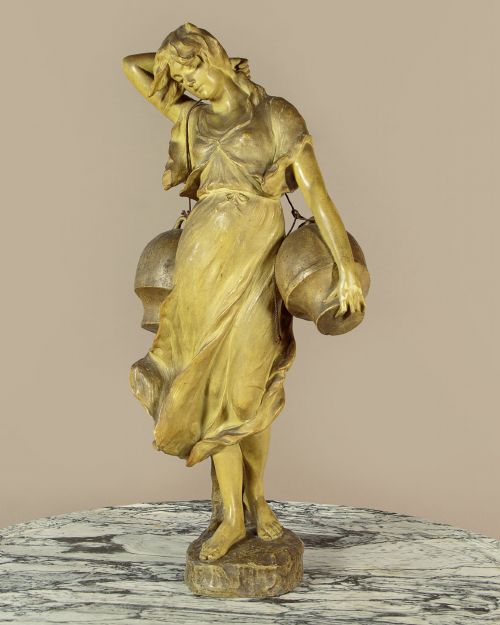
Orientalist ceramic art encompasses figures, busts, vases, and lamps that draw inspiration from Middle Eastern and North African subjects. Pieces range from large terracotta water carriers to refined porcelain figurines and enamel faience vases.
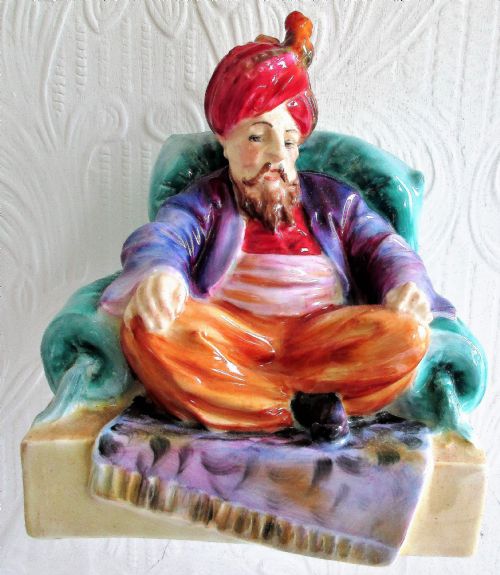
The objects on this page span the late nineteenth century through the Art Deco era, reflecting shifting European interpretations of foreign dress and culture. Figures often portray named characters or specific archetypes like water carriers and camel riders.
Makers utilised diverse forms, including table lamps, perfume burners, and monumental figures. Terracotta and earthenware dominate the earlier nineteenth century, while porcelain and bone china appear more frequently in later decades.
How they were made
Makers shaped terracotta, earthenware, and porcelain into complex figural forms using detailed moulds and hand-finishing techniques. Artisans then applied polychrome pigments, enamel, and lustre glazes to achieve rich surface textures and vibrant clothing patterns.
An elephant tamer once illuminated a room by hiding a light bulb inside his turban.
What varies in quality
The depth of the glaze and the precision of the hand-painted enamel separate standard production pieces from exceptional studio output. Superior examples retain complex colour schemes and sharp textural details across every fold of drapery.
Goldscheider·Royal Doulton·Royal Dux·Jules Vieillard·Turn Porcelain
The Orientalist Ceramic Art Glossary
- Terracotta
- Fired clay used for sculptural figures and busts. It provides a warm reddish-brown base that accepts polychrome paint and glaze.
- Faience
- Tin-glazed earthenware known for bright enamel colours and smooth surfaces. This technique allowed French workshops to produce vivid decorative vases.
- Lustre Glaze
- A metallic film applied to ceramics to create an iridescent sheen. It reflects light in changing colours across the surface.
- Polychrome
- The decoration of objects in a variety of colours. Makers applied multiple pigments to bring realism to garments and skin tones.
Orientalist Ceramic Art: Frequently Asked Questions
What periods do these pieces date from?
The listings on this page span from the nineteenth century through the Art Deco period of the nineteen-thirties.
Most examples cluster around eighteen-ninety to nineteen-thirty, capturing both Art Nouveau fluidity and later geometric designs.
How were these ceramic figures used?
Many served as decorative mantel ornaments, floor figures, or striking centrepieces in European homes.
Some specialised items functioned as lighting, such as perfume lamps and figural table lamps.
What materials are most common?
Terracotta and earthenware form the basis of the large nineteenth-century sculptural pieces.
Porcelain and bone china appear frequently in later Art Deco figures and vases.
How do I identify different manufacturing styles?
Turn-of-the-century pieces often display flowing Art Nouveau lines and rich polychrome terracotta surfaces.
Later examples embrace stylised Art Deco forms executed in smooth porcelain or enamel.