

Oriental Wool Hallway Runner
An oriental wool hallway runner brings linear pattern and deep texture to a corridor, offering a practical way to furnish narrow spaces.
Oriental Wool Hallway Runner
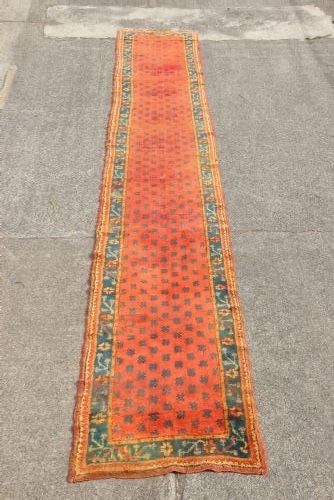
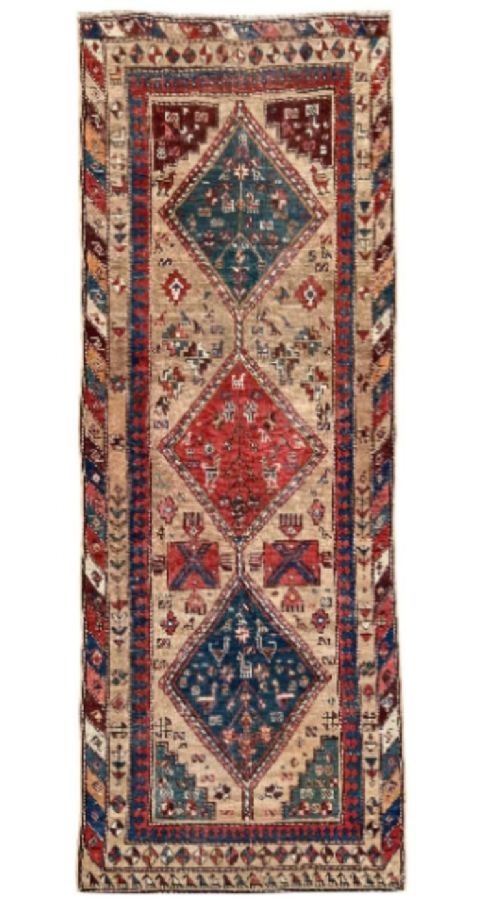
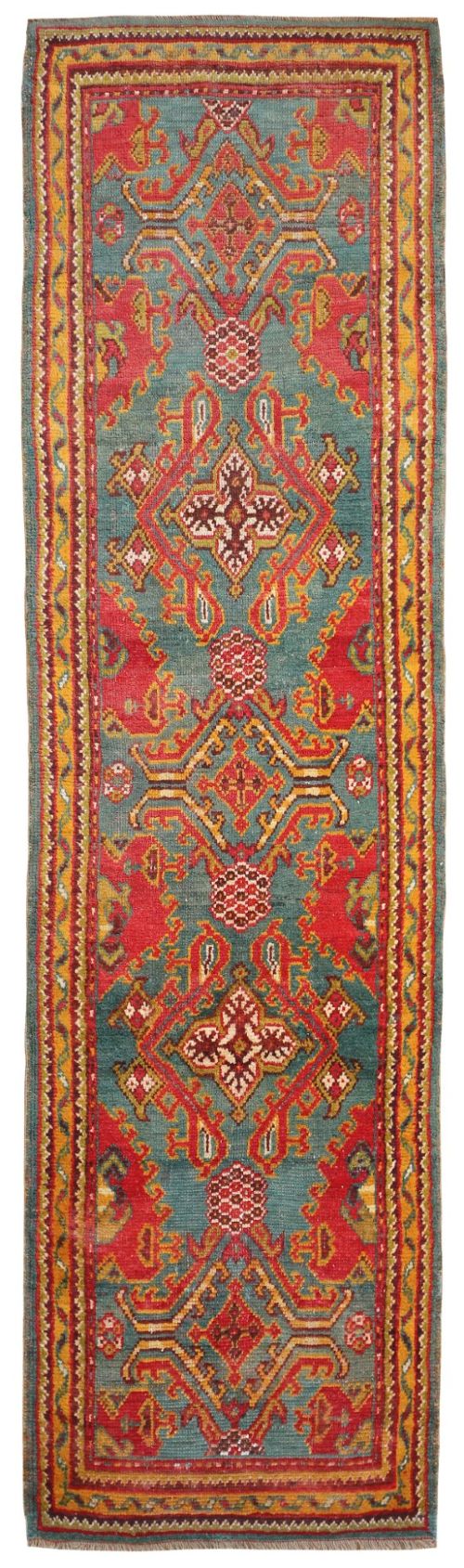
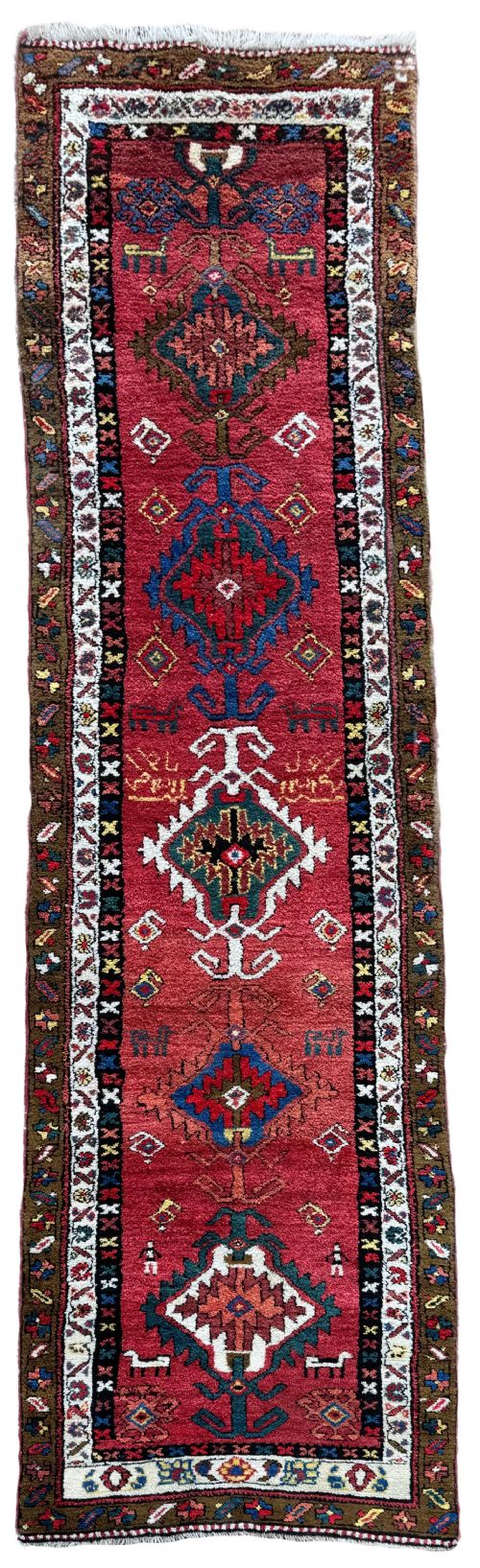
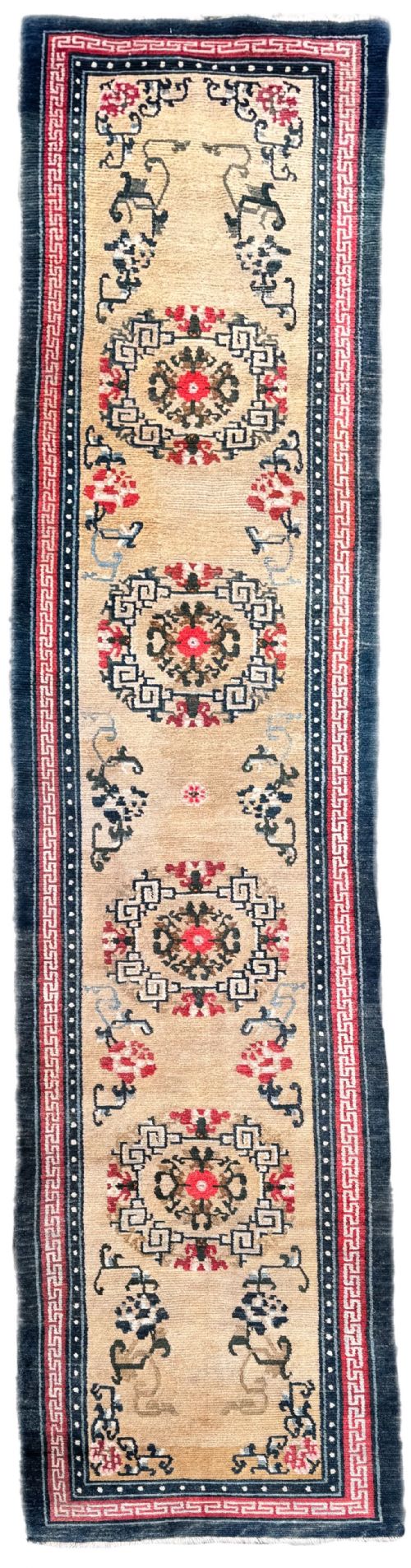
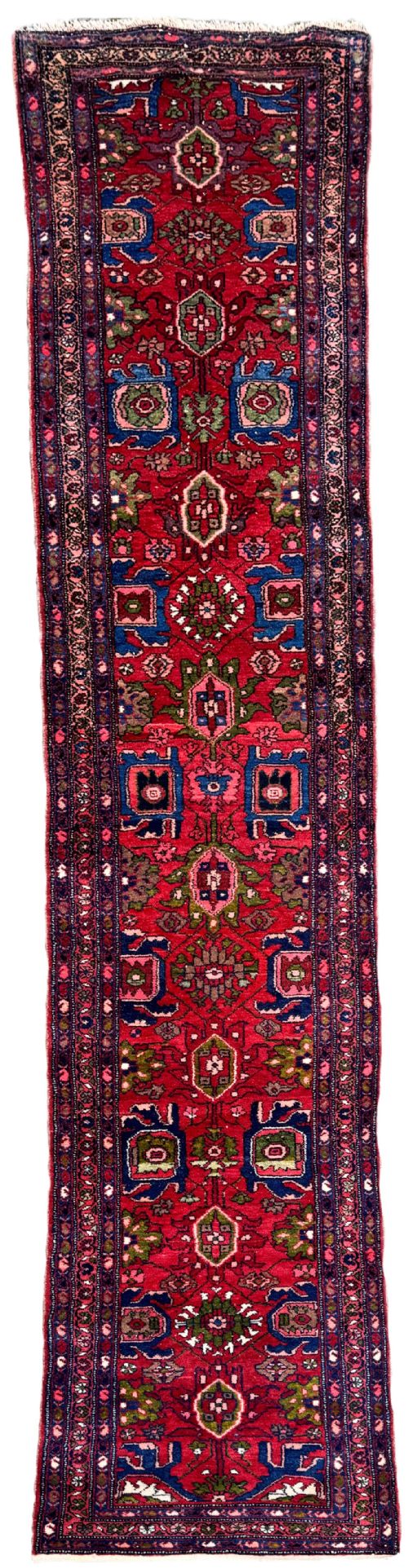
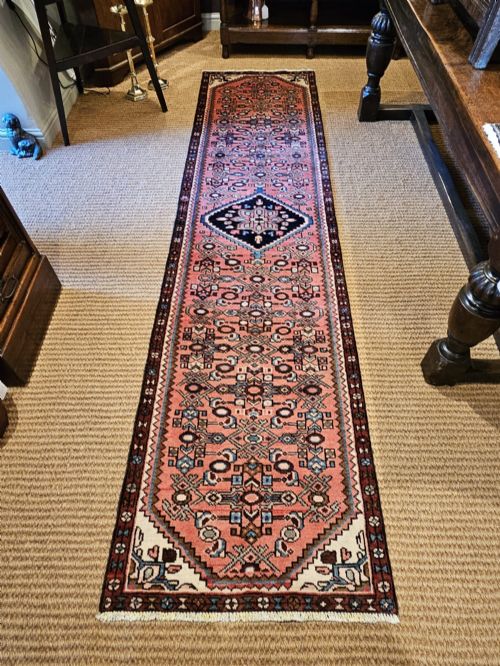
An oriental wool hallway runner is a long, narrow floor covering designed specifically for passages, corridors, and landings. These pieces combine utility with traditional design, spanning origins from Persian, Caucasian, and Anatolian workshops.
The selections available on this page date predominantly from the late nineteenth and early twentieth centuries, particularly around 1900 to 1920. Pieces range from concise lengths to exceptionally long formats suited for extended corridors.
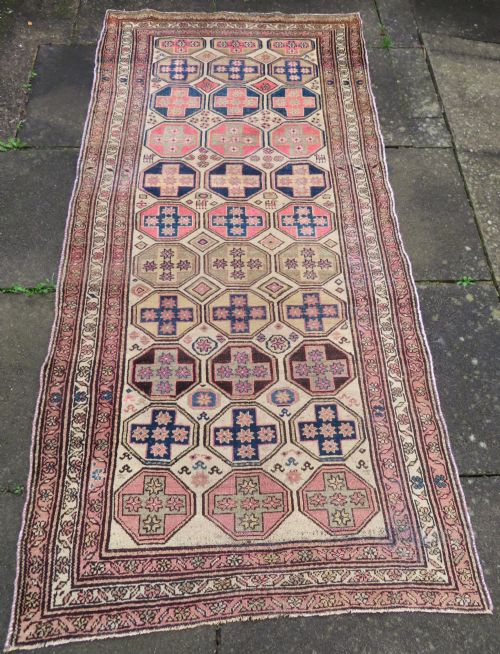
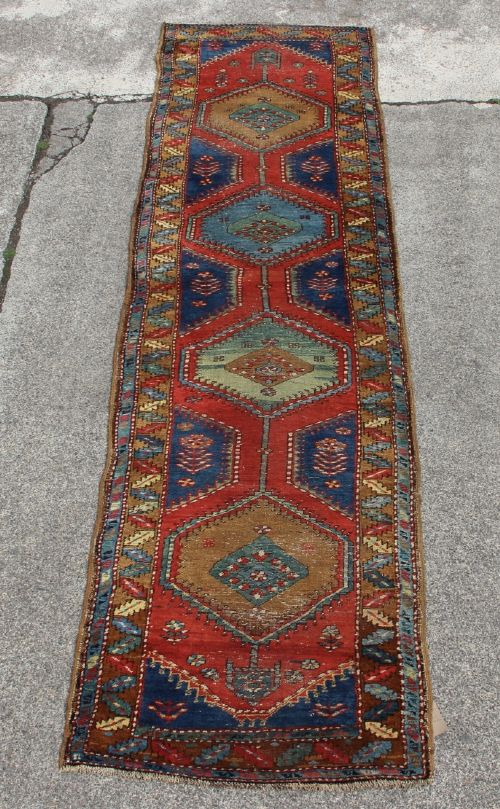
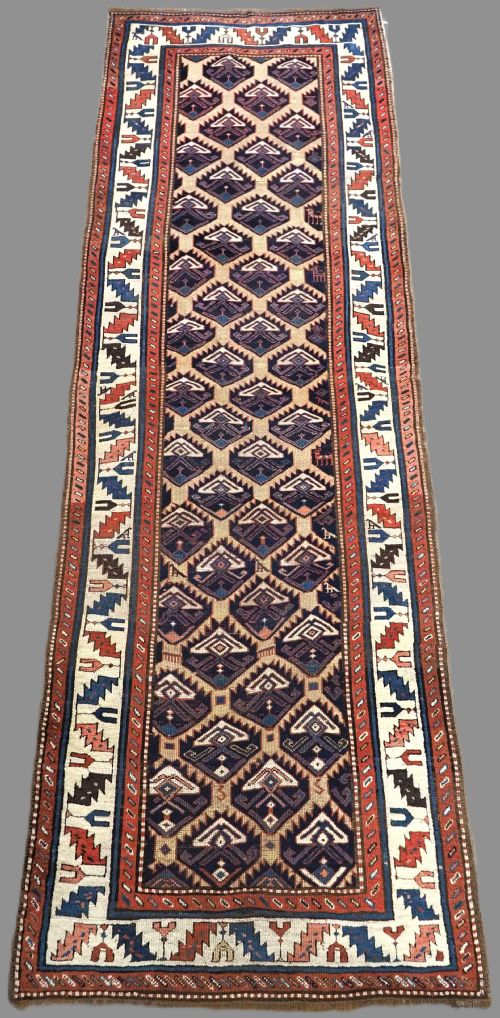
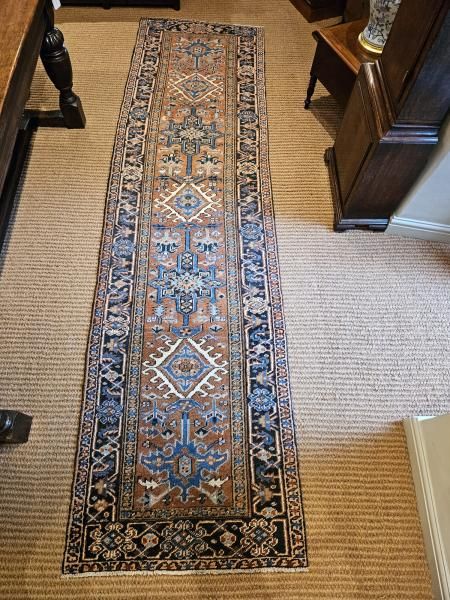
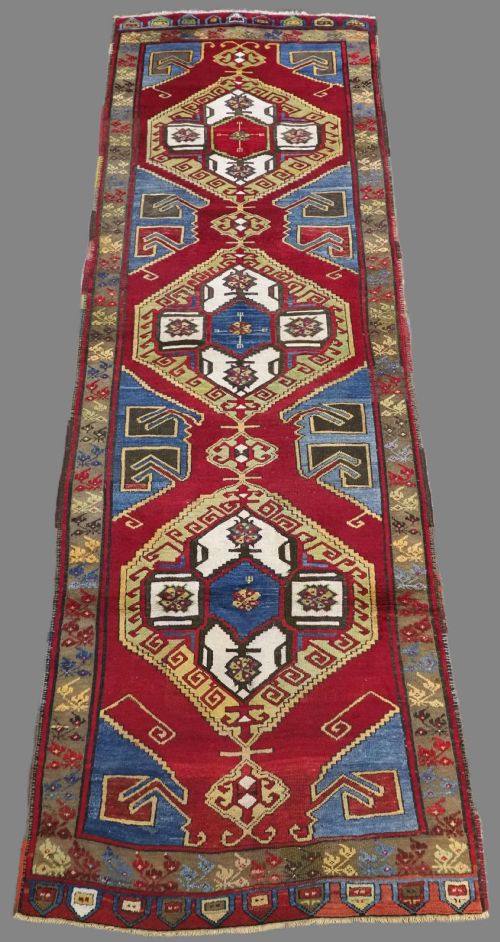
Buyers encounter regional styles including Kurdish, Heriz, Ushak, and Shirvan weaving traditions. Each type brings distinct structural proportions and characteristic motifs suited to period and traditional interiors.
How They Were Made
These floor coverings rely on a foundation of durable cotton or wool yarns, providing the structural grid for hand-knotted pile work. Natural wool fibres form the tactile surface, selected for resilience in high-traffic corridors.
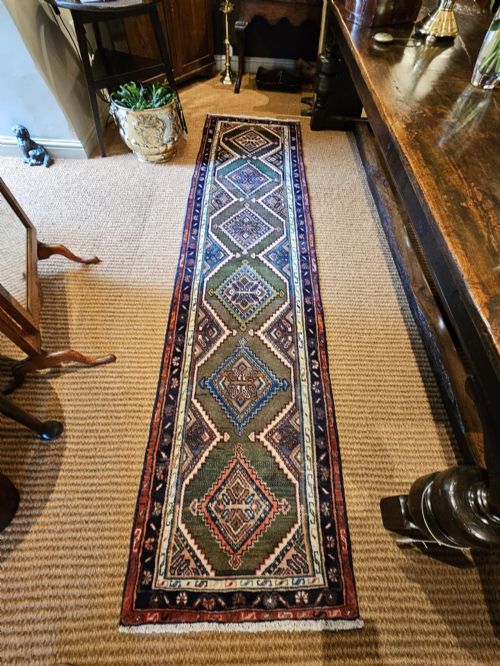
Weavers utilised traditional hand-knotting techniques on upright looms, working from regional design repertoires passed down through generations. Dyes derived from natural sources yielded the saturated background tones seen in olive green, navy blue, and rich earth hues.
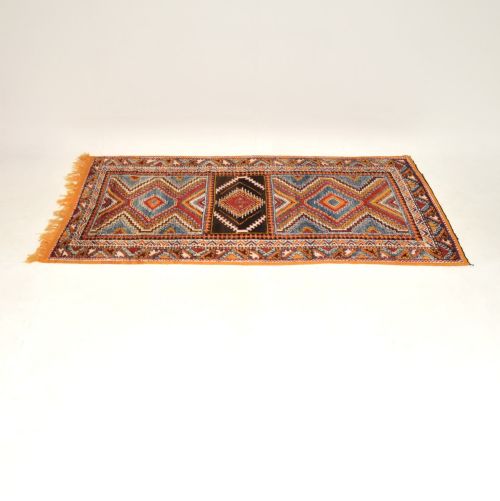
Listings on this page span the period from the nineteenth century through the 1960s, constructed in wool and cotton across diverse regional styles.
What Varies in Quality
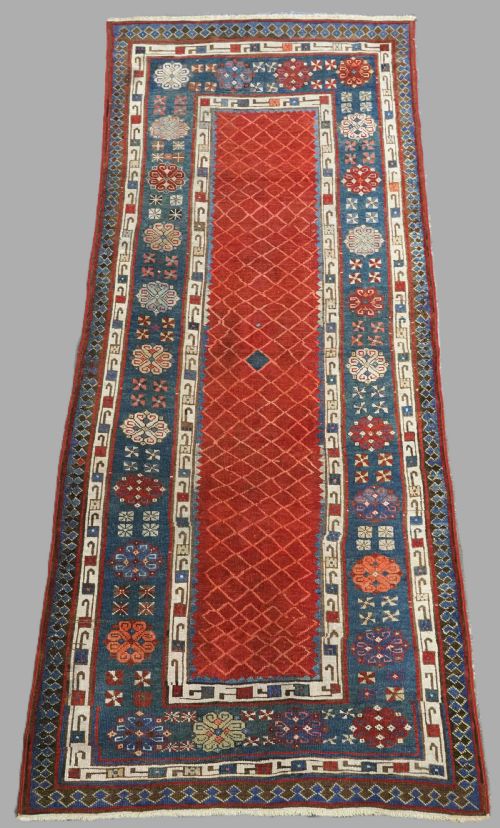
Quality rests upon the density of the knotting and the precision of the geometric or floral layout along the narrow format. Tighter knot structures allow intricate lattice work and Mina Khani motifs to remain crisp and legible.
The integrity of the wool pile and the survival of the original side cordings and end finishes determine the structural condition. Finer examples display balanced proportions where the length supports the rhythm of the central medallions without distortion.
The Oriental Wool Hallway Runner Glossary
- Runner
- A long, narrow carpet format intended for corridors, staircases, and hallways. This shape directs the eye along a passage while protecting floorboards.
- Pile
- The upright yarn surface of a woven floor covering, formed by knotted wool threads. The height and density of this layer dictate the handle and durability.
- Mina Khani
- A traditional repeating geometric pattern composed of connected flowers and rosettes. This design appears frequently in Kurdish and Persian weaving.
- Caucasian
- Pertaining to rugs woven in the region between the Black Sea and the Caspian Sea. These pieces are recognised for bold geometric drawing and striking palettes.
Oriental Wool Hallway Runner: Frequently Asked Questions
How do I choose the right length for my hallway?
Measure the clear floor space of your passage, leaving a uniform margin of exposed wood or tile around the perimeter. Ensure doorways can swing clear of the wool pile without obstruction.
Consider the visual journey down the corridor, selecting a length that anchors the space without overwhelming shorter entryways or landings.
Where should I place an oriental hallway runner?
These narrow formats work best in high-traffic passages, entrance halls, and connecting landings where linear floor coverings soften footfalls. They also function effectively in long kitchen spaces or beside bedroom furniture.
Keep the placement away from persistent dampness to protect the natural wool and cotton foundation fibres over decades of use.
How do I clean and maintain a wool runner?
Vacuum the surface regularly using gentle suction without a rotating beater bar to protect the hand-knotted wool pile. Address spills immediately by blotting with a clean cloth rather than rubbing.
Professional specialist cleaning is recommended periodically to remove embedded grit from the base of the foundation yarns.
How do I distinguish regional styles in runners?
Examine the palette, border arrangement, and geometric motifs to identify the weaving origin. Caucasian examples often feature stark, angular polygons and lattice grids, whilst Persian pieces like Heriz or Kurdish work lean towards stylized floral medallions.
Consult the structural construction, noting how the wool is handled and how the side edges are bound.