


Oriental Wood Figurine
An oriental wood figurine is a carved representation of a human, deity, or animal rooted in Asian traditions.
Oriental Wood Figurine
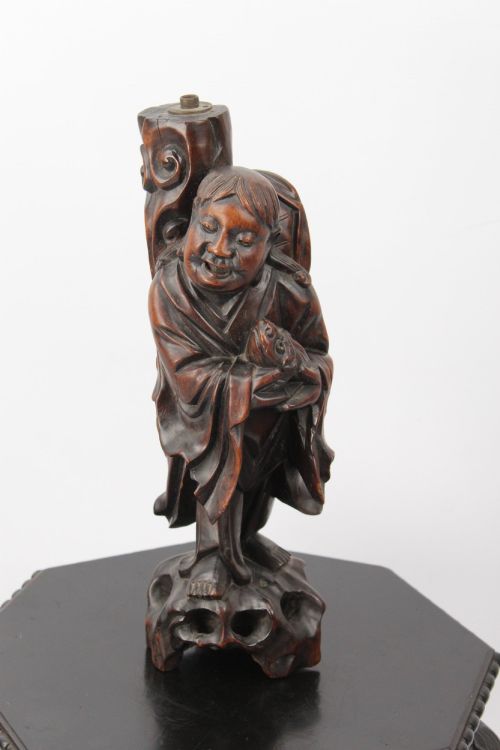
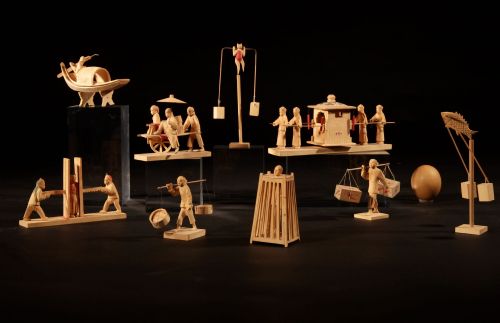
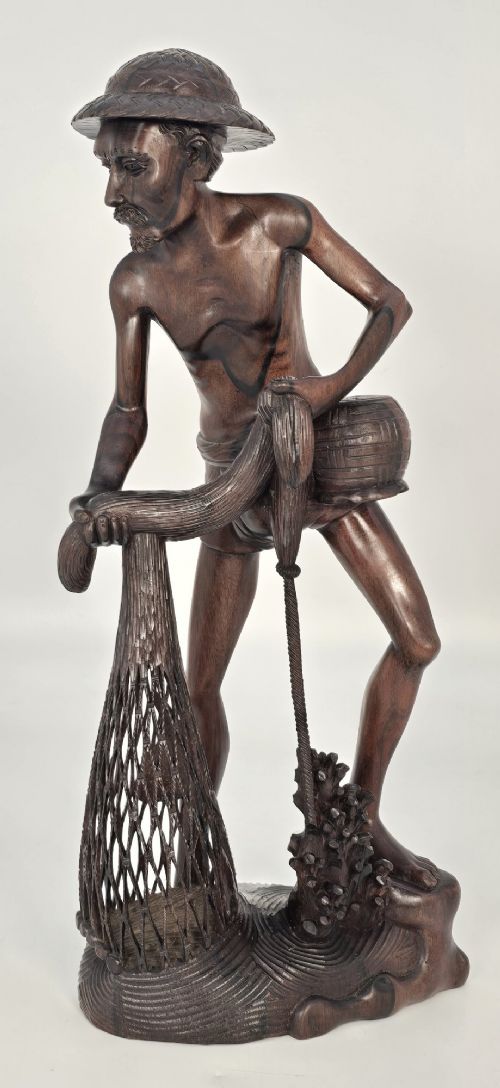
When you search for an oriental wood figurine, you encounter sculptural works spanning the nineteenth and early twentieth centuries. These pieces originate primarily from China and Japan, taking forms such as immortals, fishermen, deities, and animals. The selection relies heavily on hardwood, boxwood, and root wood carvings originating from periods like the Meiji era and Qing dynasty.
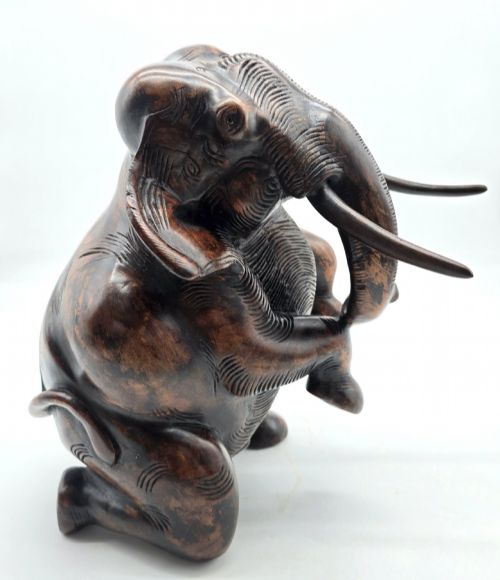
Chinese pieces frequently depict figures from daily life, Daoist immortals, and water buffaloes in dense hardwood. Japanese examples often include boxwood okimono, bamboo deities, and geisha figures carved with distinct regional techniques. Indian Raj period elephant sculptures and Indonesian dancers also appear among the broader selection.
Materials and carving techniques
Carvers utilised dense timbers such as boxwood, bamboo, root wood, and various Asian hardwoods to achieve fine detail. Hardwood provides a heavy base for figures like fishermen and water buffaloes, while boxwood allows for intricate facial expressions and smooth finishes on okimono. Root wood utilises the natural gnarled shapes of the timber to suggest figures or mythical creatures.
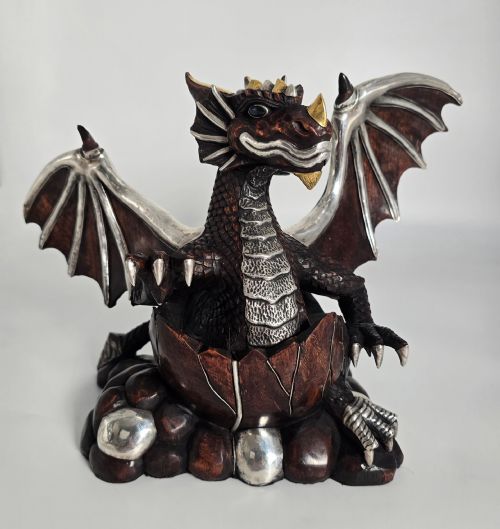
Artisans applied hand-carving methods, ranging from the chunky relief of bamboo deities to the refined surface work of Meiji period figures. Some pieces incorporate mixed metal mounts or painted elements alongside the primary wooden medium.
Represented origins span China, Japan, India, and Indonesia.
Distinctions in craftsmanship
The degree of anatomical precision and depth in the carving distinguishes finer examples from simpler workshop pieces. Master carvers utilised the natural grain of root wood or the dense grain of boxwood to define expression and movement.
Surface finish and patina indicate the age and handling of a carving. A deep, mellow touch through years of handling elevates a piece above dry or stripped surfaces.
The Oriental Wood Figurine Glossary
- Okimono
- A Japanese freestanding ornamental carving designed for display. These objects typically portray human figures, deities, or animals.
- Root wood
- Timber sourced from the root system of a tree, valued by carvers for its gnarled and twisted natural forms. Artisans shape these contours into figures.
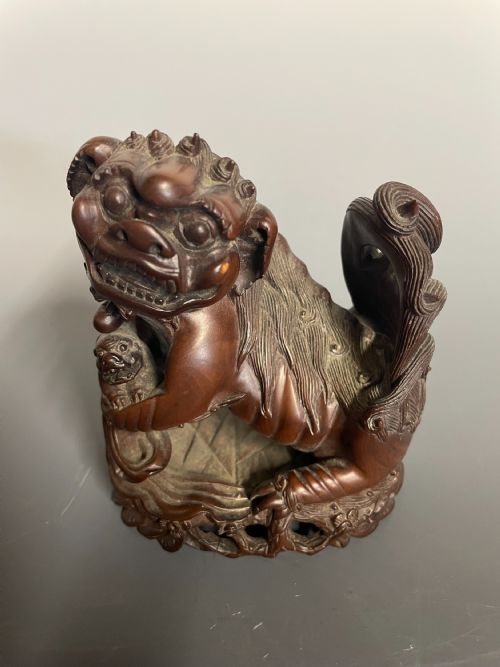
- Foo dog
- A traditional guardian lion depicted in Chinese art. These mythical beasts appear frequently in carved wood and stone.
- Qing dynasty
- The final imperial dynasty of China, spanning from sixteen forty-four to nineteen twelve. Carvings from this era often feature traditional motifs and dense hardwoods.
- Meiji period
- The era of Japanese history lasting from eighteen sixty-eight to nineteen twelve. This period produced highly detailed wood and ivory okimono.
Oriental Wood Figurine: Frequently Asked Questions
What are oriental wood figurines made from?
Carvers utilised boxwood, bamboo, root wood, and various Asian hardwoods to create these sculptures. The choice of material often depended on the region of origin and the intended scale of the piece.
Hardwoods provided durability for larger animal and human figures, while boxwood allowed artisans to execute fine facial details on smaller okimono.
How do I identify a Meiji period carving?
Japanese Meiji period carvings typically exhibit precise hand-carving techniques and polished surfaces on boxwood or bamboo. These pieces often take the form of okimono depicting daily life, deities, or animals.
Documentation or stylistic markers associated with late nineteenth-century Japanese craftsmanship further confirm the period.
Where were root wood carvings made?
Root wood carvings originated primarily in China during the nineteenth century. Artisans worked with gnarled tree roots, incorporating the natural twists of the wood into human or animal forms.
These pieces range from single figures carrying companions to multi-piece collections of naturalistic studies.
How should I care for an antique wood figure?
Keep wooden sculptures away from direct sunlight and sources of heat to prevent the timber from drying out or splitting. Maintaining stable indoor humidity preserves the natural patina and structural integrity of the carving.
Dust the surface gently with a dry, soft cloth rather than applying liquid polishes or chemical cleaners.