



Oriental Tea Set
An oriental tea set brings together porcelain and earthenware forms spanning the eighteenth to the twentieth centuries, prized for display and service.
Oriental Tea Set
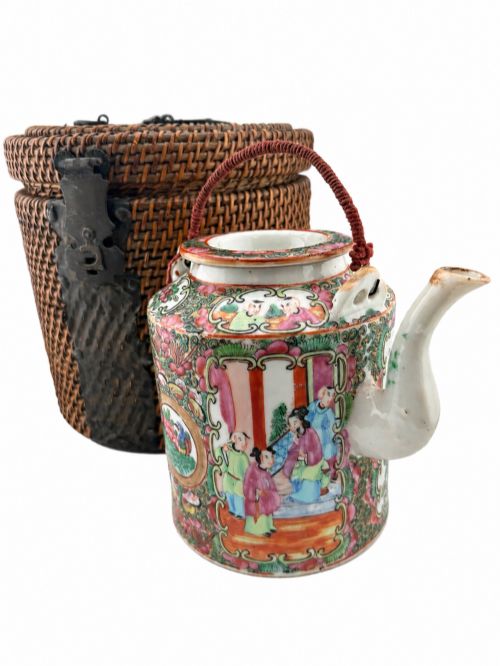
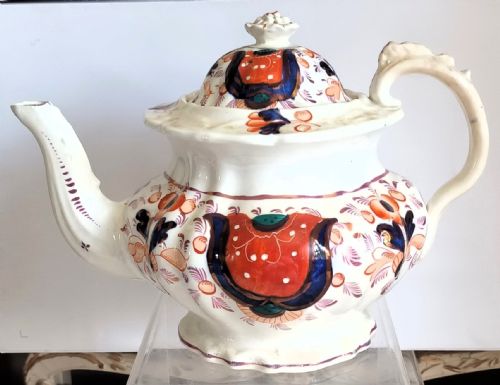
An oriental tea set encompasses services, teapots, cups, bowls and saucers created across periods ranging from the eighteenth century to the 1930s. Buyers encountering these pieces will find Chinese Export porcelain, Japanese Satsuma and Meiji items, alongside British interpretations including Georgian Gaudy Welsh, Worcester and Minton Kakiemon revival designs.
The category also extends to related serving items and decorative vessels created in similar palettes. Pieces from the Qing Dynasty sit alongside Edwardian and later twentieth-century productions, showing diverse cultural influences from British Chinoiserie to authentic Asian export workshops.
Materials and construction
Porcelain and earthenware form the core of these tea wares, shaped through traditional throwing and moulding techniques. Artisans applied enamel, lustre glaze and meticulous gold leaf detailing to surface areas to create intricate patterns such as Thousand Flowers and Thousand Lohan motifs.
Complementary furniture pieces associated with these services utilise carved hardwood and lacquered wood. Joinery methods reflect period cabinetmaking standards, supporting nests of tables and side tables designed to display the tea wares.
Oriental Tea Set Retail Price Guide 2026
Typical asking prices for oriental tea set among the pieces listed under this phrase on Sellingantiques today, from the lower quarter to the upper quarter. They describe what is for sale here now, not the wider market.
Ewes and stem cups make an unexpected appearance alongside conventional teapots and saucers.
Assessing quality and execution
Quality in these ceramics rests upon the precision of the hand-painted enamel work and the crispness of moulded porcelain forms. Superior examples display finely controlled brushwork in gold leaf and vibrant polychrome pigments that remain crisp and well-defined across every cup and saucer.
For wooden components, quality appears in the depth of the carved detailing and the structural integrity of the hardwood. Pieces that retain their original matched sets and uncompromised surface decoration command greater appreciation among collectors.
Minton·Worcester
The Oriental Tea Set Glossary
- Qing Dynasty
- The final imperial dynasty of China, lasting from 1644 until 1912. Ceramics from this period frequently feature detailed export porcelain and refined enamel decoration.
- Kakiemon
- A style of Japanese porcelain decoration featuring asymmetrical designs and a distinct palette of colours. British factories like Worcester and Minton reproduced these vibrant patterns during the nineteenth century.
- Gilt
- A thin layer of gold applied to the surface of porcelain or metal vessels. This technique highlights rims, handles and decorative motifs on tea services.
- Satsuma ware
- A type of Japanese pottery traditionally characterised by a ivory-coloured crackle glaze. Pieces are typically decorated with elaborate polychrome enamels and gold leaf.
- Chinoiserie
- European artistic style reflecting Chinese motifs and artistic traditions, popular during the Georgian and Victorian periods. It appears on both decorative tea wares and lacquered furniture.
Oriental Tea Set: Frequently Asked Questions
How do I date an oriental tea set?
Dating relies on examining the ceramic body marks, glaze characteristics and stylistic traits associated with specific periods like the Qianlong reign or the Meiji era. Reference points include manufacturing techniques and historical trade periods.
Changes in enamel saturation and decorative motifs also help distinguish eighteenth-century export porcelain from later nineteenth-century revivals and twentieth-century services.
Are these tea sets safe for daily use?
Most antique tea sets are acquired for display, collection and occasional ceremonial use rather than robust everyday service. The delicate nature of historic enamels and gold leaf requires careful handling.
Hand washing in tepid water without abrasive detergents helps preserve the fragile surface decoration on porcelain and earthenware components.
What is Chinese Export porcelain?
Chinese Export porcelain refers to ceramic wares manufactured in China specifically for the Western market from the sixteenth through the nineteenth centuries. These pieces combine traditional Chinese shapes and techniques with European decorative preferences.
Many examples feature specific coats of arms, Western commissioned scenes or adaptations of European botanical illustrations.
How should I display a tea set?
Tea sets are traditionally housed in dedicated cabinets, on sideboards or arranged upon complementary hardwood nests of tables. Adequate spacing allows the individual cups, saucers and teapots to be seen clearly.
Positioning pieces away from direct sunlight protects vulnerable enamel colours and gold leaf highlights from fading over time.