
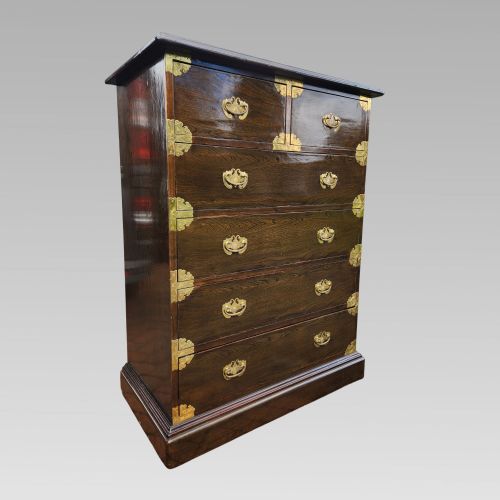


Oriental Style Chest
An oriental style chest brings layered lacquer, carved wood and portable storage into a room.
Oriental Style Chest
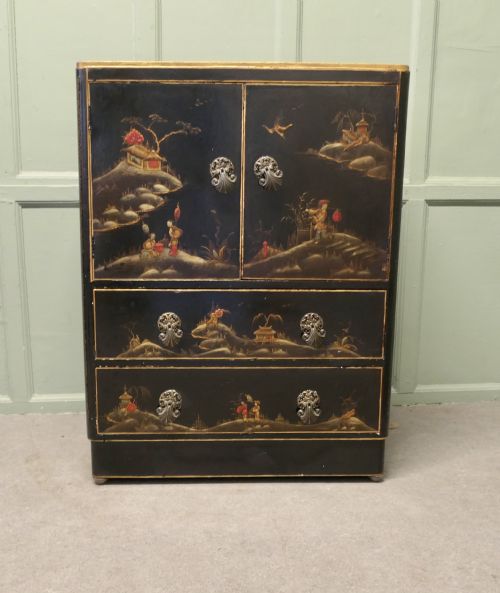
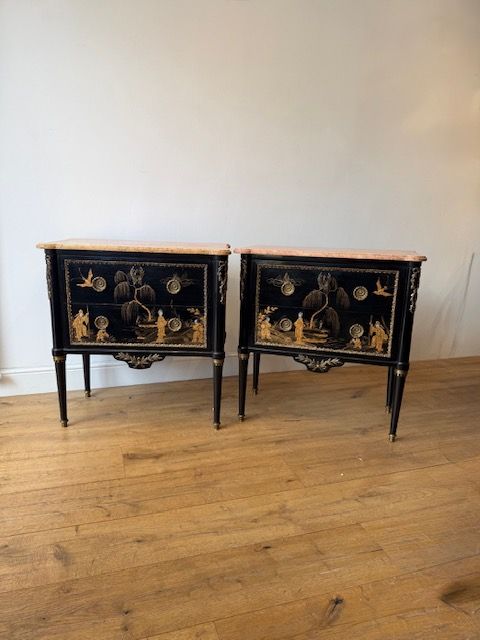
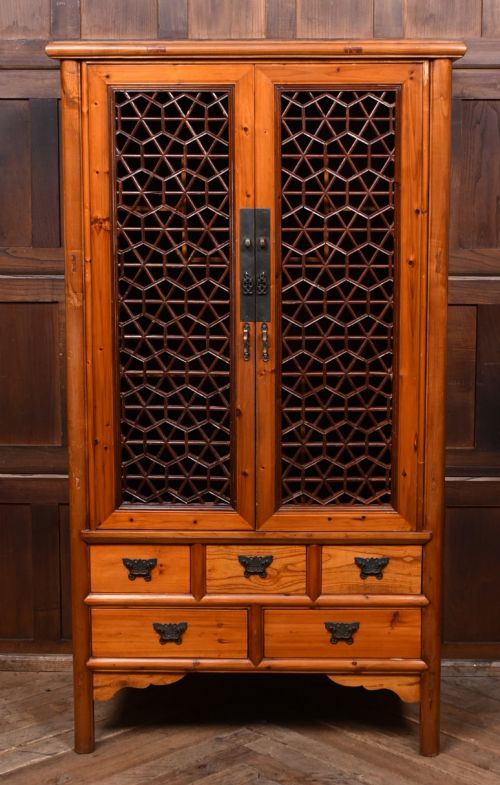
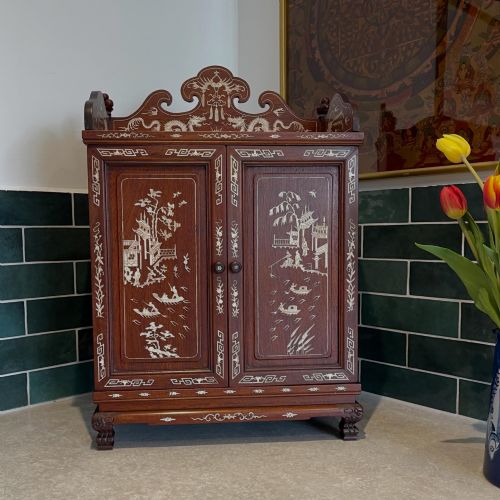
An oriental style chest encompasses storage forms ranging from compact table cabinets and apothecary drawers to large trade trunks and bedroom suites. These pieces draw on traditions spanning Chinese export work, Korean elm bandaji designs, Japanese Meiji pieces and European Chinoiserie interpretations.
The versions most commonly met on this page date from the nineteenth and early twentieth centuries, including Edwardian and Regency adaptations alongside earlier eighteenth-century examples. Buyers encounter everything from floor-standing cabinets on carved stands to low bedside chests and travelling campaign boxes.
How they were made
Joinery techniques support both functional travelling cases and elaborate display cabinets. Surfaces are finished with painted details, penwork or carved relief work that define the character of each piece.
Listings feature woods such as elm, walnut and camphor, combined with brass, iron and lacquer finishes.
What varies in quality
Quality rests in the execution of the surface decoration, whether through meticulous hand-painted Chinoiserie scenes, deep wood carving or the crispness of brass and iron mounts. The integrity of the lacquered finish and the preservation of original paint layers significantly influence the character of a piece.
Proportion and structural balance also separate standard utilitarian items from finer cabinet work, such as pieces raised on carved stands or fitted with detailed interior compartments.
Mercier Frères
The Oriental Style Chest Glossary
- Chinoiserie
- European decorative style reflecting Chinese artistic influences, popular in furniture and lacquerwork.
- Bandaji
- Traditional Korean storage chest featuring prominent metal strapwork and hinges.
- Japanning
- European imitation of Japanese and Chinese lacquer finishes using heat-dried varnish layers.
- Penwork
- Decorative technique using fine ink lines to create intricate surface patterns on wood.
- Apothecary chest
- Small compartmentalised cabinet originally designed for storing herbs, medicines or dry goods.
Oriental Style Chest: Frequently Asked Questions
What defines an oriental style chest?
These pieces include storage chests, cabinets and trunks that incorporate Asian design motifs or European Chinoiserie adaptations. They utilise materials like lacquer, elm and camphor wood.
Forms range from portable travel boxes to large floor-standing cabinets on stands, reflecting diverse periods from the eighteenth century to the early twentieth century.
How were these chests used historically?
Storage chests and trunks served to transport and protect valuable goods, clothing and documents during travel. Smaller table cabinets and apothecary chests held precious items, medicines or personal collections.
Larger cabinets and commodes functioned as primary furniture in bedrooms and reception rooms for domestic storage and display.
How do I care for a lacquered chest?
Keep lacquered and painted wooden surfaces away from direct sunlight and extreme temperature fluctuations to prevent cracking. Dust gently with a dry, soft cloth without using harsh cleaning chemicals.
Maintain stable indoor humidity levels to preserve the underlying wood and prevent stress on the decorative finish.
How can I tell the period of a chest?
Dating relies on examining construction methods, wood types, hardware and the style of decoration. Eighteenth-century pieces often show distinct hand-tool marks and specific Japanning techniques, while Edwardian and later twentieth-century examples display different manufacturing standards.
Comparing the decorative motifs against known historical styles like Regency penwork or Meiji craftsmanship helps narrow the era of production.