



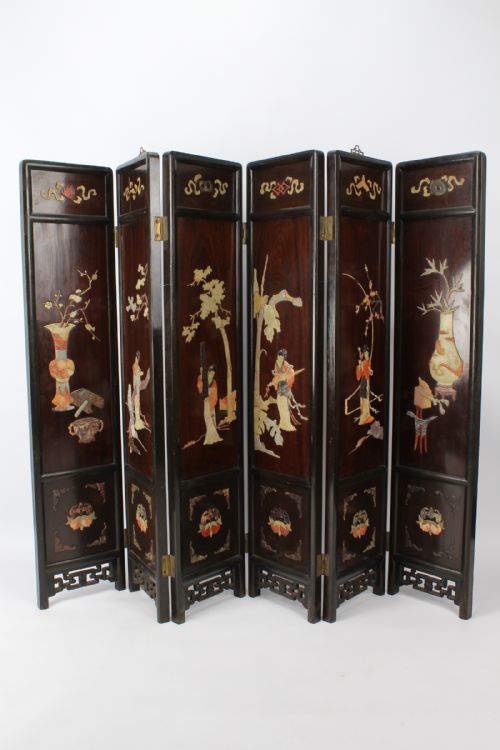


Oriental Room Screen
An oriental room screen divides a space with decorative panels of lacquer, silk, or carved hardwood.
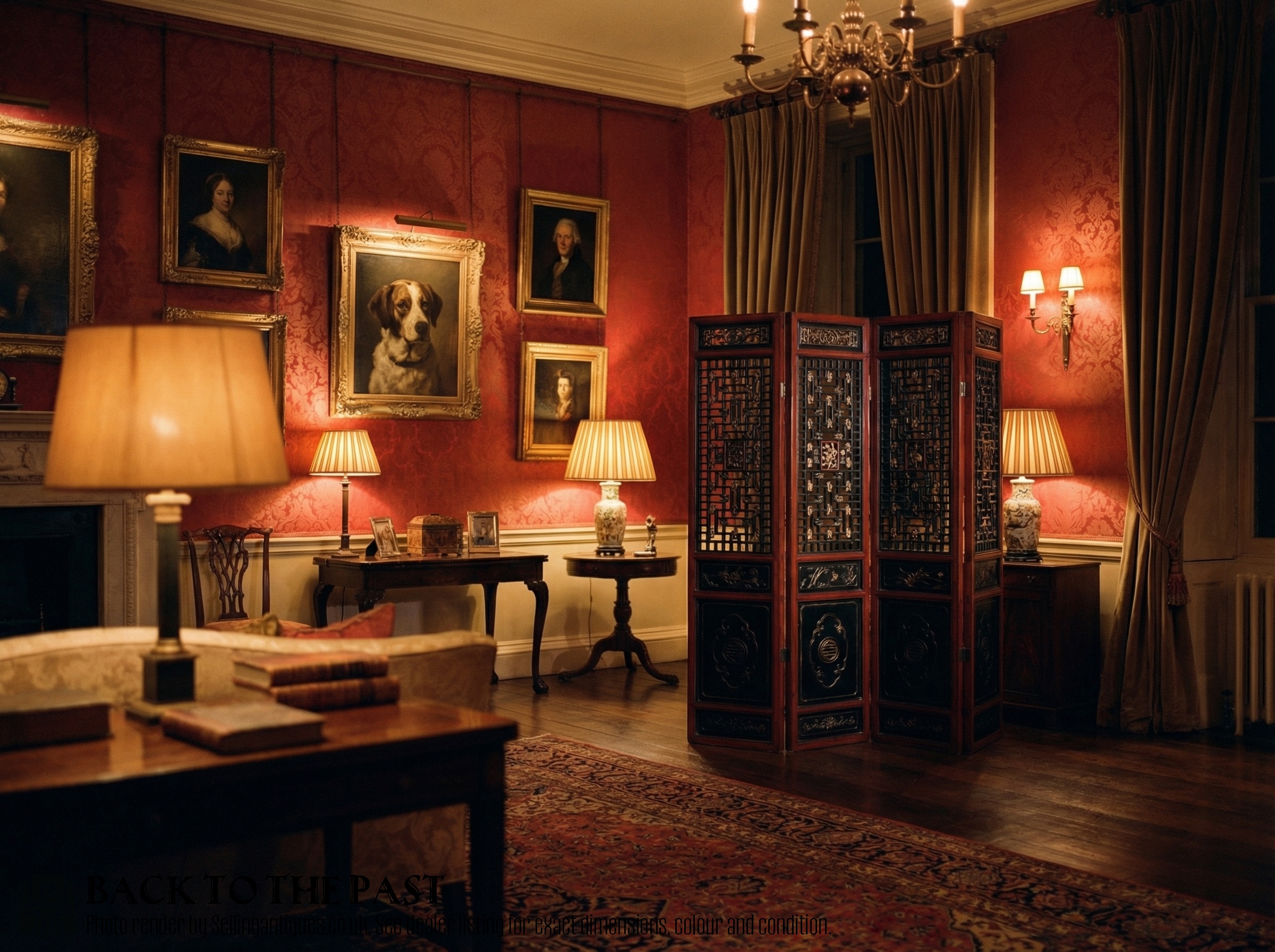
Oriental Room Screen
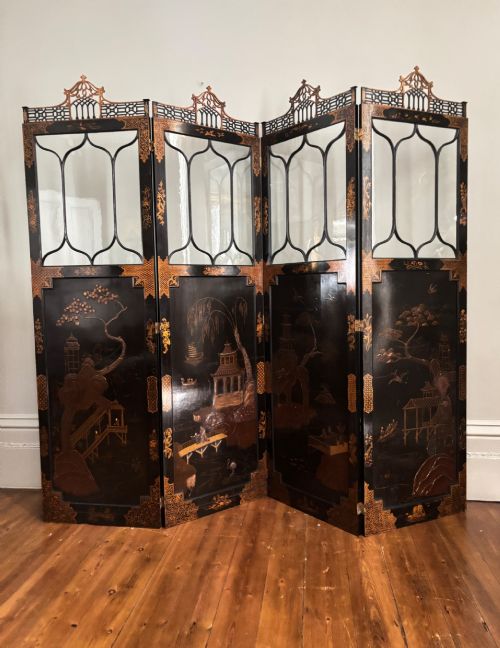
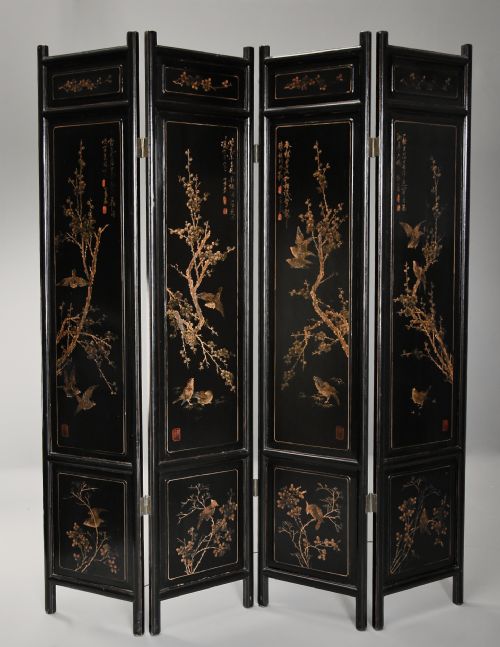
An oriental room screen offers a practical way to divide living spaces while introducing rich texture and pattern to an interior. When searching for an oriental room screen, buyers encounter folding panels, table screens, and dressing screens spanning multiple centuries. The selection ranges from multi-fold black lacquer dividers to freestanding silk panels.
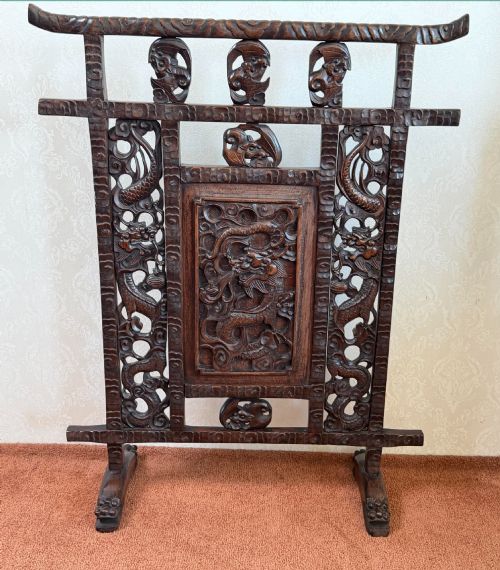
Pieces originating from China and Japan dominate the selection, alongside items executed in British Chinoiserie and Anglo-Indian styles. Many examples utilise traditional folding hinges to connect multiple leaves, allowing the screen to span wide areas or fold compactly. Smaller table screens and fire screens also appear, serving decorative purposes on a more intimate scale.
Materials and Construction
Makers built these screens using solid woods and hardwoods as a structural foundation for decorative surfaces. Lacquer and gold leaf application required patient layers of resin and pigment, often built up over months to achieve a deep, glossy finish. Artisans then polished and incised the lacquer to reveal contrasting colours beneath.
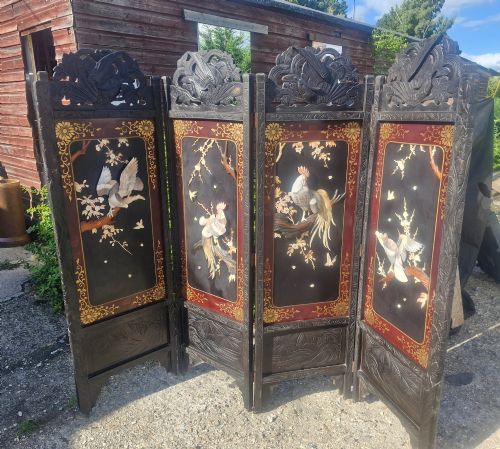
Surface ornamentation involved intricate techniques such as deep carving into wood or bone, hand-painting on silk and cotton textiles, and mounting hardstone or mother-of-pearl inlays. Brass hardware frequently secured the folding leaves, while fretwork panels introduced lighter geometric patterns alongside heavy lacquer work.
One unexpected Victorian entry served as a photographic prop studio background before finding new life in a domestic interior.
Factors of Quality
Quality rests primarily on the depth and precision of the surface decoration, whether carved, painted, or inlaid. Superior examples display crisp detail in bone figures, sharp lines in incised coromandel lacquer, and finely balanced wooden frames that stand true without sagging.
The choice of materials also dictates standard, with dense hardwoods and heavy silk textiles marking finer craftsmanship over lighter composite substitutes. Original hardware and undisturbed finish layers preserve the integrity of the piece more effectively than later restorations.
WILLIAM MORRIS
The Oriental Room Screen Glossary
- Coromandel lacquer
- A Chinese incised lacquer technique where layers of dark lacquer are carved away to reveal coloured grounds beneath. The recesses are then painted or filled.
- Chinoiserie
- European artistic style reflecting Chinese motifs and decorative techniques, popular during the eighteenth and nineteenth centuries.
- Table screen
- A small decorative screen supported by a fixed stand, designed for placement on a desk or table rather than the floor.
- Fretwork
- Ornamental perforated woodwork featuring geometric or openwork patterns, commonly found on panel tops and hinges.
Oriental Room Screen: Frequently Asked Questions
How do I use a room screen at home?
Screens divide large open rooms into smaller zones, conceal storage areas, or act as decorative wall backdrops behind furniture.
Position them carefully away from direct heat sources to protect wood and lacquer surfaces from warping or cracking.
How do I clean lacquered screens?
Dust surfaces gently using a soft, dry microfibre cloth without applying water or chemical polishes.
Harsh cleaning solutions damage delicate gold leaf, silk panels, and antique lacquer finishes.
Are these screens heavy to move?
Larger multi-fold hardwood and lacquer screens carry considerable weight due to their dense construction and multiple panels.
Lift them with two people to avoid straining the folding hinges and wooden joints.
How do I date an antique screen?
Examine the construction methods of the wooden frame, the type of hinges used, and the style of decoration.
Comparing the lacquer techniques and wear patterns against documented periods helps establish an approximate decade of origin.