






Oriental Porcelain Wall Decor
Oriental porcelain wall decor brings vibrant colour and intricate patterns to an interior, drawing the eye instantly.
Oriental Porcelain Wall Decor
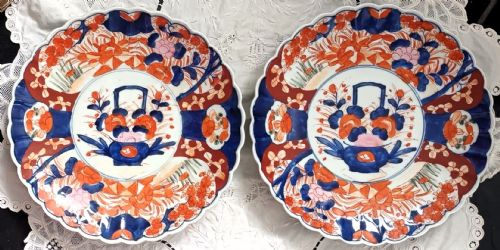
Oriental porcelain wall decor encompasses decorative plates, chargers, and dishes designed to be hung or displayed on walls. These pieces mostly originate from Japan, spanning the Meiji period, the Edo period, and the late 19th and early 20th centuries.
Forms include large chargers, decorative plates, and dishes that reflect traditional Japanese ceramic artistry from around 1890 to 1920. These items offer a historical aesthetic suited to both traditional and eclectic wall displays.
How they were made
These items are constructed from porcelain and decorated using cobalt underglaze combined with enamel and gilt highlights. Artisans shaped the clay into standard plates as well as specific forms like shell-shaped dishes before firing.
The characteristic Imari palette relies on cobalt blue underglaze paired with iron red enamel and gold gilt details over the white porcelain body. This multi-stage firing and painting technique produces the rich surface patterns seen on Meiji period ceramics.
Oriental Porcelain Wall Decor Retail Price Guide 2026
Typical asking prices for oriental porcelain wall decor among the pieces listed under this phrase on Sellingantiques today, from the lower quarter to the upper quarter. They describe what is for sale here now, not the wider market.
Listings feature items from the 19th century through to 1920, predominantly showcasing Japanese Imari styles in porcelain.
What varies in quality
Quality in these pieces is dictated by the crispness of the cobalt underglaze painting and the richness of the enamel and gilt application. Finer examples display precise detailing in motifs such as exotic birds and intricate borders.
The overall condition of the glaze and the complexity of the form, such as unusual shell-shaped platters or large chargers, separate standard production items from more desirable collectors' pieces.
The Oriental Porcelain Wall Decor Glossary
- Imari
- A style of Japanese porcelain decorated in underglaze blue, iron red, and gilt. It originated in the town of Arita and became immensely popular for export.
- Meiji
- A period in Japanese history spanning from 1868 to 1912. Ceramics from this era often exhibit great technical skill and detailed ornamentation.
- Charger
- A large decorative plate used historically for display rather than dining. These form the focal point of many wall collections.
- Cobalt Underglaze
- A blue pigment applied to the raw porcelain body before glazing and firing. It remains stable at high temperatures, creating deep blue designs.
Oriental Porcelain Wall Decor: Frequently Asked Questions
How do I hang wall plates safely?
Wall plates require specialised spring-loaded brass hangers that grip the rim securely without causing damage to the porcelain body. Ensure the wall fixing is anchored properly to support the weight of larger chargers.
For pairs or collections, measure the spacing carefully before installation to create a balanced arrangement that highlights the matching enamel patterns.
What is Imari porcelain?
Imari is a traditional style of Japanese export porcelain named after the port from which it was shipped to Europe. It is easily recognised by its distinct palette of cobalt blue and iron red, often enhanced with gold.
This aesthetic developed during the Edo period and continued into the Meiji era, combining bold geometric borders with naturalistic motifs like birds and floral arrangements.
How do I date Meiji period pieces?
Dating Meiji ceramics involves examining the style of the brushwork, the composition of the porcelain body, and any associated kiln marks or signatures. Pieces from this era often reflect a blend of traditional techniques and designs tailored for Western export markets.
Comparing the vibrancy of the enamel and the quality of the cobalt underglaze against known examples helps narrow down the production decade between 1868 and 1912.
Can I mix different plate sizes together?
Combining different sizes, such as pairing a large charger with smaller decorative dishes, adds visual depth to a wall display. Keeping a common stylistic element like the Imari palette ensures the arrangement looks cohesive.
Symmetrical layouts suit formal rooms, while asymmetrical groupings work well for showcasing collections of varying plate shapes.