




Oriental Lidded Jars
Oriental lidded jars bring painted porcelain and intricate cloisonné into a room, offering both decorative presence and container utility.
Oriental Lidded Jars
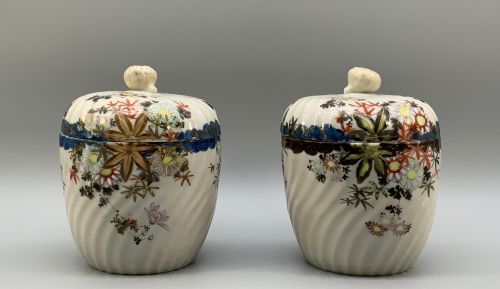
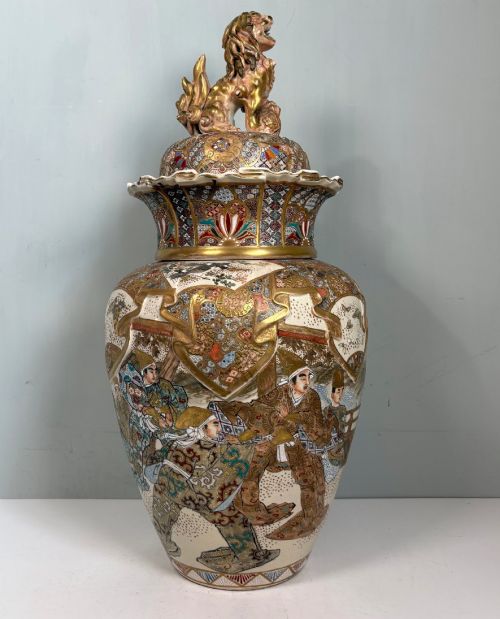
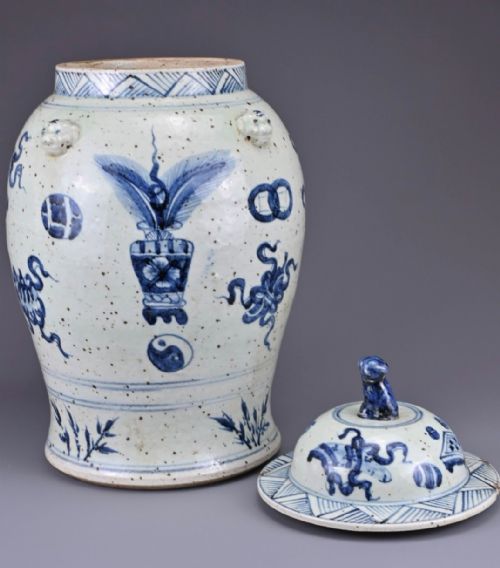
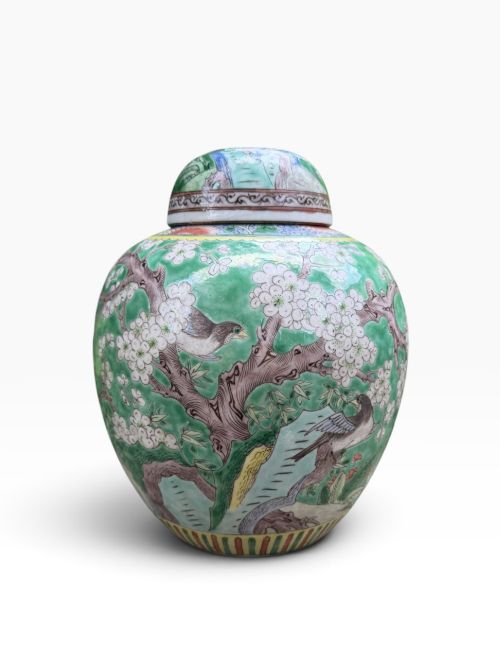
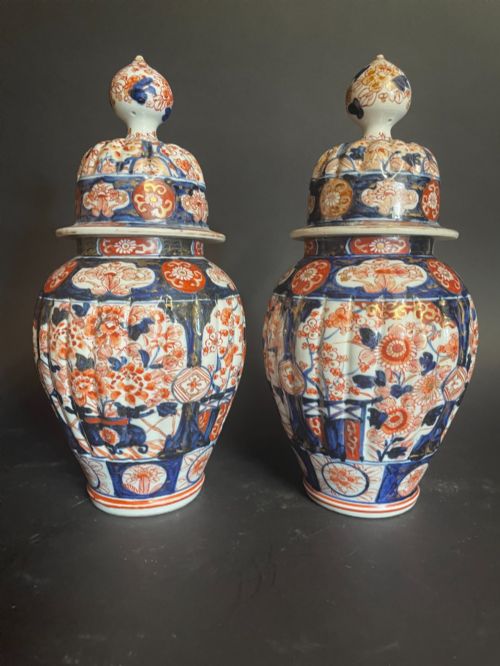
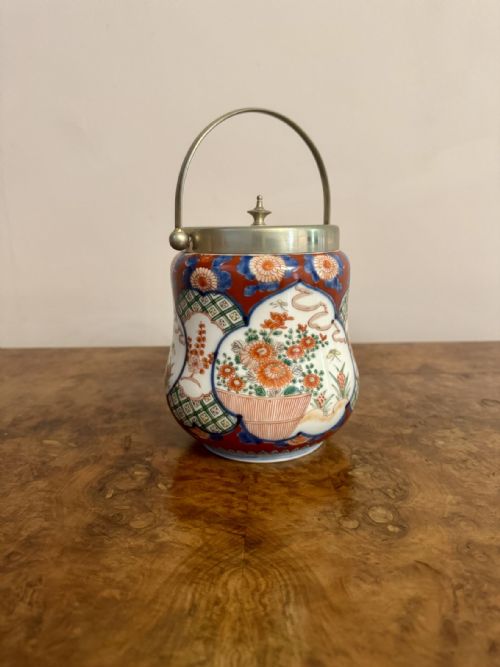
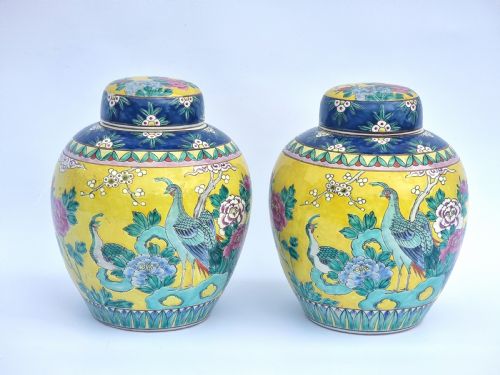
Oriental lidded jars encompass covered porcelain vessels, ginger jars, and cloisonné pots originating from Chinese and Japanese traditions. These pieces span the nineteenth century, the Edwardian era, and early twentieth-century periods. The version most commonly met on this page is the Japanese Imari lidded vase or ginger jar decorated in traditional palettes.
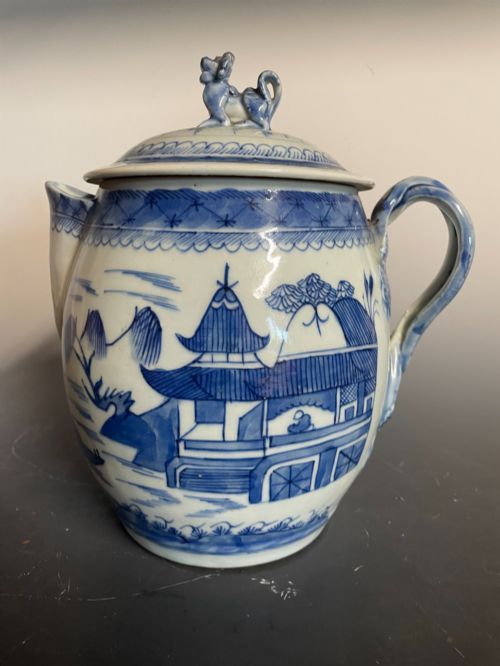
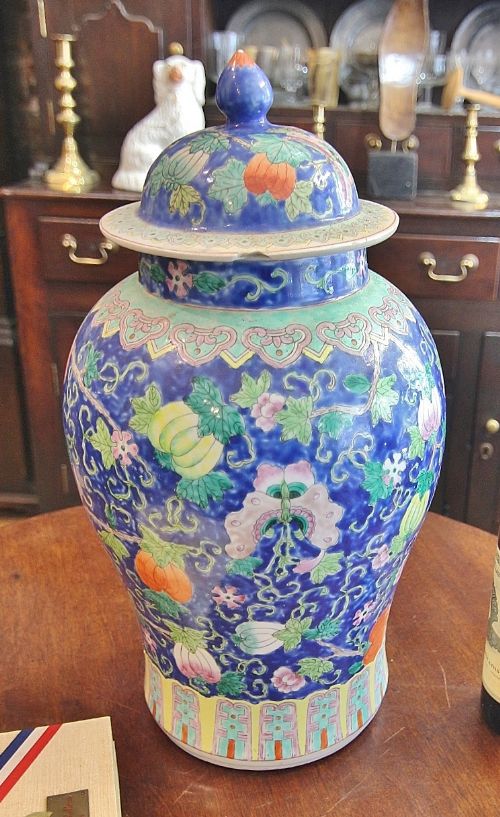
Makers and workshops across Asia and Europe produced these covered vessels in styles including Qing Dynasty blue and white, Satsuma, Kutani, and Arita Imari. Forms range from baluster vases with matching covers to gourd pots and ginger jars. Buyers encounter both authentic nineteenth-century Asian exports and European revival pieces created in similar styles.
How they were made
Potters shaped these oriental lidded jars from porcelain, earthenware, and copper bases, applying detailed hand-painted designs using glaze, enamel, and occasionally gold leaf or gilding. Cloisonné examples utilise wirework soldered to metal bodies to create cells which are subsequently filled with coloured enamel pastes before firing and polishing.
Firing techniques in Chinese and Japanese kilns achieved the vibrant underglaze blue, iron red, and multi-coloured enamel palettes seen on Imari and Satsuma wares. Covers were thrown and glazed alongside their corresponding bodies to ensure a consistent fit and continuous decorative motif from base to lid.
Listings feature items from the nineteenth century, the Edwardian era, and the twentieth century, utilising porcelain, enamel, and gold leaf.
What varies in quality
The sophistication of the hand painting and the precision of the enamel work distinguish finer oriental lidded jars from standard production pieces. Examples displaying delicate brushwork, rich gilding, and well-balanced proportions demonstrate superior craftsmanship from their respective periods.
The weight and purity of the porcelain body, alongside the crispness of the underglaze cobalt or polychrome enamels, indicate the standard of the workshop. Furthermore, pieces retaining their original, undamaged matching covers hold greater integrity than those paired together later.
Shozan
The Oriental Lidded Jars Glossary
- Imari
- A style of Japanese porcelain featuring a distinct palette of underglaze blue, iron red, and gilt highlights. It originated in Arita and became widely exported to Europe.
- Ginger jar
- A ceramic vessel characterised by its bulbous body and a fitted domed lid, originally utilised to store and transport spices.
- Cloisonné
- An enamelwork technique where metal wire is soldered to a base to form compartments, which are then filled with paste and fired.
- Satsuma
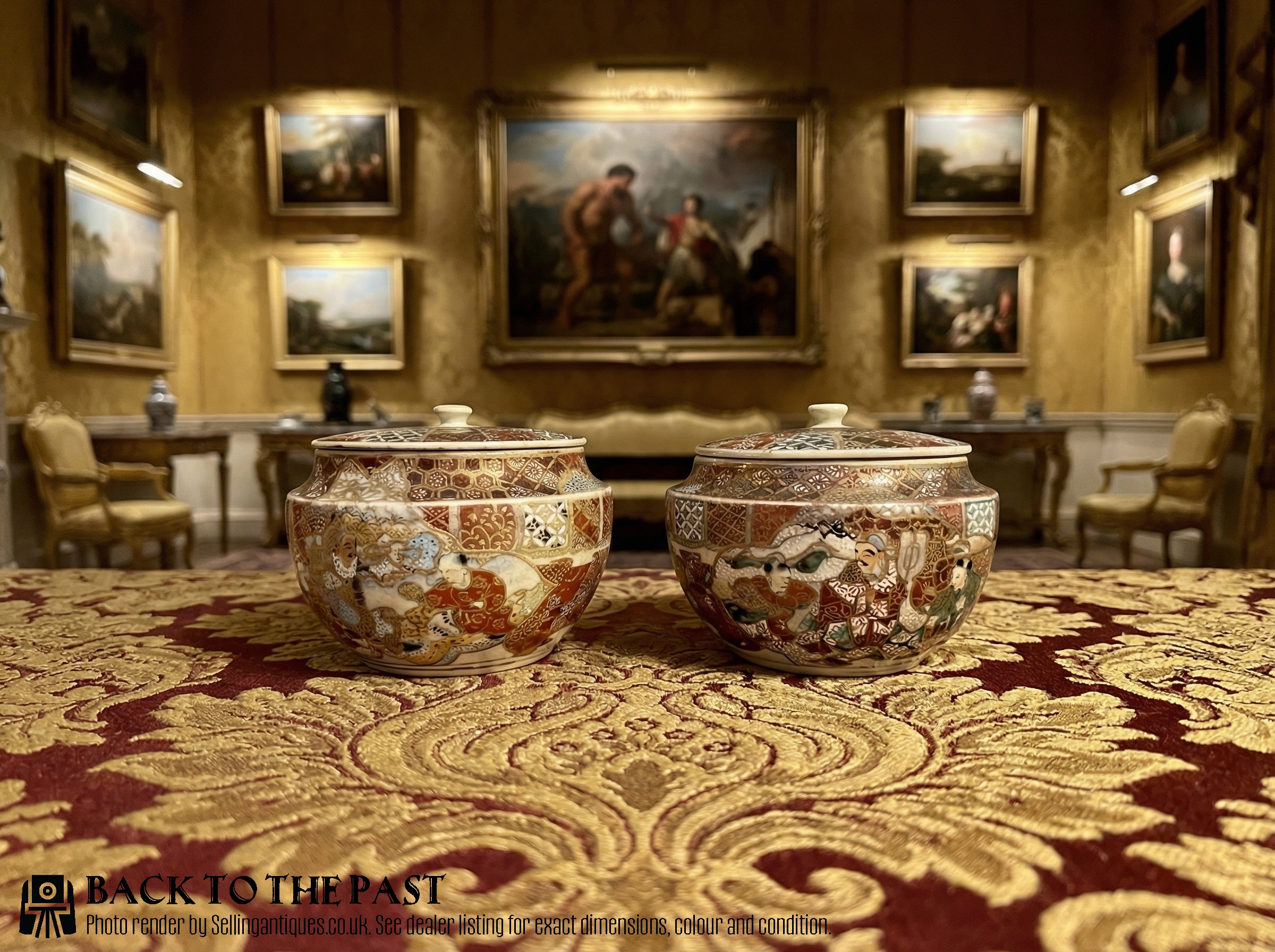
- A type of earthenware from Japan typically characterised by a crackled ivory glaze decorated with polychrome enamels and extensive gilding.
- Baluster
- An architectural shape featuring a rounded lower body tapering upward to a narrow neck, commonly utilised for large vases and jars.
Oriental Lidded Jars: Frequently Asked Questions
How do I date a lidded jar?
Dating relies on examining the ceramic body, the style of the hand-painted decoration, and any associated factory marks or signatures. Nineteenth-century pieces often exhibit specific regional palettes and finishing techniques distinct from later twentieth-century productions.
Comparing the glaze characteristics and wear patterns against established historical styles helps narrow down the period of manufacture.
Are ginger jars and lidded vases the same?
While both feature fitted lids, traditional ginger jars possess a more rounded, ovoid profile designed originally for storage. Lidded vases often feature taller, more slender baluster forms intended primarily for decorative display.
Both categories fall under the broader heading of oriental lidded jars due to their shared form and covered design.
How do I care for antique porcelain jars?
Maintain these pieces by dusting them gently with a soft, dry cloth to protect fragile enamel and gilt details. Avoid using liquid cleaners or abrasive materials that might damage the surface glaze or exposed earthenware.
Display the jars away from direct sunlight and areas subject to sudden temperature fluctuations to preserve the integrity of the ceramic and enamel.