



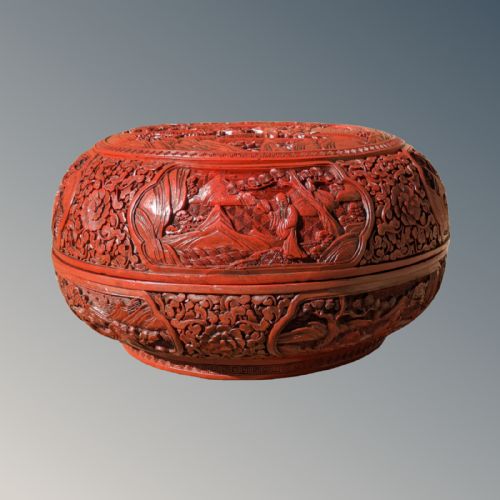
Oriental Lacquered Box
An oriental lacquered box brings rich texture and intricate detail to any room, offering both decorative presence and practical storage.
Oriental Lacquered Box
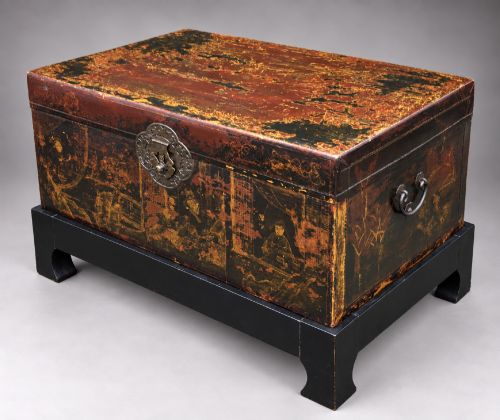
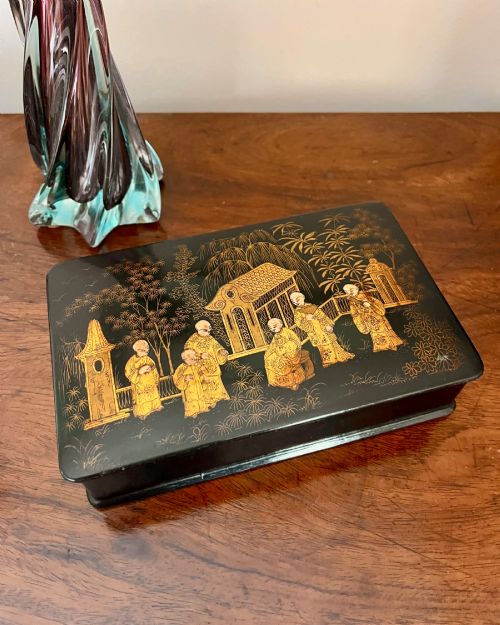
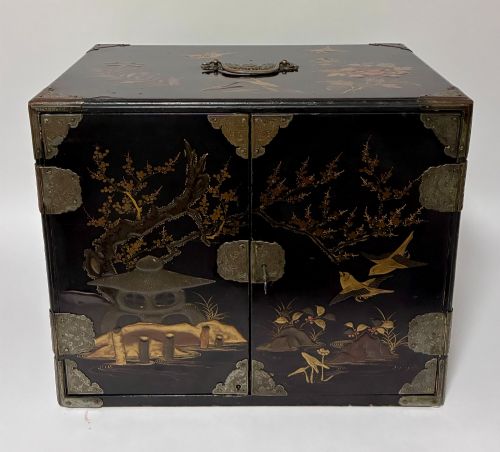
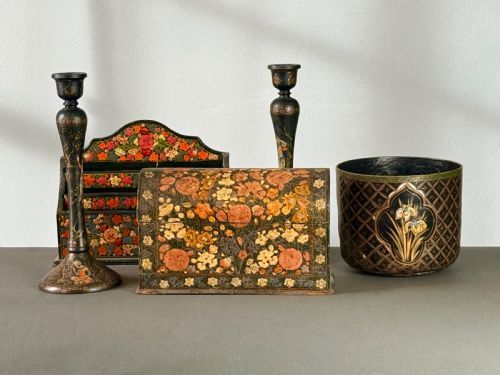
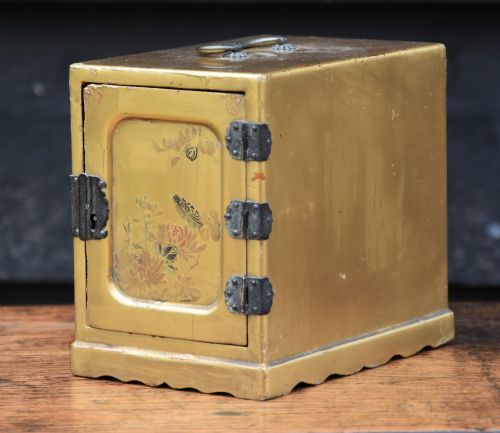
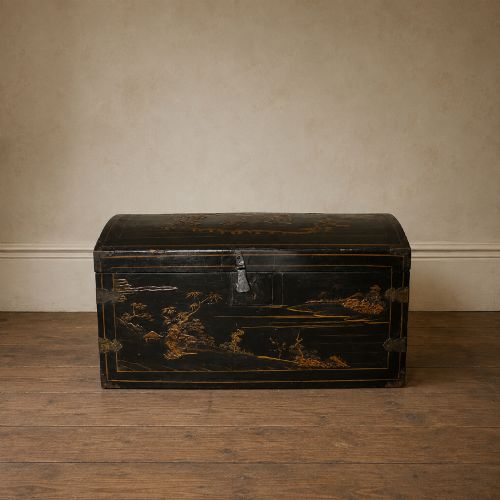
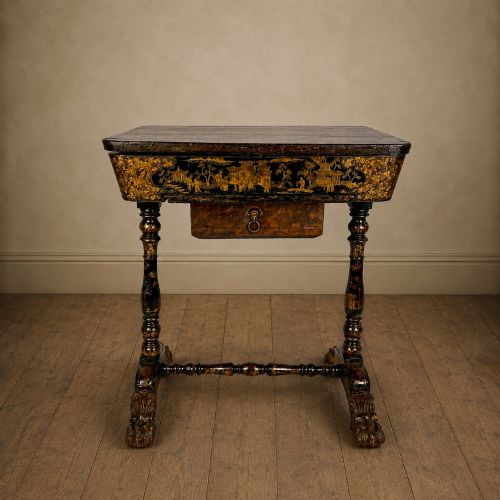
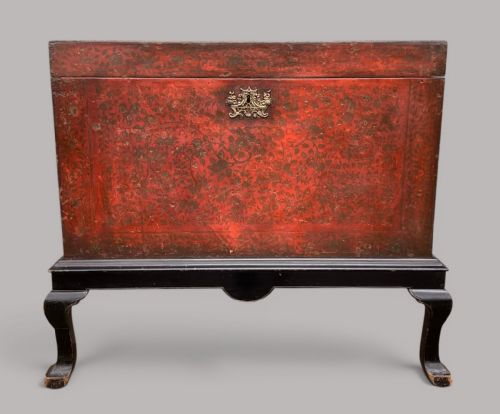
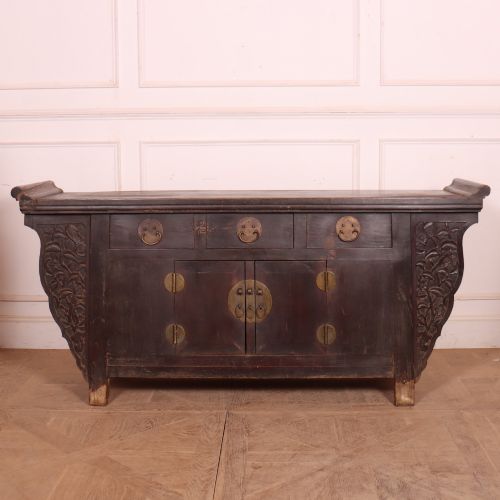
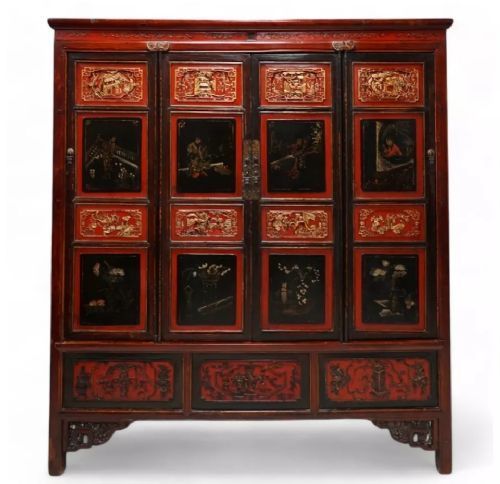
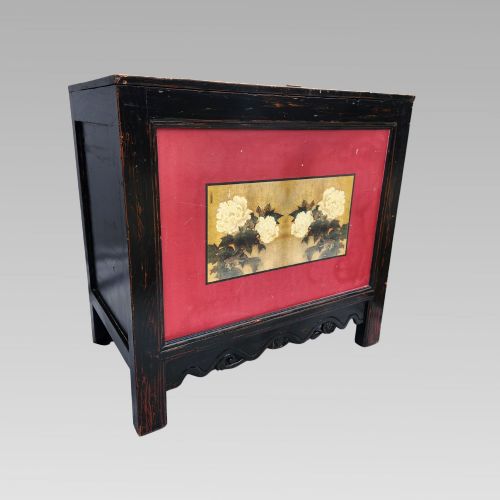
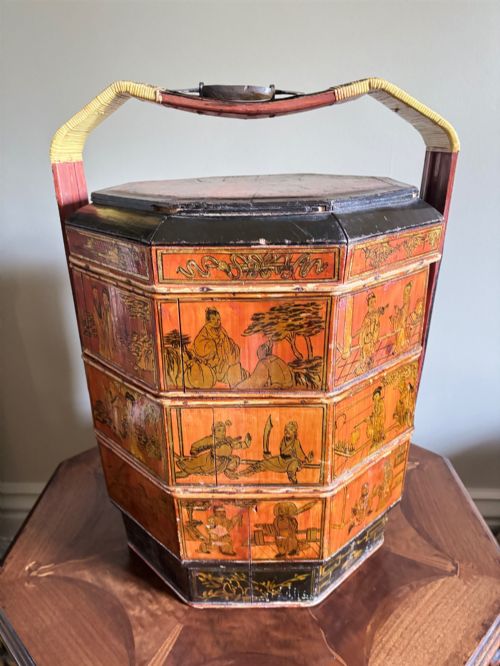
An oriental lacquered box encompasses a diverse group of containers ranging from small tabletop jewellery cases and tea caddies to large trunks, chests, and sewing tables. The examples met on this page span the eighteenth, nineteenth, and early twentieth centuries, reflecting long-standing traditions of craftsmanship across China, Japan, and India.
Buyers encounter distinct regional forms, including Chinese export chests with gilt decoration, Japanese Meiji period table cabinets and inro, Kashmiri lidded pots, and Anglo-Indian trunks on stands. Materials frequently include lacquered wood, camphor wood, papier-mâché, and bamboo, often enriched with gold leaf or painted floral designs.
Functional pieces such as dowry baskets, writing boxes, and marriage cabinets sit alongside smaller keepsake cases and trinket boxes. Each object demonstrates the practical application of durable lacquer finishes to wood foundations, designed to store valuables, documents, and personal items.
How they were made
The construction of an oriental lacquered box relies on a stable wooden foundation, commonly utilising woods such as camphor, elm, or kiri. Artisans applied successive coats of natural lacquer sap to create a hard, protective surface that resists moisture and wear.
Decoration often involved the application of gold leaf, gilt details, and hand-painted motifs depicting floral scenes or traditional landscapes. Metal elements such as brass hinges, corner plates, and catches frequently reinforced the structural joints and corners of larger chests and trunks.
Keepers of tiny Victorian trinket boxes sometimes discovered hidden compartments designed for secret love letters.
What varies in quality
The distinction between tiers of quality rests upon the depth of the lacquer finish and the precision of the surface decoration. Superior examples display smooth, even applications of lacquer with finely detailed gilt work or carved relief, whereas simpler pieces show more utilitarian finishing.
The complexity of the form and the condition of the underlying woodwork also determine worth. Well-preserved joinery, intact brass hardware, and original painted or gilded details indicate higher workshop standards during production.
The Oriental Lacquered Box Glossary
- Lacquer
- A durable glossy finish derived from tree sap, applied in multiple layers to wooden objects. It provides both protection and a deep, lustrous surface.
- Kodansu
- A traditional Japanese small tabletop cabinet featuring multiple internal drawers. These miniature chests were used for storing documents, seals, and personal valuables.
- Chinoiserie
- A European artistic style reflecting Chinese motifs and techniques. It appeared frequently on decorative boxes and furniture produced during the eighteenth and nineteenth centuries.
- Inro
- A traditional Japanese multi-tiered case suspended from a sash, used for carrying small items. They are closely associated with the Edo and Meiji periods.
- Cinnabar
- A red mineral pigment utilised in traditional carving. In lacquerwork, multiple layers of red cinnabar lacquer allowed artisans to carve intricate low-relief designs.
Oriental Lacquered Box: Frequently Asked Questions
What were oriental lacquered boxes used for?
These containers served varied practical purposes in domestic and commercial life, ranging from the storage of tea leaves and documents to the safekeeping of jewellery and textiles. Larger trunks and chests held garments and household goods, while smaller caddies and kodansu kept personal valuables secure.
Many forms adapted to specific cultural requirements, such as dowry baskets for marriage ceremonies and writing boxes for correspondence. Their durable lacquer surfaces protected contents from humidity and insects during daily use or travel.
How do I care for an antique lacquered box?
Maintenance requires gentle handling and stable environmental conditions, keeping pieces away from direct sunlight, radiators, and rapid humidity shifts. Dusting should occur regularly with a soft, dry, lint-free cloth without employing chemical polishes or modern cleaning sprays.
If the surface requires light cleaning, a barely damp cloth followed immediately by dry buffing is generally sufficient. Protecting the lacquer from sharp impacts prevents chipping in the hard resin finish.
How can I tell Japanese lacquer from Chinese export pieces?
Distinguishing between regional origins involves examining the decorative motifs, wood choices, and specific construction methods employed by the workshops. Japanese pieces frequently feature Meiji period aesthetics, such as fine gold hiramaki-e or distinct cabinet forms like the tansu and kodansu.
Chinese export pieces often display rich black or red lacquer combined with bold gilt decoration depicting traditional figures, pavilions, and floral arrangements. Examining the underlying wood, such as camphor or elm, also provides clues regarding provenance.
What is a Chinese tea caddy?
A tea caddy is a specialised container designed to store dry tea leaves safely before brewing. Early examples often featured secure lidded compartments and fitted interiors to preserve the aroma and quality of valuable imported tea.
These boxes frequently utilised lacquer, wood, or metal linings, reflecting the high status of tea consumption during the eighteenth and nineteenth centuries. Their portable size made them suitable for tabletop use in reception rooms.