







Oriental Lacquer Accent Table
These pieces bring oriental lacquer accent table designs into a room, offering striking painted surfaces and rich wood forms that anchor an interior scheme.
Oriental Lacquer Accent Table
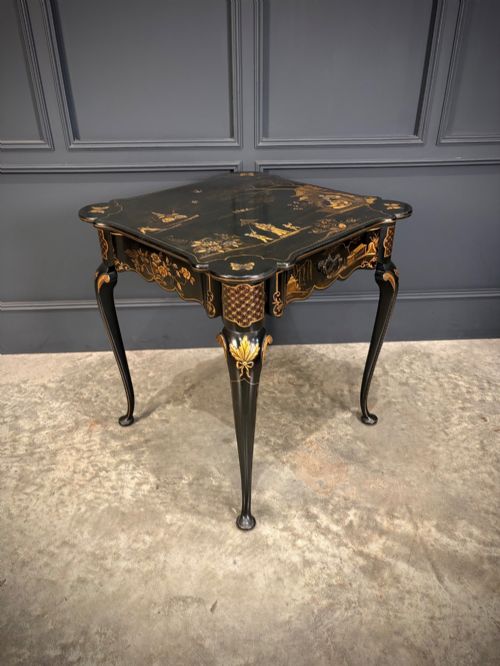
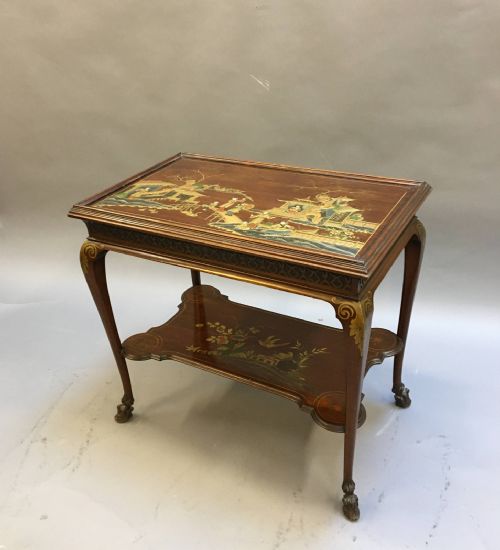
An oriental lacquer accent table serves as a decorative surface for a living space, spanning forms such as side tables, coffee tables, nests of tables, and occasional tables. These items appear across nineteenth-century, Victorian, Edwardian, and early twentieth-century periods, capturing styles like Chinoiserie, Kashmiri, Anglo-Indian, and Qing Dynasty origins.
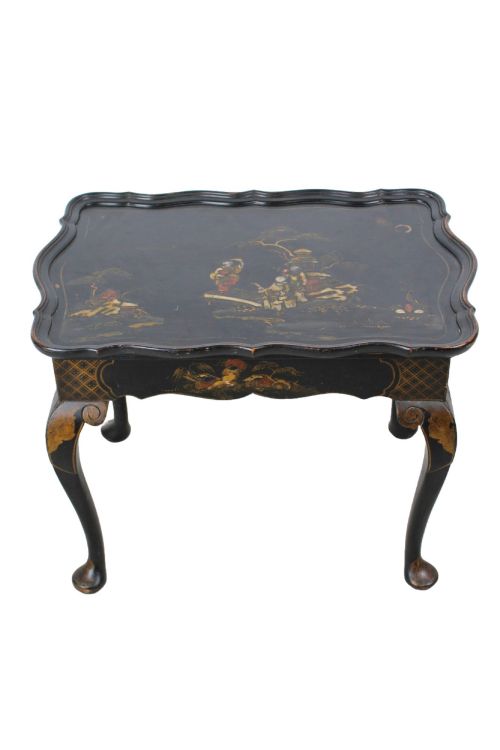
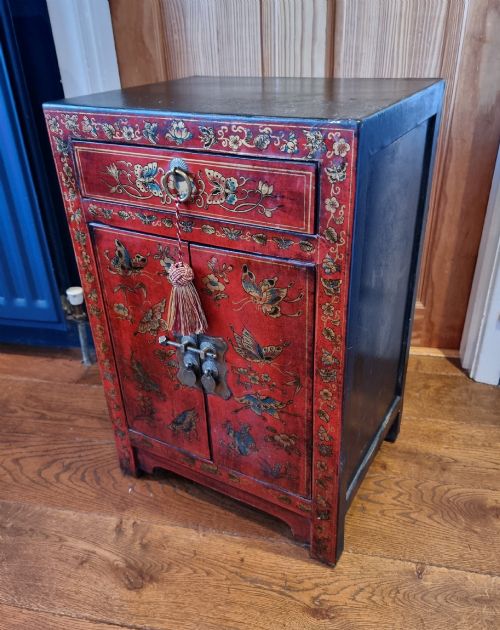
Buyers meet variations ranging from black and red lacquered occasional stands to tray top coffee tables and intricate nests of four tables. The selection encompasses English Japanned pieces alongside imported Chinese and Indian examples, uniting diverse regional traditions under distinct painted and lacquered finishes.
Materials and construction
The construction relies on wood bases such as elm or bamboo, coated with multiple layers of lacquer to achieve deep black, red, or green grounds. Artisans then applied gilt, gold leaf, and hand-painted details to create complex pictorial scenes.
Additional elements incorporate brass fixtures, marble tops, quartz inserts, and fabric components. These combined materials reflect both traditional Asian craftsmanship and European adaptation during the Victorian and Edwardian eras.
Oriental Lacquer Accent Table Retail Price Guide 2026
Typical asking prices for oriental lacquer accent table among the pieces listed under this phrase on Sellingantiques today, from the lower quarter to the upper quarter. They describe what is for sale here now, not the wider market.
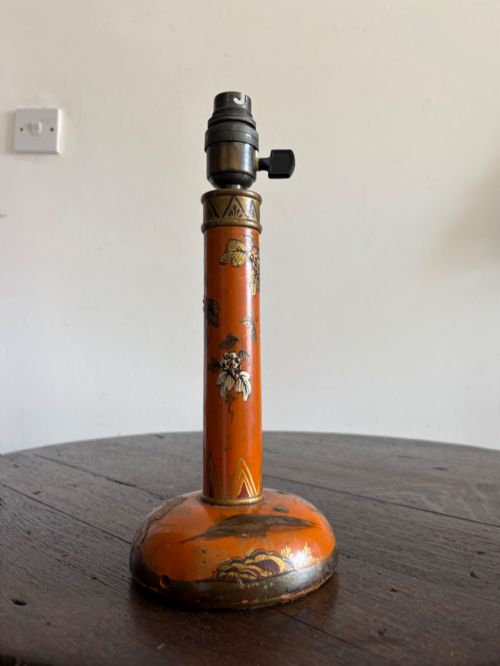
Early twentieth-century makers even applied vibrant mandarin orange paint to brighten up gloomy corners.
Distinctions in quality
Quality rests upon the depth of the lacquering process and the precision of the hand-painted or gilt ornamentation. Pieces displaying crisp, layered pictorial detail and substantial wood frames command greater regard than simpler utilitarian items.
The integrity of the surface finish and the harmonious integration of decorative panels, such as Boulle-work or inlaid stone, separate standard production from superior examples.
The Oriental Lacquer Accent Table Glossary
- Chinoiserie
- European decorative style inspired by Chinese artistic traditions, prevalent in furniture decoration during the eighteenth and nineteenth centuries.
- Japanned
- European imitation of East Asian lacquerwork, created by applying layers of varnish and hardening them through heat.
- Kashmiri
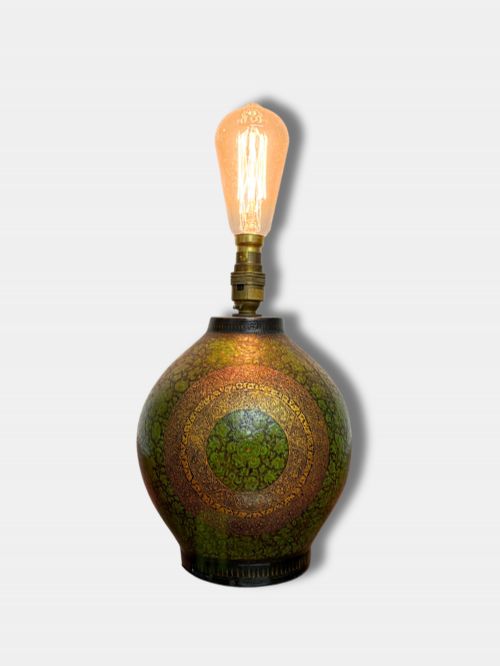
- Pertaining to decorative work from Kashmir, characterised by intricate, colourful painted floral and botanical patterns on wood.
- Nest of tables
- A set of graduated tables designed to slide one beneath another for compact storage when not in use.
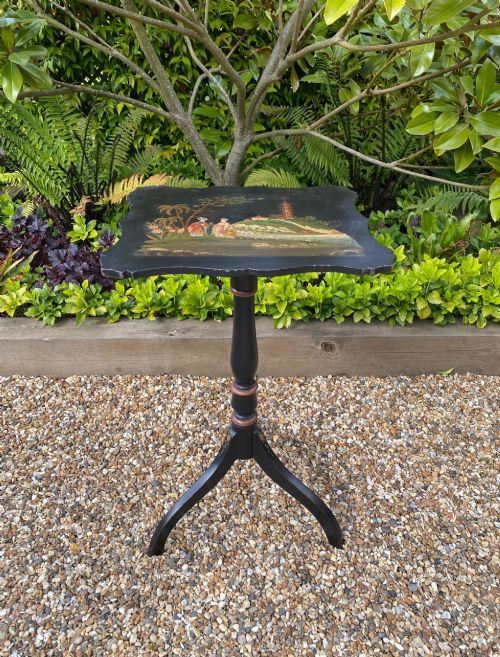
- Tripod table
- A small freestanding table supported by a central pillar resting on three feet.
Oriental Lacquer Accent Table: Frequently Asked Questions
How do I use an oriental lacquer accent table?
These tables function well beside a sofa or armchair as a convenient surface for lamps, books, or small decorative objects. Their compact footprints also suit hallways and corners where space is limited.
Because the surfaces feature decorative lacquer, placing coasters beneath drinks helps protect the finish from moisture and heat marks during everyday use.
How do I tell Victorian Chinoiserie from earlier pieces?
Victorian interpretations often combine European cabinetmaking forms with British or continental interpretations of East Asian motifs. They frequently utilise ebonised wood or heavier structural framing alongside distinct painted details.
Earlier examples tend to reflect specific export traditions or direct adaptations, showing different structural joinery and distinct lacquer depth.
What is the difference between Kashmiri and Chinese styles?
Kashmiri pieces are typically distinguished by dense, multicoloured hand-painted floral motifs and botanical patterns across the wood surface. They often employ bright tones like green and gold leaf.
Chinese styles frequently display narrative scenes, figures, pavilions, or landscapes rendered in gold or red lacquer against a dark black ground.
How should I care for a lacquered surface?
Maintenance requires gentle dusting with a soft, dry cloth to prevent abrasive particles from scratching the lacquer. Avoid chemical polishes, silicone sprays, and direct sunlight, which can fade the gilt and paint over time.
Keeping the table away from direct heat sources prevents the wood substrate from expanding and causing the lacquer layers to craze or crack.