


Oriental Jewellery Chest
An oriental jewellery chest is a compact, highly decorative storage piece designed for valuables, appearing here across Chinese, Japanese, and Ottoman traditions.
Oriental Jewellery Chest
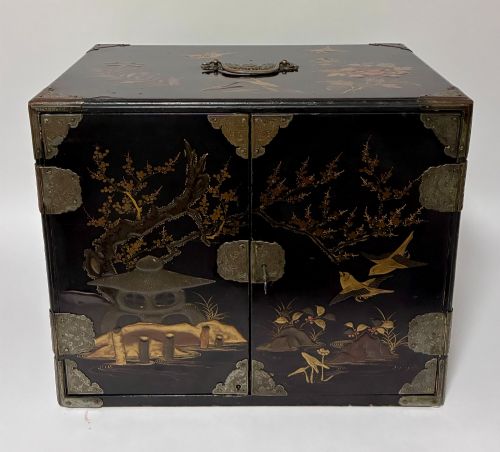
An oriental jewellery chest is a portable cabinet or box designed to hold small valuables, taking forms such as the Japanese kodansu, Chinese table cabinets, and travel trunks. These pieces serve both a utilitarian function for safekeeping and a decorative role with elaborate surface ornament.
The versions most frequently met on this page span the nineteenth century through the early twentieth century, encompassing Qing Dynasty, Meiji period, and Victorian accession dates. They range from small tabletop specimen cases to larger travelling boxes with multiple internal compartments.
Makers utilised various regional forms, including swing-out cleric's cases, campaign boxes, and miniature floor cabinets. Each variation reflects the specific craft traditions of its origin, from East Asian lacquer workshops to Ottoman metalwork.
How they were made
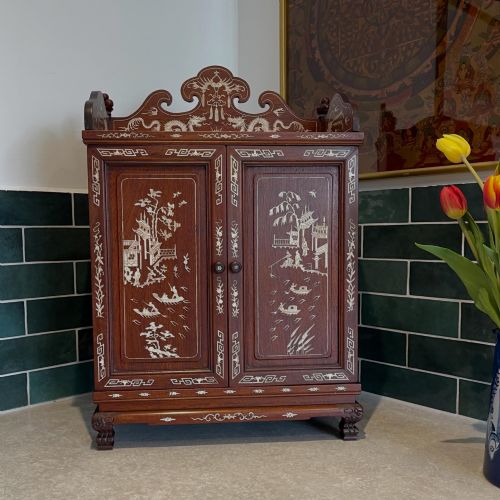
These pieces are constructed from dense timbers such as rosewood, hardwood, East African teak, and eastern elm, providing a stable foundation for decorative treatments. Joinery methods suit the portable nature of the objects, often incorporating brass binding or corner reinforcement for travel.
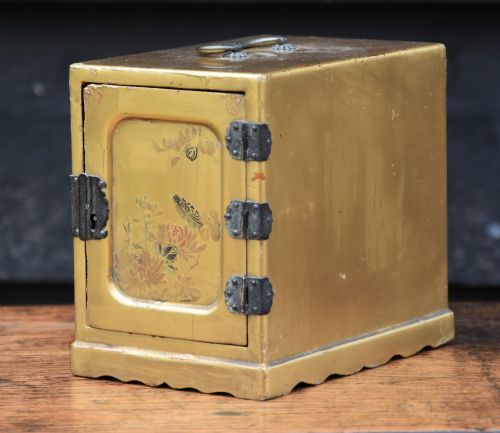
Surfaces frequently feature black or gilt lacquer applied in multiple layers, sometimes enhanced with gold leaf or inlaid mother of pearl. Metalwork elements include cast brass mounts, bronze animal decoration, and hinges that secure drop-front panels or lid compartments.
Some travelling boxes feature clever swing-out compartments that pivot away like secret doors to guard tiny treasures.
What varies in quality
Quality separates through the precision of the joinery and the depth of the decorative programme, such as hand-carved relief or meticulous mother of pearl inlay. Superior examples display balanced composition in their gilded motifs and tight tolerances in moving drawers and swing-out panels.
Materials dictate the upper tier of the range, where dense hardwoods and refined lacquer work require exceptional technical skill from the maker. Lesser pieces rely on simpler surface decoration and standard metal fittings rather than integrated bronze or heavy brass mounts.
The Oriental Jewellery Chest Glossary
- Kodansu
- A traditional Japanese small cabinet featuring multiple internal drawers, often finished in lacquer.
- Hongmu
- A category of dense, dark Chinese hardwood frequently utilised for fine furniture and decorative boxes.
- Campaign case
- A portable chest or box constructed with reinforced brass corners and flush handles for travel.
- Qing Dynasty
- The final imperial dynasty of China, spanning the seventeenth to the early twentieth century and defining a distinct aesthetic in decorative arts.
- Meiji Period
- An era in Japanese history associated with intricate metalwork, lacquer, and decorative arts produced for export.
Oriental Jewellery Chest: Frequently Asked Questions
What is an oriental jewellery chest?
An oriental jewellery chest is a small decorative container, cabinet, or box originating from Asian or Ottoman workshops. They were designed to securely store precious items and personal valuables.
These pieces utilise traditional materials like hardwood, lacquer, and brass hardware. Their forms range from tabletop cabinets to portable travelling cases.
How were these chests used?
Owners utilised these chests for organising rings, necklaces, and small documents in domestic settings or during travel. Internal compartments and swing-out drawers kept items separated and secure.
Many examples function as stationary tabletop display pieces while others feature robust construction for transportation.
How do I date a Chinese lacquer cabinet?
Dating relies on examining the construction timber, the style of the brass hardware, and the wear patterns within the lacquer layers. Nineteenth-century examples often show hand-cut joinery and dense hardwood carcasses.
Later pieces from the early twentieth century may incorporate different synthetic binders or standardised metal fittings. Comparing the decorative motifs to known period styles helps narrow the origin.
What is a Japanese kodansu?
A kodansu is a miniature Japanese chest of drawers traditionally used for storing personal items, documents, and jewellery. They are celebrated for their intricate lacquer finishes and fine metal mounts.
Makers frequently decorated these small cabinets with gold leaf landscapes or floral motifs. They represent a specialised subset of tabletop storage from the Meiji and Taisho periods.