


Gold Lacquer Jewellery Box
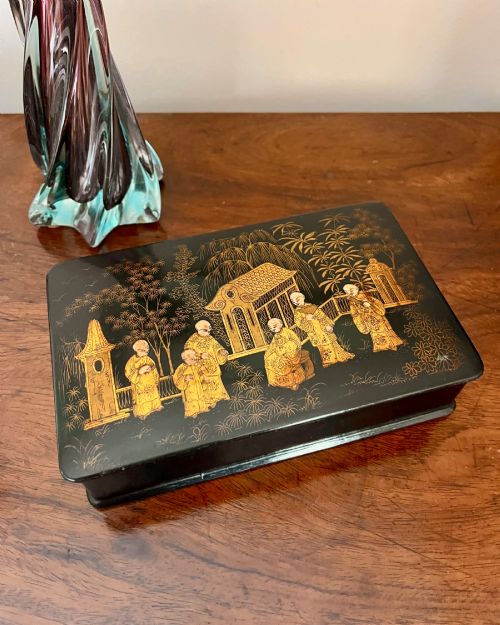
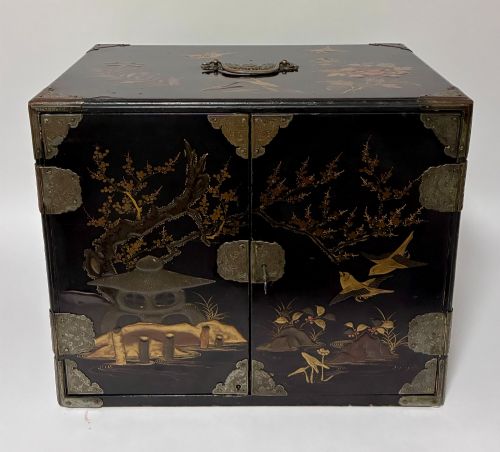
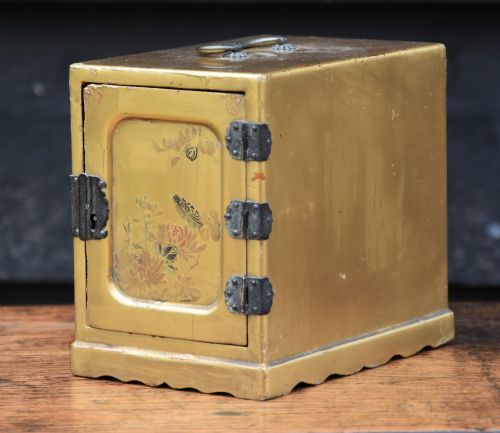
A gold lacquer jewellery box brings together intricate gilt decoration and oriental craftsmanship, offering a striking storage piece for small treasures.

Gold Lacquer Jewellery Box
A gold lacquer jewellery box represents a refined group of decorative containers designed to hold trinkets and keepsakes, appearing frequently in forms such as table cabinets and small keepsake cases. These items span various periods including the Georgian, Regency, Victorian, and early twentieth-century eras.
The objects seen here encompass distinct stylistic traditions, notably Japanese Meiji and Taisho period pieces alongside Chinese Export and European Chinoiserie interpretations. Buyers encounter everything from compact trinket boxes to larger table cabinets with gilded decoration.
Originating from diverse cultural workshops, these pieces often utilise traditional lacquer techniques combined with wood or papier-mâché foundations. Each container reflects the aesthetic preferences of its period, whether through Japanese lacquerwork or English penwork.
Materials and construction methods
Construction relies heavily on timber, wood, and papier-mâché forming the structural core of each box or cabinet. Artisans then apply layers of lacquer to create a smooth, durable surface.
Decoration is achieved through the application of gold leaf, egg tempera, and intricate painting techniques. Metal fittings, brass accents, and penwork further embellish the exterior surfaces of these decorative boxes.
Listings feature items from the Georgian, Regency, Victorian, Meiji, and Taisho periods, utilising lacquer, wood, gold leaf, and papier-mâché.
Evaluating the standard of execution
Quality reveals itself in the precision of the surface finish and the complexity of the gilded ornamentation. Pieces featuring detailed Japanese Meiji period lacquerwork or fine Chinese Export decoration display superior artistic depth.
The handling of materials such as gold leaf and egg tempera distinguishes masterwork cabinets from standard decorative boxes. Structural integrity in the timber or papier-mâché core also dictates the overall standard.
The Gold Lacquer Jewellery Box Glossary
- Lacquer
- A durable resin finish applied to wooden objects, forming a hard and smooth protective layer. It serves as the primary medium for intricate surface decoration.
- Kodansu
- A traditional small Japanese cabinet with multiple internal drawers, often finished in black lacquer and gilt. These function as portable storage for precious items.
- Chinoiserie
- European artistic style reflecting Chinese and East Asian motifs, prevalent in Georgian and nineteenth-century decorative arts. It incorporates painted landscapes and gilded figures.
- Penwork
- A decorative technique using fine ink lines and pen drawings on a prepared surface, commonly found on Regency and Georgian boxes. It often depicts architectural scenes or coastal views.
- Papier-mâché
- A composite material made from paper pulp reinforced with glue or resin, moulded and painted. Russian folk art boxes frequently utilise this durable medium.
Gold Lacquer Jewellery Box: Frequently Asked Questions
What is a gold lacquer jewellery box used for?
These boxes were historically used to store small valuables, letters, trinkets, and personal keepsakes. Their compartmentalised interiors and small drawers made them practical for organising delicate items.
Today, they serve both as functional storage containers and as decorative art objects displayed on tabletops or cabinets.
How do I distinguish Japanese from Chinese export boxes?
Japanese pieces from the Meiji or Taisho periods often feature distinct lacquer techniques and characteristic pictorial motifs such as natural scenes and flora. Chinese export items created during the Qing dynasty typically display specific courtly or export-oriented decorative motifs.
Examining the underlying wood, lacquer composition, and application of gold leaf helps identify the regional origin.
What periods do these boxes come from?
The selections span a wide chronological range, including Georgian, Regency, and Victorian eras, alongside the early twentieth century. Pieces from the Meiji period and the 1920s also appear frequently.
Each era brings distinct stylistic traits, from English penwork to oriental gilt lacquerwork.
How should I care for a lacquer box?
Lacquer surfaces require gentle handling and protection from direct sunlight, extreme temperature fluctuations, and high humidity. Dusting with a soft, dry cloth is usually sufficient for routine maintenance.
Avoid using chemical polishes, abrasive cleaners, or excess moisture which can damage the delicate gold leaf and lacquer layers.