






Oriental Inlaid Table
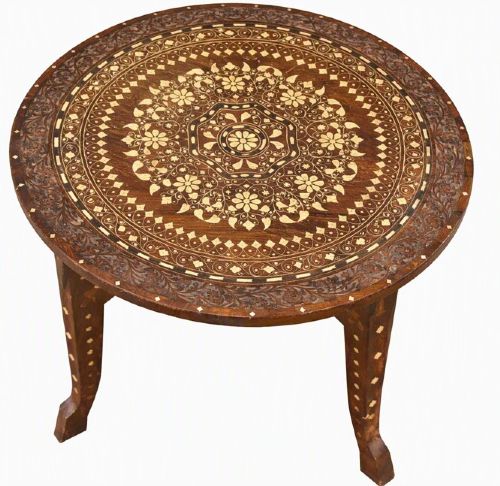
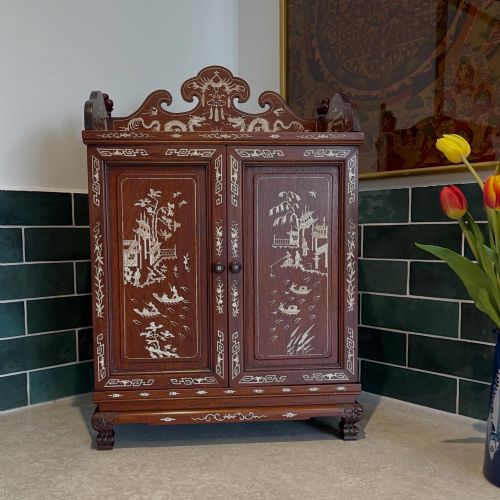
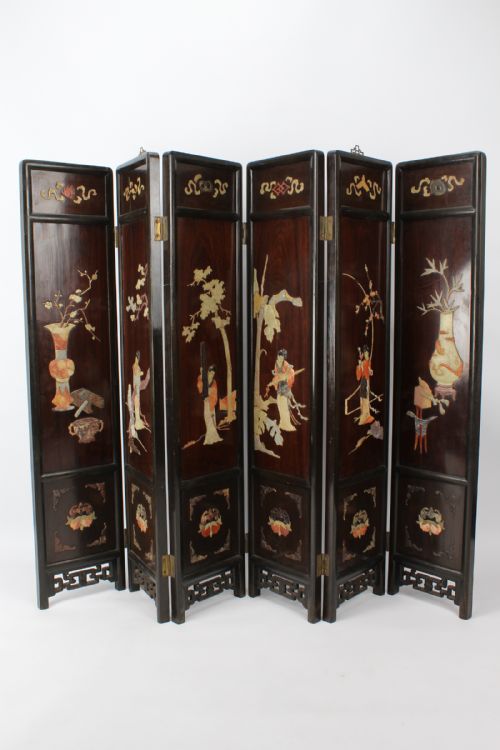
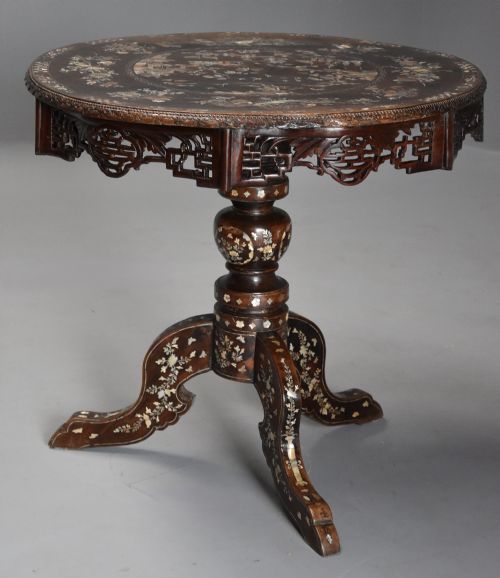
An oriental inlaid table brings rich detail and contrasting materials to a room, turning a simple surface into a focal point.
Oriental Inlaid Table
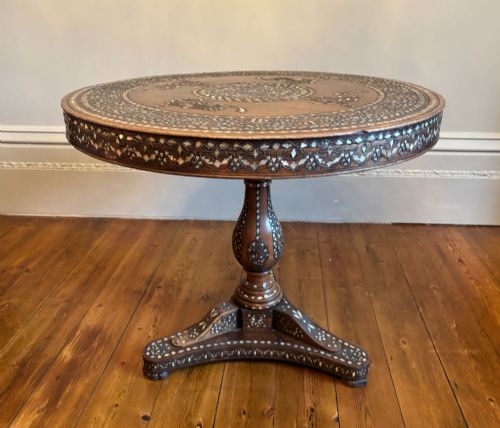
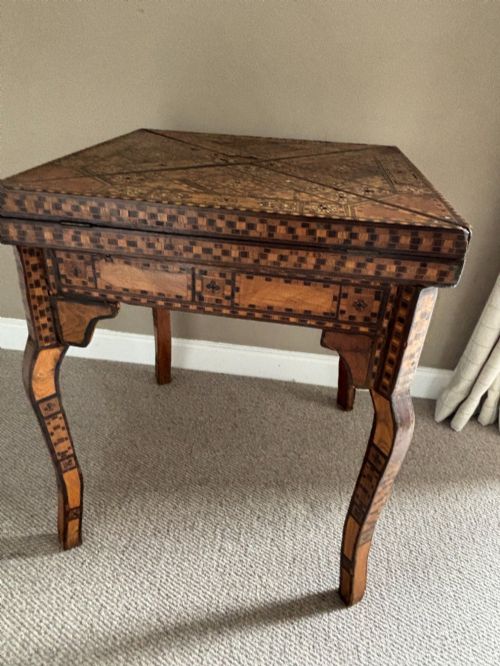
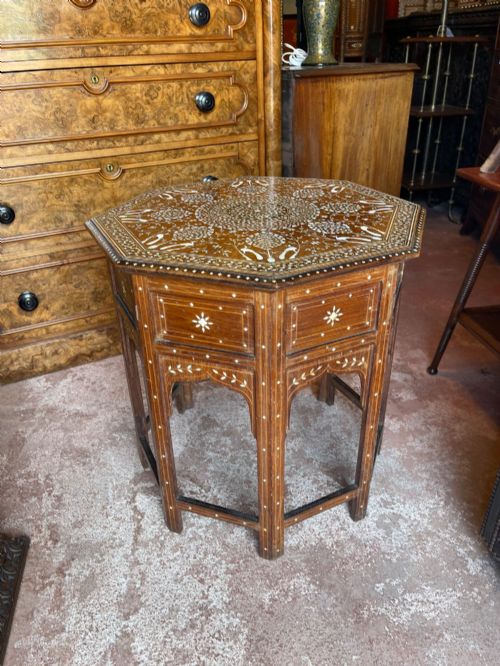
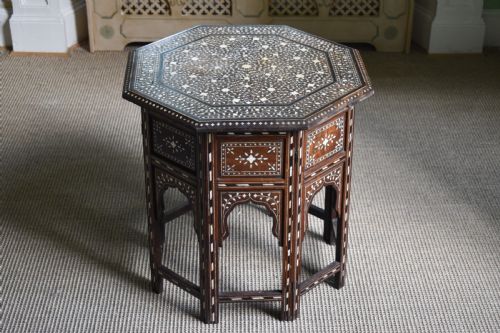
Most entries span the nineteenth century through the Edwardian era, incorporating regional styles such as Chinese scholars studio designs and Hoshiarpur folding work. These surfaces served varied domestic functions, functioning as lamp tables, coffee surfaces, and plant stands within period interiors.
How they were made
Craftsmen built these items from dense timbers including hardwood, rosewood, teak, sandalwood, and sheesham wood. Carved structures received precise decorative elements through the insertion of contrasting materials into recessed channels.
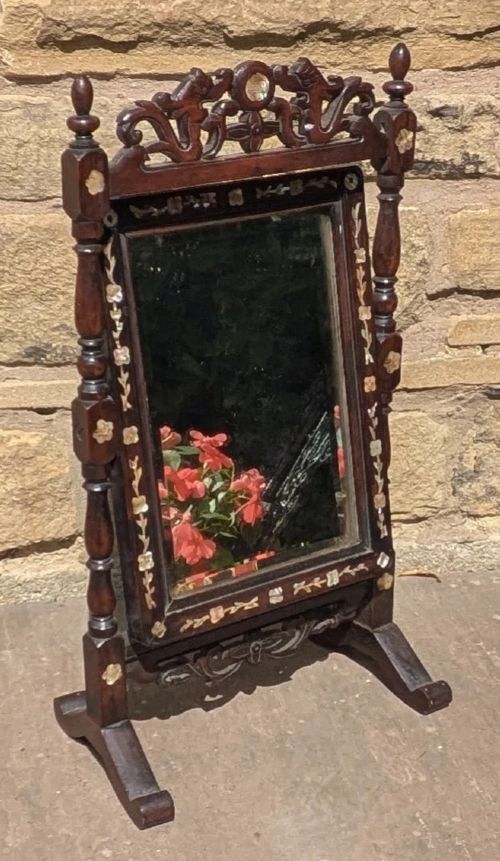
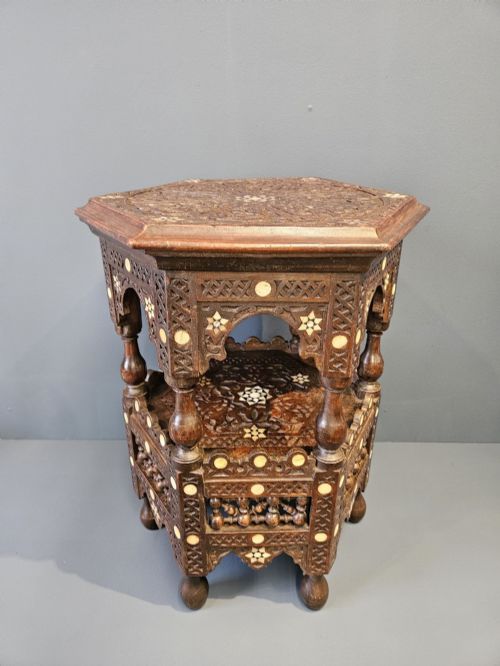
Makers utilised mother-of-pearl, bone, and brass to create intricate geometric patterns and floral motifs across tops and panels. Lacquer finishes and carved details frequently complemented the inlaid surfaces to complete the construction.
Oriental Inlaid Table Retail Price Guide 2026
Typical asking prices for oriental inlaid table among the pieces listed under this phrase on Sellingantiques today, from the lower quarter to the upper quarter. They describe what is for sale here now, not the wider market.
Listings feature nineteen-century hardwoods like rosewood and teak alongside delicate bone, brass, and mother-of-pearl inlay.
What varies in quality
The precision and density of the inlay work distinguish finer examples from simpler production, particularly where mother-of-pearl or bone meets the surrounding timber with tight joints. The complexity of the carved woodwork and the choice of dense hardwoods also elevate certain pieces above standard occasional tables.
Provenance and retail history add distinction when workshops or major retailers such as Liberty & Co mark the timber. Structural integrity of folding mechanisms and the preservation of delicate surface decoration ultimately determine the standing of each item.
Liberty & Co·Viardot
The Oriental Inlaid Table Glossary
- Hongmu
- A dense, dark Chinese hardwood frequently utilised for traditional furniture and barrel-shaped tables. It provides a heavy, durable structural base for intricate mother-of-pearl inlay.
- Hoshiarpur
- A North Indian centre known for intricate wooden folding tables and octagonal pieces inlaid with bone. These items often feature dense geometric star patterns.
- Shibayama
- A Japanese decorative technique incorporating inlaid shell, ivory, and bone to create pictorial panels. It appears on fine table screens and decorative objects.
- Moorish Revival
- An architectural and decorative style popular during the Victorian period that influenced European and British interpretations of Islamic furniture. It manifests in carved octagonal lamp tables and intricate geometric panels.
- Japanned
- European lacquerwork imitating Asian export pieces through built-up varnishes and metallic decoration. This finish appears on nineteenth-century desks and occasional tables.
Oriental Inlaid Table: Frequently Asked Questions
Where were these tables made?
Production spans several distinct geographic regions, notably workshops in China, British India, and the Ottoman Empire. British retailers also commissioned or imported specific styles to satisfy domestic tastes during the nineteenth and early twentieth centuries.
Makers utilised local timbers and traditional carving techniques native to each region, resulting in distinct visual traditions that ranged from Chinese Qing export pieces to Hoshiarpur folding tables.
How do I care for an inlaid table?
Maintain these surfaces by avoiding direct sunlight and excessive heat, which can cause timber to dry and delicate inlay to loosen. Regular dusting with a soft, dry cloth protects the polished hardwood and applied mother-of-pearl or bone.
Refrain from using liquid polishes or harsh chemical cleaners that might seep into joints or damage traditional lacquered and polished finishes.
Are folding tables sturdy?
Many regional occasional tables utilise a clever hinged or interlocking construction designed to fold flat for transport or storage. When properly assembled, the interlocking wooden panels provide a stable base for everyday domestic use.
Care should be taken when moving these items to protect the hinge joints and the surrounding bone or brass inlay from unnecessary strain.
What defines Anglo-Indian furniture?
This category describes items made in India by local artisans using traditional techniques to satisfy British colonial demand. They combine familiar European furniture forms with dense regional carving and contrasting bone inlay.
Pieces from centres such as Hoshiarpur frequently feature folding octagonal structures and intricate star motifs that showcase exceptional woodworking skill.