




Oriental Hardwood Sculpture
Oriental hardwood sculpture brings substantial carved figures and animal studies into a room, offering rich textures and traditional motifs from Asian workshops.

Oriental Hardwood Sculpture
When buyers search for oriental hardwood sculpture, they encounter a diverse array of figures, animals, and mythological subjects originating primarily from Chinese, Indian, and Japanese traditions. These pieces span the nineteenth century through the early twentieth century, encompassing periods such as the Qing Dynasty, the Edwardian era, and the Raj period.
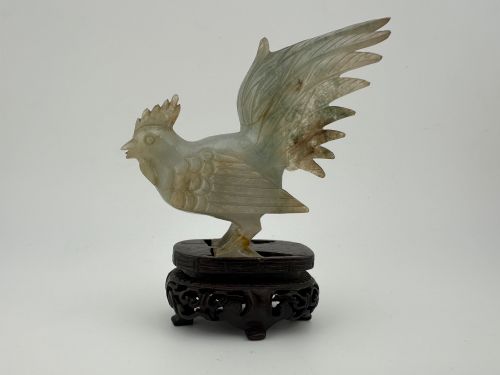
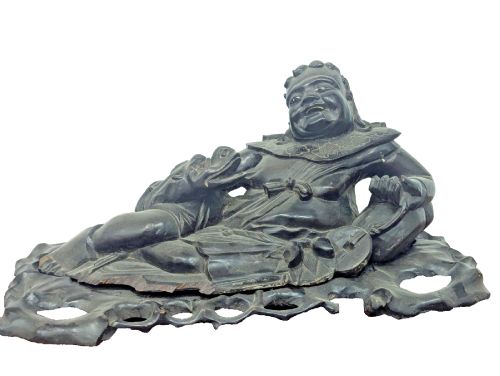
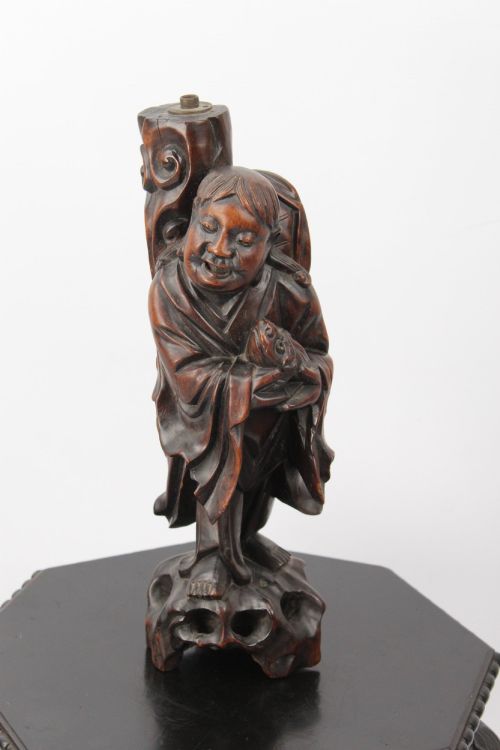
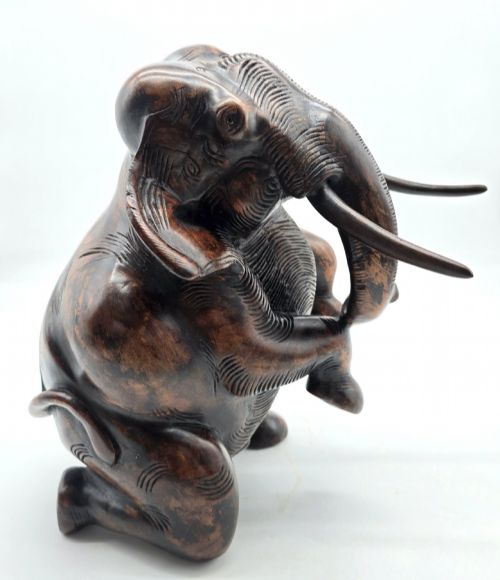
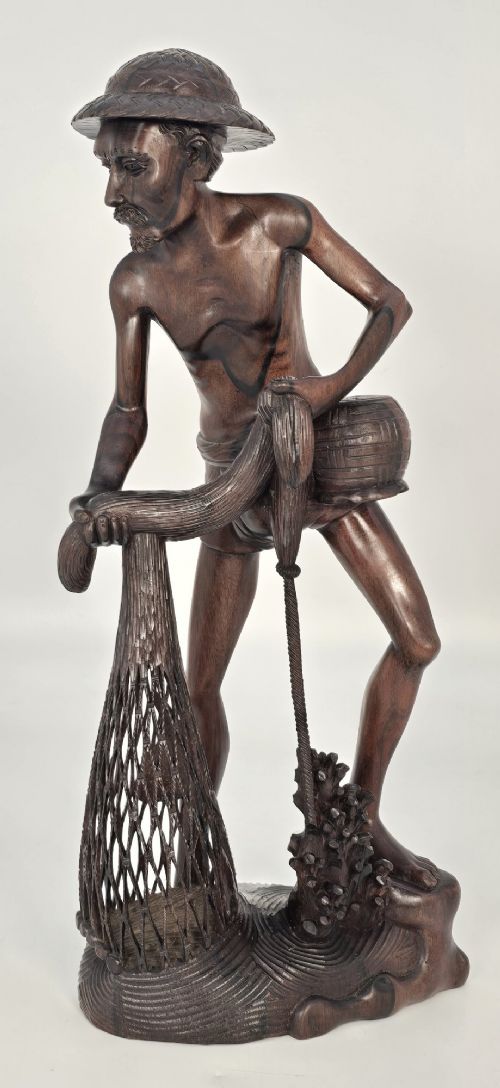
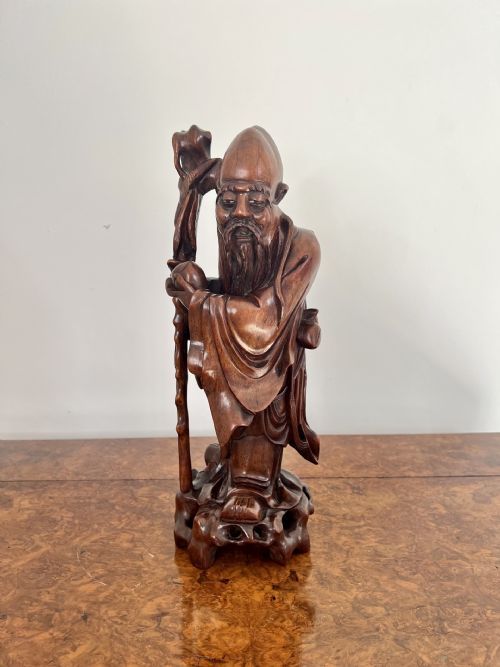
The selections on this page are dominated by Chinese subjects, including depictions of Budai Laughing Buddha, Daoist immortals, guardians, fishermen, and pairs of water buffaloes or mandarin ducks. Alongside these are Indian elephants, Japanese okimono figures, and Indonesian dancers, reflecting multiple regional styles within traditional wood carving.
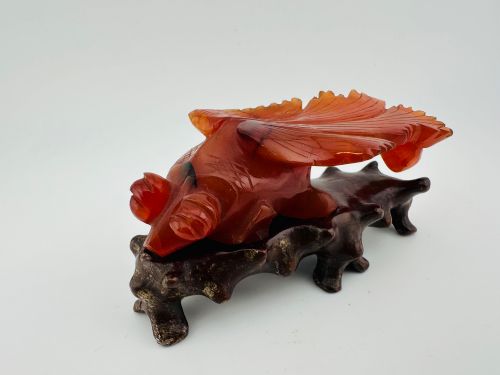
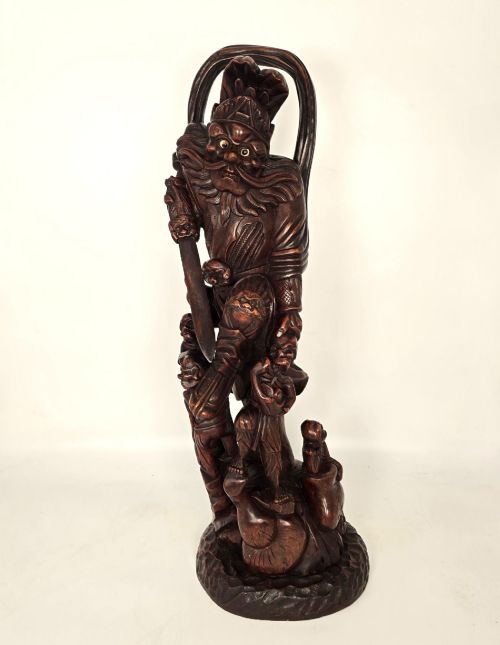
Common forms range from substantial standalone statues and monumental Guardian Kings to root wood lamps, tea ceremony gongs, and jade mountain landscapes mounted upon custom hardwood stands. These objects vary from single figures to matching pairs and complex figural groups involving multiple human and animal subjects.
Materials and construction methods
The working of root wood allowed artisans to follow natural grain patterns and organic contours, resulting in figurative forms that integrate the natural growth of the timber. Standalone sculptures often relied on fitted wooden bases or incorporated separate carved stands to support heavier compositions.
The documented styles on this page range from traditional Chinese Qing Dynasty motifs to Anglo-Indian Raj period studies and Japanese Meiji period okimono.
Distinctions in execution and character
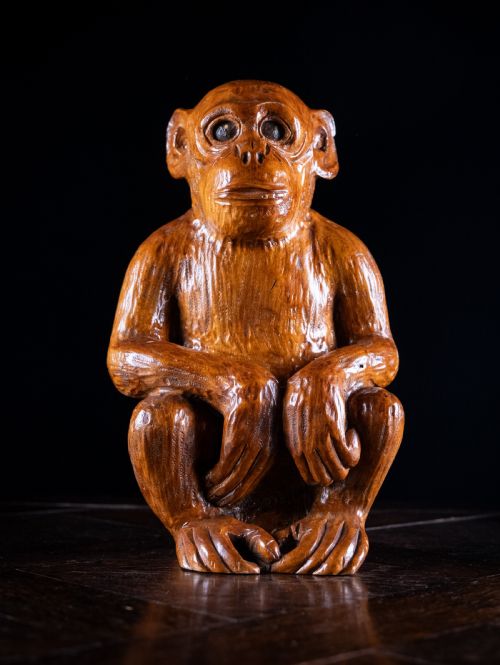
The standard of carving distinguishes superior examples, seen in the precision of facial expressions, drapery folds, and the anatomy of animals such as elephants, horses, and water buffaloes. Finer pieces demonstrate depth of undercut and confident hand-tool work rather than shallow, mechanical finishing.
Material selection also dictates quality, with tightly grained hardwoods and well-chosen root wood sections commanding attention through their natural finish and resistance to splitting. The integration of secondary materials, such as mixed metal mountings or paired stands, adds complexity to the construction.
The Oriental Hardwood Sculpture Glossary
- Hardwood
- Dense timber derived from broad-leaved trees, used by traditional carvers to achieve fine detail and durability. This material forms the primary structural medium for the sculptures on this page.
- Root Wood
- The gnarled subterranean growth of a tree, utilised by carvers to create organic, fluid forms. Artisans shape these root sections into figures and lamp bases while retaining the natural contours.
- Okimono
- A Japanese decorative freestanding statuette designed for display on a shelf or cabinet. These carvings typically portray historical figures, labourers, or animals.
- Qing Dynasty
- The final imperial dynasty of China, lasting from sixteen forty-four to nineteen twelve. Many pieces on this page originate from the later decades of this period.
- Raj Period
- The era of direct British rule in the Indian subcontinent, spanning from eighteen fifty-eight to nineteen forty-seven. Carvings from this time frequently portray ceremonial elephants and processions.
- Mandarin Duck
- A colourful perching duck native to East Asia, traditionally symbolising fidelity in Chinese art. Pairs of these birds frequently appear in nineteenth-century hardwood carvings.
Oriental Hardwood Sculpture: Frequently Asked Questions
What subjects do these sculptures show?
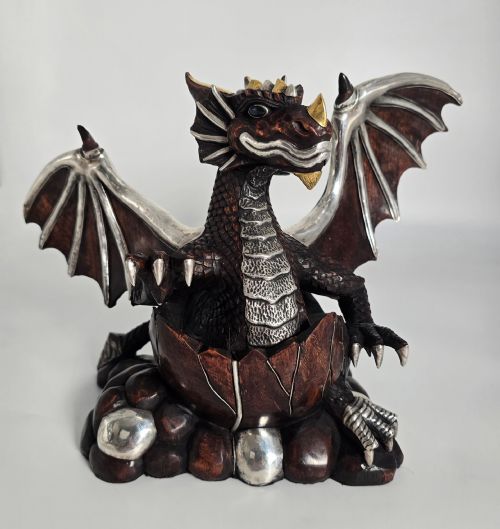
The subjects include human figures such as monks, immortals, fisherman, and dancers, alongside animals like elephants, water buffaloes, horses, and mandarin ducks. Mythological beings such as Guardian Kings and dragons also feature prominently.
Many of these figures carry symbolic meanings rooted in traditional folklore, religious traditions, and courtly aesthetics from China, India, and Japan.
How do I date a hardwood carving?
Dating relies on stylistic markers, tool marks, and the natural ageing of the timber. Pieces from the nineteenth century often display hand-chizzled surfaces and deep patination accumulated over decades of handling.
Later works from the early twentieth century may incorporate different mounting techniques or reflect transitional styles influenced by international trade and changing tastes.
Are these figures sold as pairs?
Many listings include matched pairs, particularly water buffaloes, mandarin ducks, elephants, and guardian figures. These were originally created to sit symmetrically on either side of a room or altar.
Single standalone pieces also appear frequently, ranging from small table sculptures to monumental figures designed for prominent display.
How were root wood pieces used?
Root wood items served as decorative sculptures, figurative studies, and functional objects such as lamps and stands. Carvers shaped the twisted timber to resemble human figures, mythical creatures, or natural landscapes.
The organic irregularities of the root dictated the final form of the object, ensuring that each piece remained unique.