






Oriental Hardwood Bench
An oriental hardwood bench brings dense timber and traditional carving into a room, offering a sturdy seat rooted in centuries of Asian craftsmanship.
Oriental Hardwood Bench
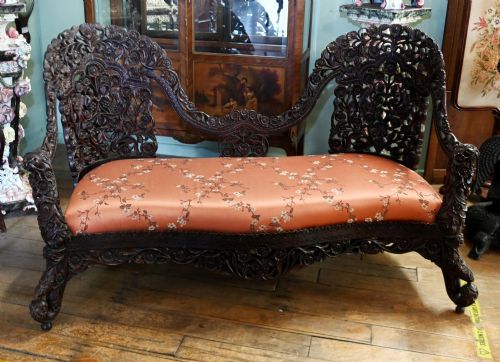
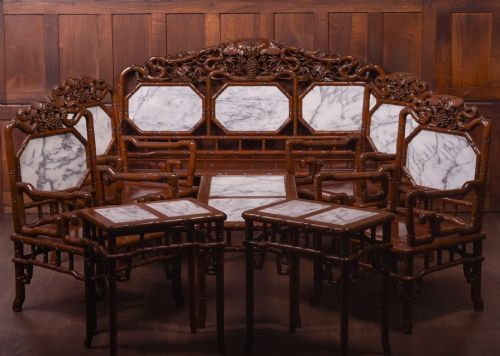
An oriental hardwood bench encompasses seating furniture originating from Asian workshops, frequently arriving in forms such as hall benches, window seats, and settles. These pieces appear across various periods from the nineteenth century into the twentieth century, reflecting traditional Chinese and export designs.
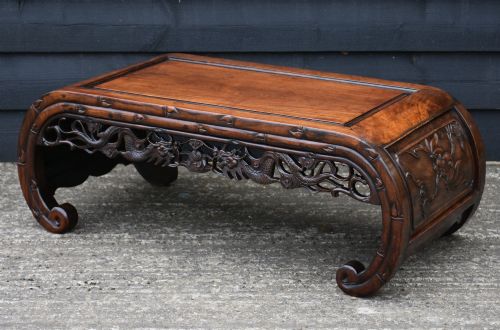
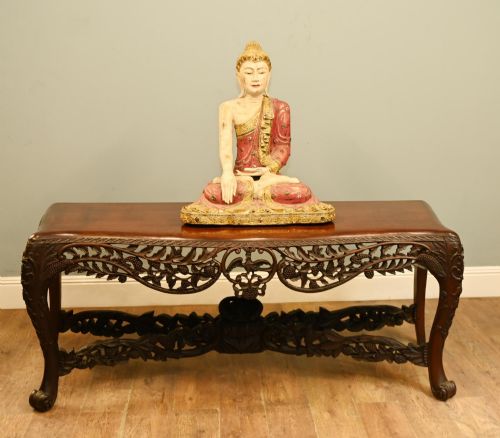
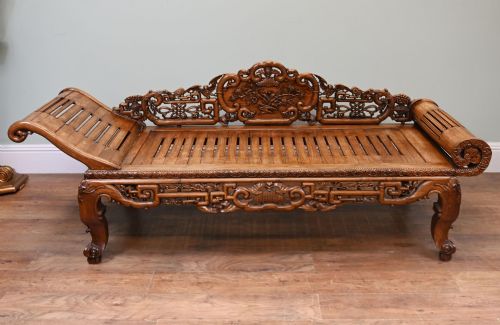
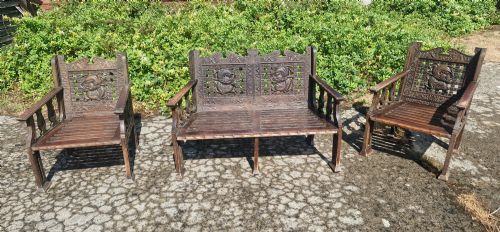
The items seen on this page range from simple plank-top trestle benches to elaborately carved altar seats and horseshoe forms. Qing dynasty influences and Chinese export styles dominate the selection, often accompanied by related seating suites and day beds.
Buyers seeking this phrase most commonly encounter heavy wooden benches featuring detailed surface ornamentation or clean structural lines. These items function equally well as standalone hallway seating or as distinct focal points within a modern interior scheme.
Quality and Construction
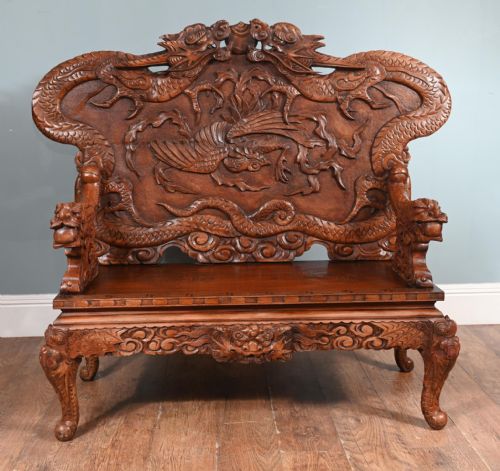
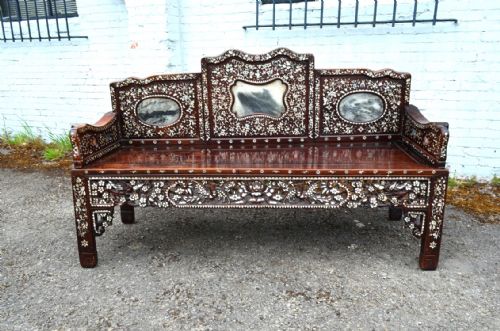
The depth and crispness of the hand carving separate standard commercial items from superior examples. Finely executed dragon motifs, pierced scrollwork, and balanced proportions indicate skilled workmanship within the producing workshop.
Material selection and timber stability dictate the overall caliber of each piece. Denser woods like hongmu and rosewood, combined with intact lacquer and secure mother of pearl inlay, represent the upper tier of surviving examples.
Oriental Hardwood Bench Retail Price Guide 2026
Typical asking prices for oriental hardwood bench among the pieces listed under this phrase on Sellingantiques today, from the lower quarter to the upper quarter. They describe what is for sale here now, not the wider market.
Several benches double as hidden resting places for your tea set.
The Oriental Hardwood Bench Glossary
- Hongmu
- A dense, heavy tropical hardwood prized in Chinese furniture making for its rich colour and durability. It takes a high polish and supports intricate carving.
- Cinnabar lacquer
- A decorative technique involving multiple layers of coloured resin applied to a wood base and carved when dry. It creates a vibrant red surface often seen on ornamental panels.
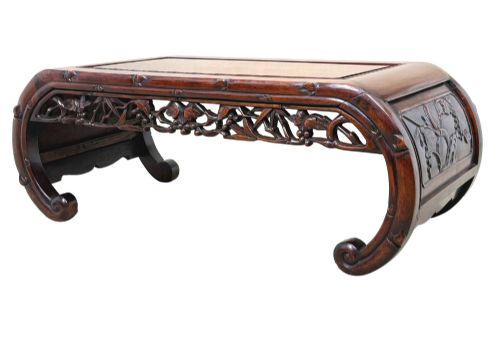
- Kang table
- A low platform table traditionally used in northern China for sitting or serving tea on a heated brick bed. Examples vary in scale and feature scroll ends.
- Altar bench
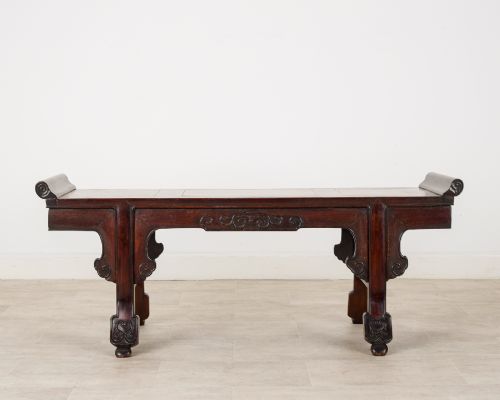
- A long, narrow seating form or table derived from traditional temple furnishings. These pieces typically display restrained architectural lines and sturdy trestle supports.
- Mother of pearl
- An iridescent inner shell material used for inlay work. Craftsmen embed small pieces into carved recesses to create contrasting floral or geometric patterns.
Oriental Hardwood Bench: Frequently Asked Questions
How do I style an oriental bench at home?
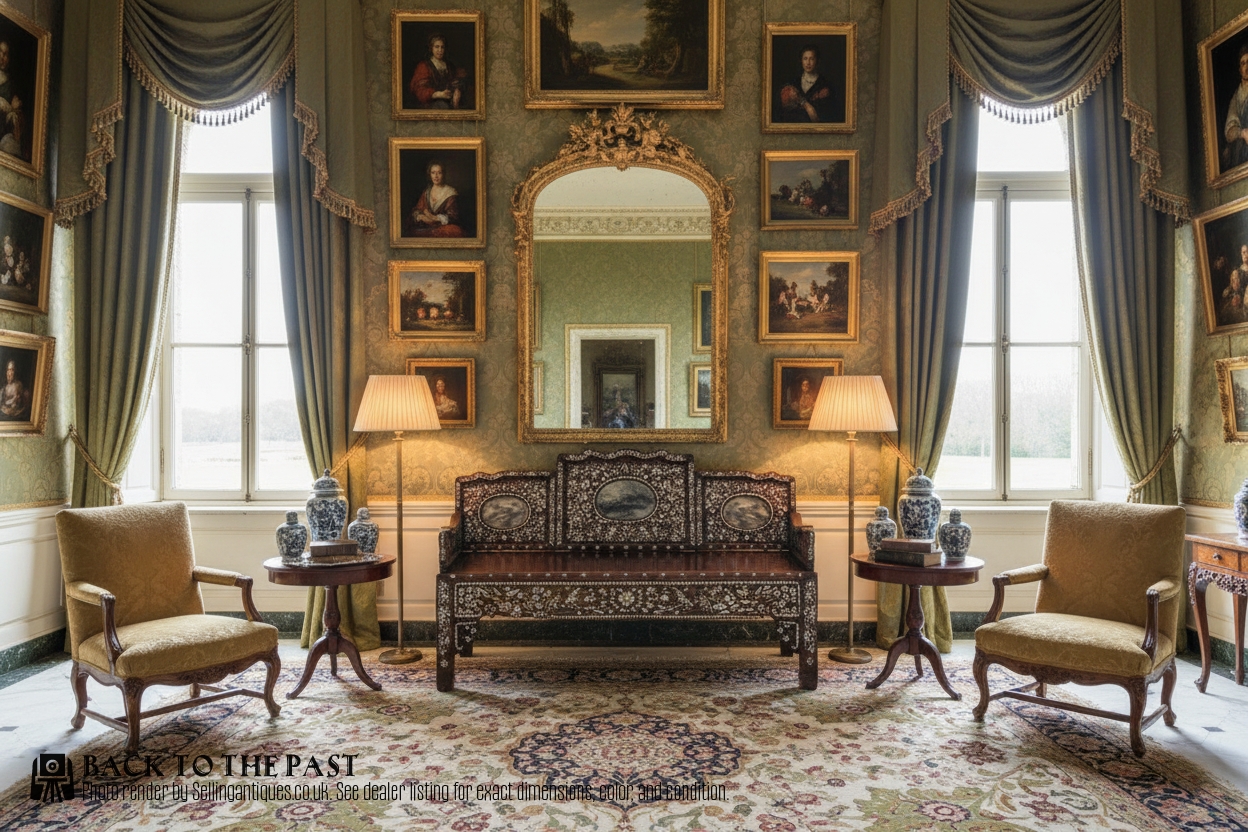
Position an oriental hardwood bench in a hallway as a striking standalone seat, or place it beneath a window to function as a low viewing platform. The substantial timber presence anchors surrounding furniture without requiring additional ornamentation.
Keep surrounding decor relatively simple to let the carved details and dense grain of the wood remain the focal point of the room. A plain cushion can soften the wooden seat for everyday use.
What is the difference between a hall bench and an altar bench?
Hall benches are generally constructed with backrests and arm supports designed for upright sitting in entryways or reception spaces. Altar benches derive their proportions from temple furnishings and usually feature open, unbacked frames with distinct scroll ends.
Both forms utilise dense hardwoods, but their structural layout dictates how they interact with living spaces. Altar benches often double as low display surfaces or window seats.
How do I care for antique hardwood furniture?
Maintain the timber by dusting regularly with a soft, dry cloth and avoiding placement near direct heat sources or strong sunlight. Excessive temperature fluctuations can cause dense woods to split or warp over time.
Apply a microcrystalline wax sparingly if the surface appears dry, avoiding heavy commercial polishers that build up residue on carved areas. Lacquered and inlaid sections require particularly gentle handling.
Can I date these benches by their timber and style?
Nineteenth-century pieces frequently display heavier proportions and deeper hand carving associated with Qing dynasty traditions. Early twentieth-century examples sometimes incorporate export-oriented styling tailored for Western drawing rooms and conservatory suites.
Examining the joinery, wear patterns, and the specific type of hardwood helps establish the production era. Subtle stylistic shifts between traditional domestic forms and export pieces provide further chronological clues.