







Oriental Fretwork Table
These oriental fretwork table examples bring intricate geometric lattice designs into interiors, offering striking focal points rooted in traditional craftsmanship.
Oriental Fretwork Table
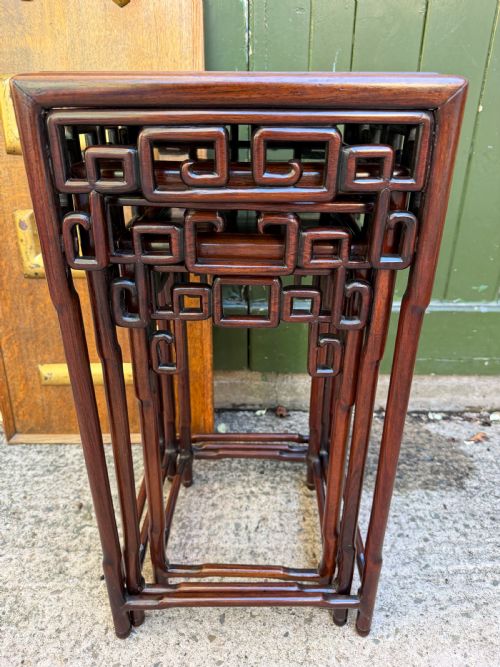
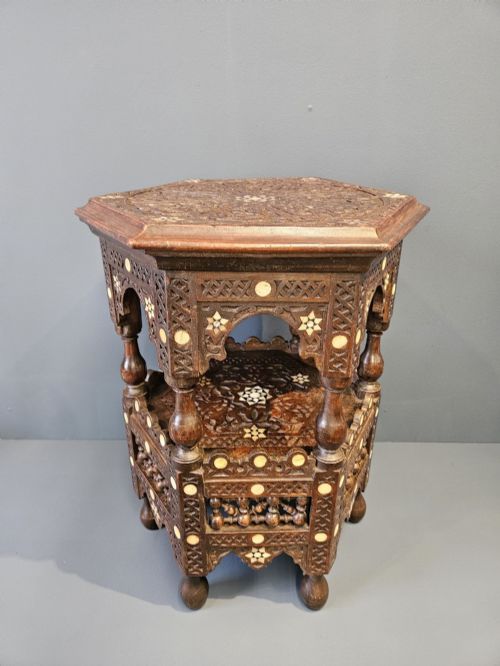
When you search for an oriental fretwork table, you are looking at items defined by pierced or carved geometric lattice detailing originating from various Asian and regional revival traditions. The pieces appearing here span side tables, nesting sets, plant stands, and console tables produced across the nineteenth and twentieth centuries.
The most common versions met on this page are Chinese Qing Dynasty hardwood examples, alongside Indian and Moorish revival occasional furniture. These surface in diverse forms such as rectangular centre tables, octagonal lamp tables, and graduated nesting sets.
Construction types vary from traditional altar tables to glass-topped coffee tables incorporating antique panels. Their origins bridge export wares made for Western markets and traditional forms used in domestic interiors.
Materials and construction
Makers utilised dense timbers including hardwood, teak, rosewood, elm, and hongmu to achieve the structural stability required for intricate openwork carving. These heavy woods allowed artisans to fashion delicate fretwork panels without compromising the load-bearing capacity of legs and aprons.
Surface details frequently incorporate contrasting insets such as rouge marble, porcelain panels, burrwood, or glass tops. Joinery methods relied on traditional interlocking joints rather than metal hardware, securing panels within carved frames.
Oriental Fretwork Table Retail Price Guide 2026
Typical asking prices for oriental fretwork table among the pieces listed under this phrase on Sellingantiques today, from the lower quarter to the upper quarter. They describe what is for sale here now, not the wider market.
Some tables hide their utilitarian roots so well that guests will wonder if they escaped from a temple or a palace.
Assessing quality in fretwork furniture
Quality separates along the depth and crispness of the carved lattice work, where finer pieces display sharp internal angles and smooth hand-finished surfaces. Lesser examples show shallower cuts, machine smoothing, or softer definition within repetitive geometric motifs.
The choice and selection of timber heavily influence the tier of the piece, with dense hongmu and figured rosewood commanding superior status over plain elm or general mixed hardwoods. The integrity of inset panels, whether marble, burrwood, or porcelain, further distinguishes standard production from exceptional examples.
The Oriental Fretwork Table Glossary
- Fretwork
- An ornamental design created with piercing or carving, forming an openwork pattern of geometric or organic shapes. This technique defines the visual lightness of the surface panels.
- Hongmu
- A traditional Chinese term designating dense, dark hardwoods used for fine furniture and decorative objects. It translates directly to red wood and incorporates several heavy species.
- Altar table
- A traditional Chinese furniture form featuring an elongated rectangular top, often with upturned flange ends, supported by recessed legs. These originated for ceremonial use before transitioning to domestic settings.
- Nesting tables
- A set of graduated tables designed to fit neatly beneath one another when not in use. They typically share matching construction and fretwork detailing.
- Aesthetic Movement
- A late nineteenth-century design ethos that championed art for art's sake and drew heavily on Japanese and Chinese artistic motifs. Pieces from this context integrate Eastern joinery and fretwork into Western furniture forms.
Oriental Fretwork Table: Frequently Asked Questions
What is an oriental fretwork table?
An oriental fretwork table is a piece of furniture featuring pierced or carved lattice patterns, commonly sourced from Chinese, Indian, or Moorish traditions. These range from small nesting sets and plant stands to large console and altar tables.
They combine functional surfaces with decorative woodwork, utilising dense hardwoods and often incorporating inset panels of marble, porcelain, or glass.
How were these tables used originally?
These tables served multiple domestic and ceremonial functions depending on their specific form. Altar tables held ritual objects, while smaller stands displayed porcelain vases or lamps.
Nesting tables and occasional tables provided flexible surfaces for tea or writing in both traditional Asian interiors and Western homes influenced by export styles.
How do I care for antique hardwood tables?
Maintain these tables by keeping them away from direct heat sources and dramatic humidity fluctuations, which can cause dense hardwoods and fitted panels to split. Dust regularly with a soft, dry cloth rather than applying modern chemical polishes.
Wax can be applied sparingly to nourish the timber surface when the wood appears dry, preserving the natural sheen of the hardwood.
How can I tell the period of a table?
Dating relies on examining construction techniques, timber choice, and stylistic markers such as Qing Dynasty carving styles or Victorian revival influences. Tool marks, joinery methods, and the natural ageing of the wood provide key evidence for age.
Comparative analysis with documented export pieces and standard regional forms helps narrow down the production era.