



Oriental Enamel Planter
An oriental enamel planter brings rich colour and meticulous metalwork into a room, offering a striking vessel for your favourite plants.
Oriental Enamel Planter
An oriental enamel planter is a substantial decorative vessel designed to house botanical displays while standing as a work of art in its own right. When searching this phrase, you will most frequently encounter nineteenth-century and early twentieth-century examples originating from China and Japan.
The forms span deep jardinières, bowls, and rectangular containers, sometimes accompanied by drip trays or custom stands. These pieces often draw upon traditional Qing Dynasty aesthetics and Japanese Meiji period craftsmanship.
Many incorporate intricate metalwork or painted porcelain rather than plain ceramic surfaces. They function equally well as standalone decorative objects or as functional pots for bonsai trees and indoor foliage.
How they were made
The construction relies heavily on durable metals such as bronze and brass, which form the robust structural body of the vessel. Artisans then applied enamel techniques, notably cloisonné and champlevé, to create vibrant surface patterns.
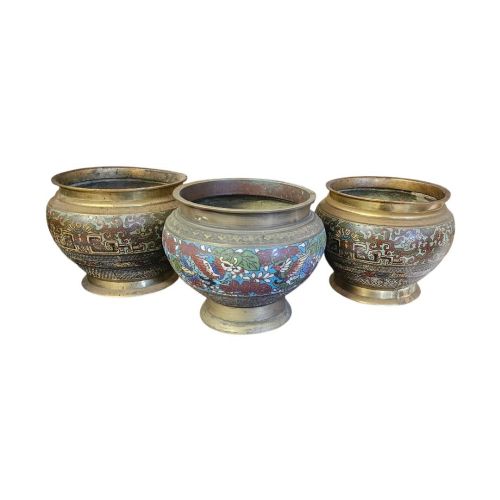
Cloisonné involves soldering thin metal wires to the metal base to create compartments, which are subsequently filled with coloured enamel paste and fired. Champlevé utilises recessed cells carved directly into the bronze or brass surface to hold the enamel pigments.
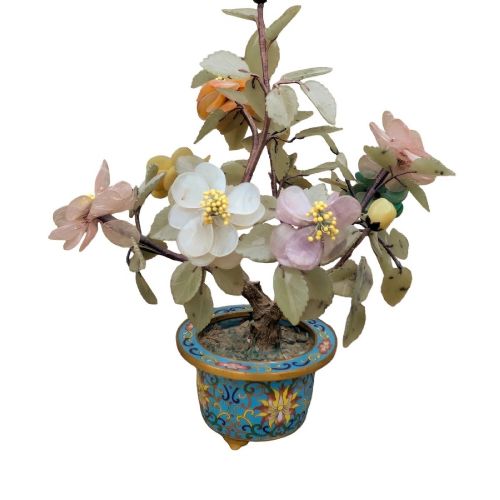
Other variations incorporate hardstone, jade, and porcelain elements alongside the metal and enamelwork. Stoneware and hand-painted famille rose ceramics also appear among the materials used to shape these vessels.
Common forms include heavy bronze bowls, hexagonal porcelain planters with drip trays, and intricate cloisonné jardinières.
What varies in quality
The standard of workmanship is visible in the precision of the wirework and the smoothness of the fired enamel surface. Finer pieces display crisp, uniform compartments and subtle colour gradients without pitting or discoloration.
Weight and structural substance distinguish the more substantial vessels from lighter productions. Bronze and brass examples with thick walls and integrated stands command greater presence and demonstrate superior foundry skills.
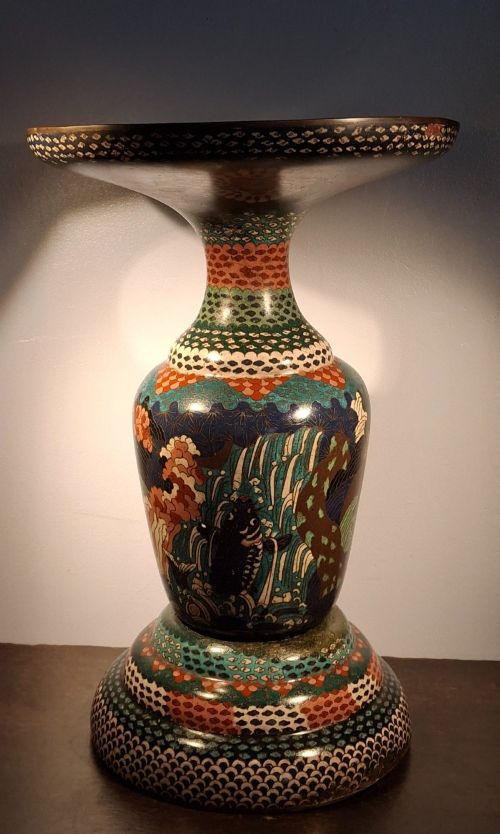
Artistic depth in the decorative motifs, such as detailed depictions of koi or floral arrangements incorporating hardstone and jade, separates standard decorative items from masterworks.
Makuzu Kozan II
The Oriental Enamel Planter Glossary
- Cloisonné enamel
- A metalwork technique where fine wires are soldered to a base to form cells for enamel paste. This method creates intricate patterns defined by delicate metal lines.
- Champlevé
- A technique where troughs or cells are carved into a metal surface and filled with enamel. The surrounding metal remains visible as part of the overall design.
- Jardiniere
- A large ornamental pot or stand designed to hold plants or flowers indoors. These vessels are often heavy and richly decorated.
- Famille rose
- A palette of opaque enamel colours dominated by pink, used on Chinese porcelain. It gained popularity during the Qing Dynasty.
- Meiji period
- A historic era in Japan associated with sweeping artistic output and fine metalwork. Pieces from this time often exhibit exceptional technical mastery.
Oriental Enamel Planter: Frequently Asked Questions
How were oriental enamel planters originally used?
These vessels served primarily as indoor planters for substantial botanical specimens, including bonsai trees and flowering plants. Wealthy households placed them in reception rooms to display prized greenery.
Beyond functional horticulture, they functioned as decorative centerpieces that demonstrated the owner's appreciation for fine craftsmanship and exotic art.
What is the difference between cloisonne and champleve?
Cloisonné involves soldering thin metal wires onto the body of the vessel to create raised boundaries for the enamel paste. This produces a delicate, linear pattern across the surface.
Champlevé relies on carving troughs directly into a thick metal base, such as bronze, to hold the enamel. The resulting designs feature wider, bolder metal borders.
Can I use these planters outdoors?
These antique and vintage vessels are designed strictly for indoor use. Exposure to frost, rain, and fluctuating outdoor temperatures can cause the metal to corrode and the enamel to crack.
Keeping them inside protects the fragile hardstone elements, delicate porcelain, and intricate metalwork from environmental damage.
How can I tell a Chinese planter from a Japanese one?
Chinese pieces often feature motifs rooted in traditional Qing Dynasty symbolism, alongside palette choices like famille rose porcelain or heavy bronze champlevé. The forms tend to be monumental and formal.
Japanese examples from the Meiji period frequently showcase naturalistic subjects, such as leaping koi, executed with extreme precision in cloisonné enamel on copper or brass bases.