


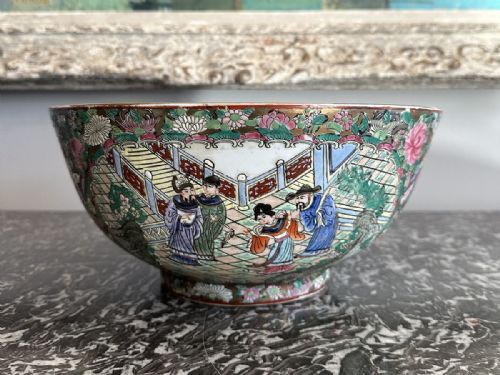
Oriental Enamel Centrepiece Bowl
An oriental enamel centrepiece bowl brings heavy hand-painted porcelain or rich copper cloisonné directly to a dining table or sideboard.
Oriental Enamel Centrepiece Bowl
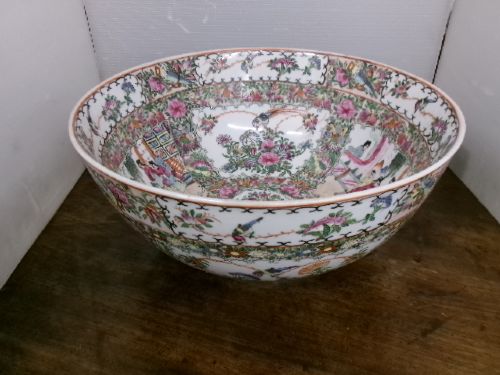
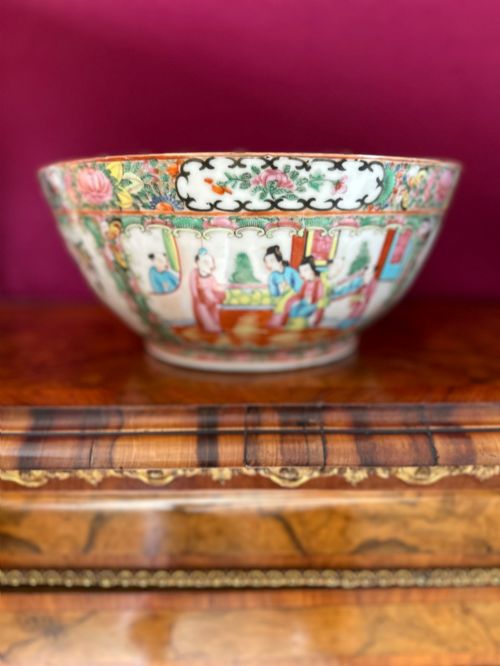
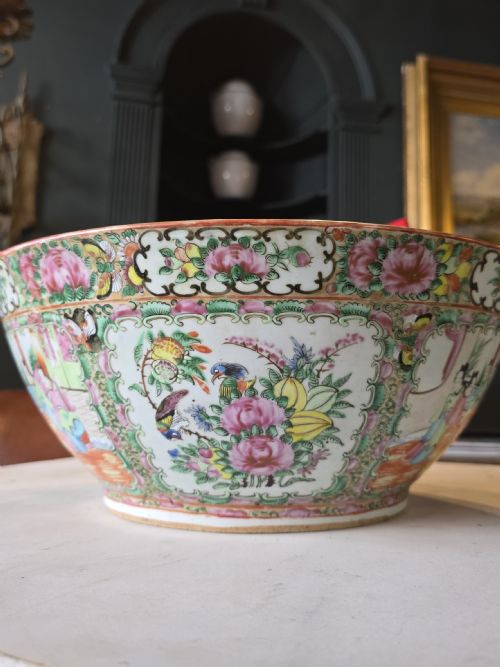
An oriental enamel centrepiece bowl spans large punch bowls and decorative vessels originating from China and Japan. The pieces encountered here most frequently include Chinese Canton porcelain and Japanese cloisonné enamel vessels.
The periods represented stretch from the eighteenth century through the Victorian era and into the twentieth century. Forms range from heavy bronze-mounted cloisonné pieces to delicate hand-painted porcelain bowls depicting figurative scenes and floral motifs.
Materials and Construction
Makers formed these bowls using robust porcelain, earthenware, or metal bases of copper and bronze. Artisans then applied colourful enamel powders within soldered wire cells for cloisonné or painted directly onto the ceramic body.
Gilt and gold leaf accents frequently highlight the rims and surface details of both Chinese and Japanese wares. Firing in traditional kilns fixed the bright pigments and metallic sheens.
Several heavy cloisonné bowls feature tiny birds hiding amongst peony flowers.
Assessing the Workmanship
The intricacy of the hand-painted detailing and the crispness of the enamel work set finer examples apart from standard decorative pieces. Precision in wirework and the depth of the palette indicate the skill of the original workshop.
Scale and weight also influence the character of the vessel, with substantial porcelain punch bowls and heavy copper-based cloisonné bowls demonstrating greater ambition in design.
Kozan
The Oriental Enamel Centrepiece Bowl Glossary
- Cloisonne Enamel
- A technique where metal wires form raised cells on a copper or bronze base to hold coloured enamel paste before firing. This method creates a patterned mosaic effect across the surface of the bowl.
- Famille Rose
- A prominent palette of opaque enamel colours dominated by pink or rose hues, used extensively on Chinese porcelain during the Qing dynasty and later periods. The style often incorporates detailed floral and human figures.
- Meiji Period
- A Japanese historical era spanning from 1868 to 1912, noted for highly refined decorative arts including Satsuma earthenware and intricate metalwork. Pieces from this time frequently feature rich gilding and dense motifs.
- Imari
- A traditional Japanese porcelain style characterised by underglaze blue and overglaze red, green, and gold decorations. These wares were heavily exported to Western markets during past centuries.
- Punch Bowl
- A large deep bowl traditionally utilised for mixing and serving communal drinks at social gatherings. In antique collections, these items serve primarily as decorative centrepieces due to their expansive painted surfaces.
Oriental Enamel Centrepiece Bowl: Frequently Asked Questions
What is an oriental enamel centrepiece bowl used for?
These bowls serve as large decorative centrepieces on dining tables, sideboards, or display cabinets. Their vibrant colours and painted scenes draw the eye and anchor the styling of a room.
Historically, larger porcelain examples functioned as punch bowls for gatherings, while cloisonné vessels were displayed for their intricate metalwork and enamel artistry.
How do I tell Chinese and Japanese bowls apart?
Chinese pieces often feature porcelain bodies with hand-painted Famille Rose or cobalt blue motifs, typical of Canton and Qing dynasty exports. These frequently depict elaborate figure scenes and floral arrangements.
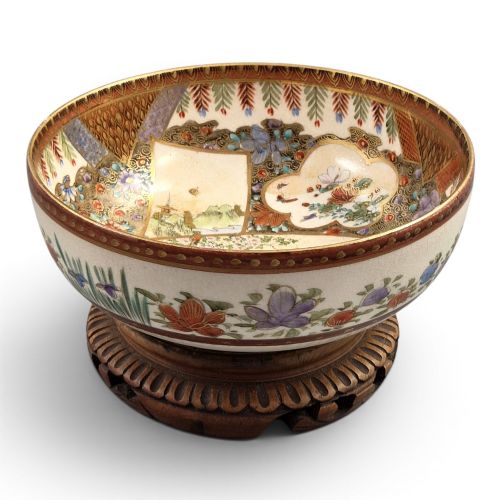
Japanese pieces in the selection lean towards cloisonné enamel on copper or bronze bases, alongside Satsuma earthenware marked by dense floral patterns and fine gilding.
How should I clean my enamel bowl?
Dust the surface gently with a soft, dry cloth to prevent any buildup within the enamel cells or painted crevices. Avoid harsh chemical cleaners or abrasive scouring pads.
Keep these vessels away from direct, prolonged sunlight to preserve the richness of the original pigments and gold leaf detailing over time.
Can I display these bowls safely on a table?
Place the bowl on a stable, level surface away from table edges where it might suffer accidental knocks. Heavier items, such as bronze-based cloisonné pieces, require sturdy support.
Using a padded felt mat underneath protects both the furniture surface and the footring of the antique vessel from friction.