
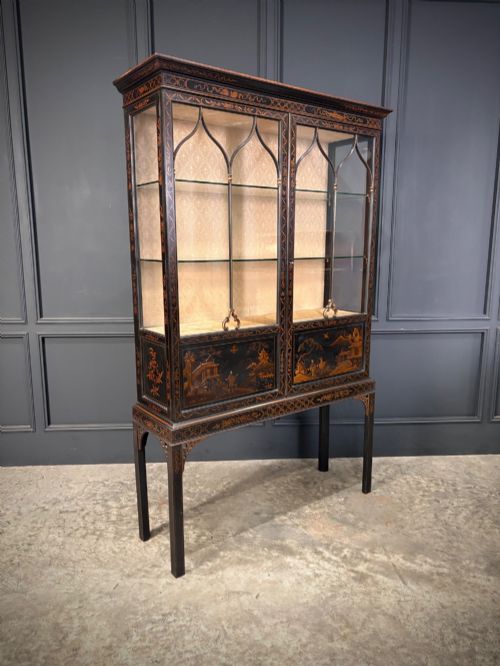


Oriental China Cabinet
An oriental china cabinet organises precious ceramics behind glass doors while bringing carved hardwood and lacquer into the room.
Oriental China Cabinet
An oriental china cabinet brings together carved hardwood, lacquer, and glass display storage originating from Asian export traditions and European imitations. These pieces range from substantial hardwood display cabinets with glass panels to red lacquer versions decorated in the 19th century.
The version most commonly met on this page is the 19th century carved hardwood display cabinet, often featuring glazed doors to showcase plates and porcelain inside. Makers during the Edwardian period and late Qing dynasty also produced Chinoiserie and cherrywood variations for domestic display.
How oriental china cabinets were made
Hardwoods such as rosewood and cherrywood form the structural carcass of these cabinets, carved with traditional motifs or left smooth to highlight the natural grain. Artisans joined these timbers using traditional joinery methods suited to heavy display furniture.
Surfaces receive decorative treatments including red lacquer, gold leaf, and mother of pearl inlay embedded into the wood. Glazed panels are fitted into doors to protect the porcelain and plates kept within.
Listings feature 19th century and Edwardian cabinets alongside 18th century Qianlong Dynasty plates.
What separates the fine examples
Quality rests in the depth and crispness of the wood carving, where hand-tooled details on hardwood display cabinets outshine machine-cut decoration. The integration of mother of pearl inlay and the condition of the lacquer finish dictate the standing of an individual piece.
Construction methods determine durability, with solid hardwood frames holding weight far better than applied surface decoration over secondary timbers. The clarity of the glass and the stability of the glazed doors further distinguish standard utility cabinets from finer examples.
The Oriental China Cabinet Glossary
- Chinoiserie
- European decorative style reflecting Chinese artistic traditions. It appears on cabinets and furniture produced in the 19th and Edwardian periods.
- Imari
- Japanese porcelain decorated in underglaze blue and iron red with gold additions. These plates frequently accompany or populate display cabinets.
- Famille Rose
- Chinese porcelain palette dominated by opaque pink enamel introduced during the Qing dynasty. Plates of this type represent significant export ceramics.
- Hardwood
- Dense timber such as rosewood or cherry used for furniture construction. It provides the heavy structural support needed for large display cabinets.
Oriental China Cabinet: Frequently Asked Questions
What goes inside an oriental china cabinet?
These cabinets house collections of decorative ceramics, porcelain plates, and tableware sets safely behind glass panels.
Items such as Japanese Imari plates and Chinese export porcelain fit naturally on the shelves within view.
How do I clean a lacquer cabinet?
Dust surfaces gently using a soft, dry cloth without applying harsh chemical polishes or modern cleaning sprays.
Protect red lacquer and gold leaf finishes from direct sunlight to prevent fading over time.
Where should I place my cabinet?
Position the piece against an interior wall away from direct heat sources and dramatic temperature shifts.
Hardwood and lacquer timbers react poorly to radiators and damp environments, which can cause warping.
How do I date an antique cabinet?
Examine the timber species, joinery techniques, and hardware style to establish the manufacturing period.
Cabinets from the 19th century often display hand-carved hardwood details distinct from later Edwardian reproductions.