



Oriental Cast Bronze Vase
An oriental cast bronze vase brings substance and weight to a room, carrying the sculptural forms of the Meiji period and Qing dynasty.
Oriental Cast Bronze Vase
When you search for an oriental cast bronze vase, you are looking at heavy metal vessels originating primarily from Japan and China. The pieces available span several centuries, with a strong concentration of 19th-century Meiji period examples and Victorian-era imports alongside older Qing dynasty items.
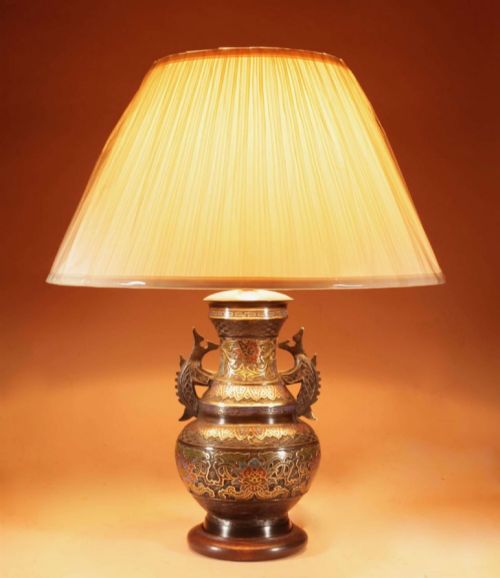
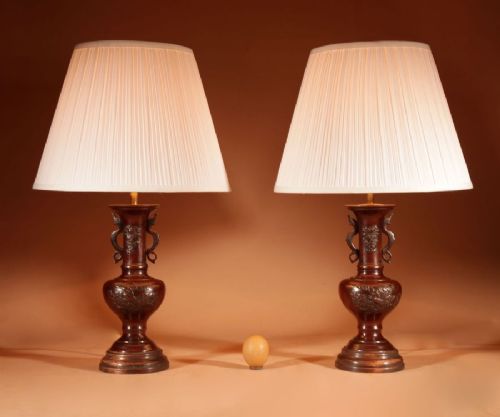
Forms vary considerably from ritual vessels and altar vases to large garden urns, table lamps, and traditional Hu or Tsubo shapes. You will frequently encounter pairs of vases designed for display, alongside single decorative pieces modified as lamps or jardinières.
How they were made
Makers utilised bronze, copper alloy, and brass, often applying chemical treatments to create patinated surfaces in dark brown or green tones. Many pieces incorporate intricate details through casting, while others integrate champlevé enamel work or fabric elements.
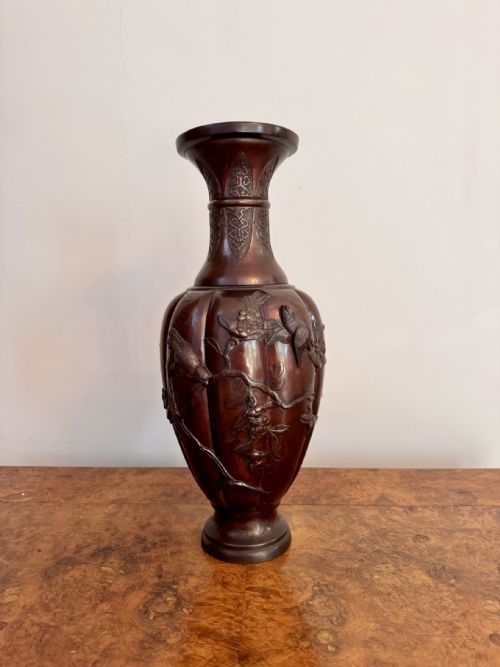
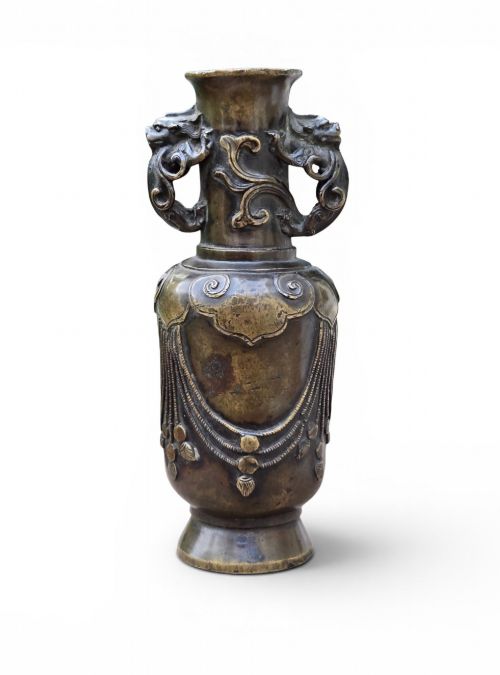
The construction relies on traditional metal casting techniques, producing substantial objects that range from light stem vases to massive multi-kilogram floor and garden urns. Surface enrichment includes applied dragon motifs, ritual 'yingluo' patterns, and archaistic designs.
Materials recorded across the selection include patinated bronze, raw copper alloy, brass, wood stands, and champlevé enamel highlights.
What varies in quality
The distinction between standard decorative items and exceptional pieces rests upon the crispness of the casting and the depth of the original patina. Heavier metal weight and well-defined relief ornamentation separate the finest examples from simpler production.
Artisanal precision in handling complex shapes, such as dragon-handled forms or archaic ritual vessel replicas, determines the standing of a piece within the range. Signed works or those from recognised traditions display superior control over surface finish and decorative inlay.
The Oriental Cast Bronze Vase Glossary
- Champlevé
- An enamelling technique where troughs are dug into the bronze surface and filled with vitreous enamel before firing. This method creates colourful patterns that contrast with the dark metal body.
- Hu
- A traditional pear-shaped ritual vase form with a wide belly and a constricted neck, often fitted with loop handles. These vessels derive from ancient Chinese bronze prototypes.
- Meiji Period
- The era in Japanese history spanning from 1868 to 1912, noted for a surge in highly decorative metalwork produced for export. Vases from this time often feature elaborate dragons and naturalistic motifs.
- Tsubo
- A large Japanese storage jar form adapted into ornamental bronze vases for display. They typically feature broad shoulders and stable bases.
- Usubata
- A specific type of Japanese bronze container traditionally utilised for flower arrangement displays. They often feature a wide, shallow basin supported by a distinct stem and foot.
- Archaistic
- A style that deliberately mimics the decorative motifs, shapes, and patination of ancient ritual bronzes from earlier dynasties. Makers used this approach to lend historic gravity to later pieces.
Oriental Cast Bronze Vase: Frequently Asked Questions
How do I identify a Meiji period piece?
Meiji period items are generally dated between 1868 and 1912 and often display high-relief casting work, such as dragons or floral bouquets. The metal surfaces usually carry a distinct dark patination characteristic of Japanese export production from that era.
Many of these pieces were made specifically for Western markets during the Victorian period, meaning they frequently appear alongside domestic British items of the same decades.
Were these vases used for flowers?
While some forms like Usubata and posy vases were made explicitly for floral arrangements, others such as ritual vessels and large garden urns served purely decorative or ceremonial purposes. Many retain interior evidence of water use or incense burning.
Collectors should inspect the interiors to understand whether a vessel held water historically or functioned strictly as a display object.
What is the difference between Chinese and Japanese bronzes?
Chinese examples often reference ancient ritual forms, including Gu and Hu vessels from dynasties like the Qing, marked by formal symmetry and archaistic motifs. Japanese pieces from the Meiji era frequently lean towards dynamic naturalism, featuring sweeping dragons and detailed flora.
Both traditions rely on exceptional bronze casting, but the stylistic vocabulary differs significantly between the two regions.
Can I convert a bronze vase into a lamp?
Many pieces found in collections have already been adapted into table lamps, often retaining their original bronze bodies paired with fabric shades. Such modifications are common for 19th-century imports that found new utility in Western interiors.
When evaluating a converted piece, look at whether the mounting preserves the structural integrity of the original metal vessel.