






Oriental Carved Side Cabinet
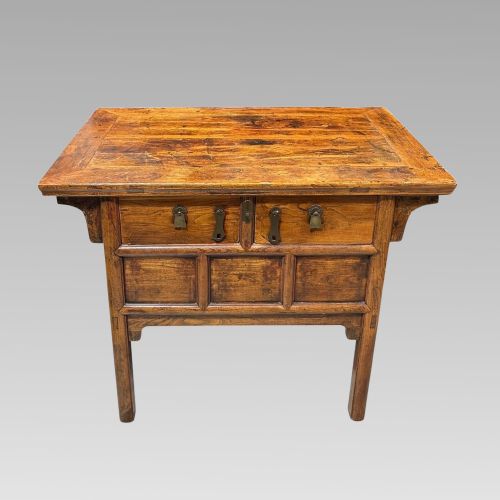
An oriental carved side cabinet brings dense hand-carved detail and rich regional timbers straight into a room.
Oriental Carved Side Cabinet
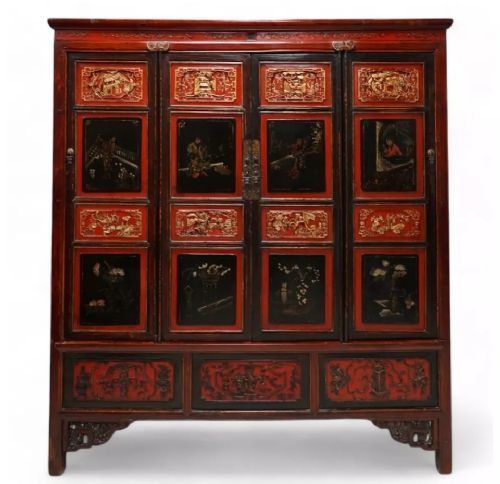
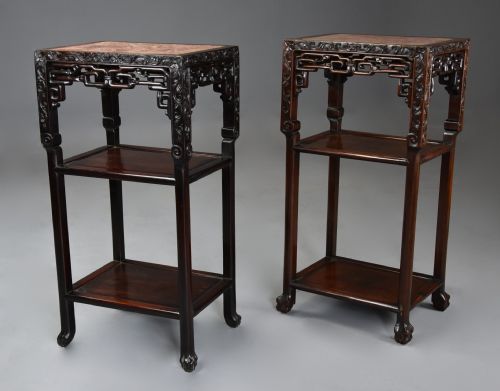
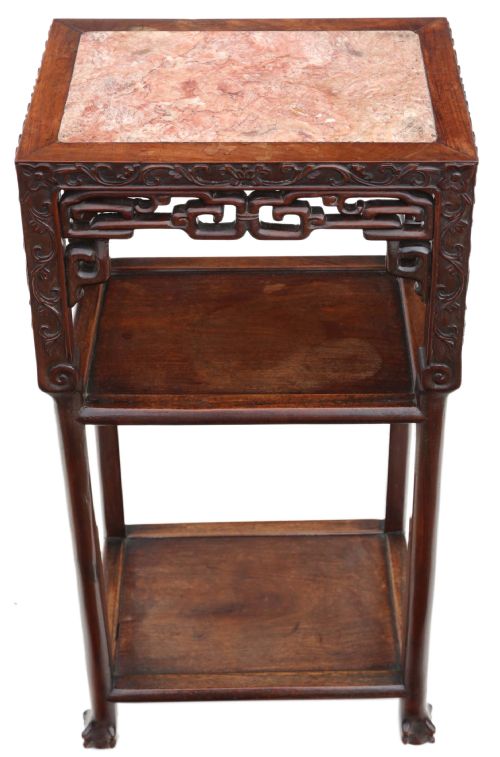
An oriental carved side cabinet represents the intersection of nineteenth-century craftsmanship and international trade, drawing on Chinese Qing Dynasty traditions alongside Anglo-Indian and Anglo-Burmese influences. Buyers searching for an oriental carved side cabinet encounter pieces ranging from compact dwarf cabinets and shodanas to larger red lacquer marriage cupboards and marble-topped pedestals.
The selection here spans the nineteenth century up to the early twentieth century, taking in diverse forms such as two-tier lamp tables, occasional tables, and sideboards. Hardwoods dominate the listings, frequently paired with inset marble tops, mother of pearl inlay, or striking red and gold lacquer work.
Makers and workshops of the period produced these items for both domestic use and the export market, resulting in distinct regional interpretations of carved furniture. A buyer is most likely to meet heavily carved hardwood cupboards and occasional tables that display traditional motifs executed in dense timber.
Assessing quality in carved cabinetry
The depth and crispness of the hand-carving separate standard utility items from exceptional workshop output. Superior examples show undercut relief work where foliage and figures stand clear from the background timber, while lesser pieces rely on shallow, repetitive stamping.
Timber selection and construction integrity also define the upper tier of the range. Heavier, tightly grained hardwoods like rosewood and padauk hold structural joints more securely than softer secondary woods, ensuring doors and drawers operate smoothly across decades.
Oriental Carved Side Cabinet Retail Price Guide 2026
Typical asking prices for oriental carved side cabinet among the pieces listed under this phrase on Sellingantiques today, from the lower quarter to the upper quarter. They describe what is for sale here now, not the wider market.
Gabriel Viardot
The Oriental Carved Side Cabinet Glossary
- Hongmu
- A traditional Chinese term for dense, reddish-brown hardwoods. It translates literally to red wood and encompasses several heavy timber species used in fine furniture.
- Shodana
- A multi-tiered display cabinet featuring staggered shelves, cupboards, and compartments. This form reflects Japanese and Chinese aesthetic influences popular during the late nineteenth century.
- Cinnabar lacquer
- A technique involving multiple brushed layers of pigmented vermilion resin carved into low-relief patterns. It produces a tactile, matte red surface with immense depth.
- Padauk
- A heavy tropical hardwood prized for its reddish-orange hue that darkens with age. It accepts crisp hand-carving exceptionally well.
- Japonisme
- A late nineteenth-century Western artistic movement inspired by Japanese art and design. It influenced the asymmetry and decorative motifs found on certain export cabinets.
Oriental Carved Side Cabinet: Frequently Asked Questions
Where should I place a side cabinet?
Position your cabinet away from direct sunlight and heat sources to prevent the hardwood from drying out and splitting. These pieces work well in hallways, living rooms, or dining spaces as focal points.
Ensure the floor is level so the doors and drawers hang true without twisting the frame. Freestanding pedestals and side tables also suit darker corners where their carved details catch ambient light.
Are marble tops original?
Inset marble slabs are a common and original feature on nineteenth-century tables and cabinets designed for export. The stone provided a cool, durable surface resistant to moisture and heat.
Inspect the rebate where the marble sits to ensure the wooden frame has not been altered to accommodate a replacement slab. Original marble typically shows age-appropriate minor scratching and dullness rather than modern high-gloss perfection.
How do I date an oriental cabinet?
Examine the construction joints, timber preparation, and hardware fixings for signs of nineteenth-century hand tools. Machine-cut screws and uniform modern plywood indicate a later reproduction rather than an antique piece.
Compare the carving style and decorative motifs against documented export periods like the Qing Dynasty or the late Victorian aesthetic movements. Patination on the interior timbers and wear patterns around handles offer further clues to age.