
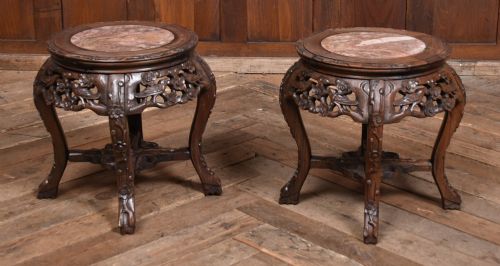
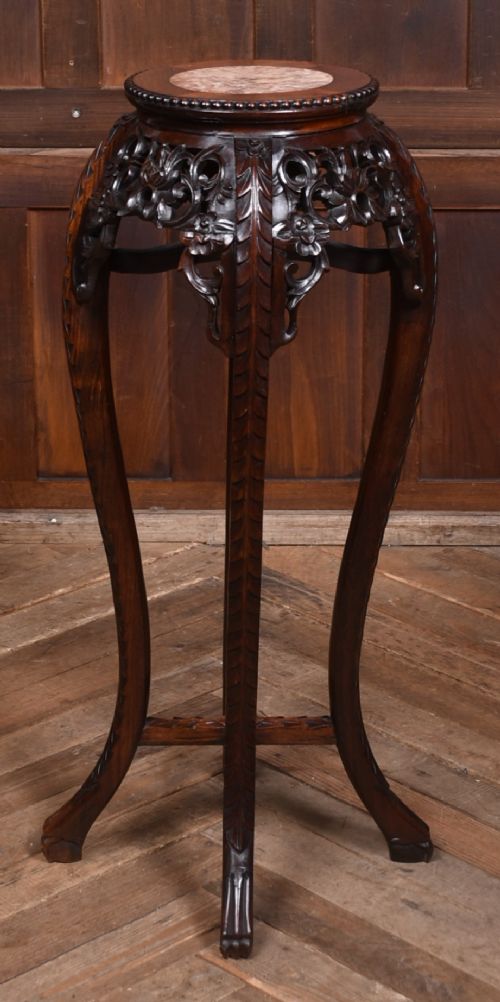

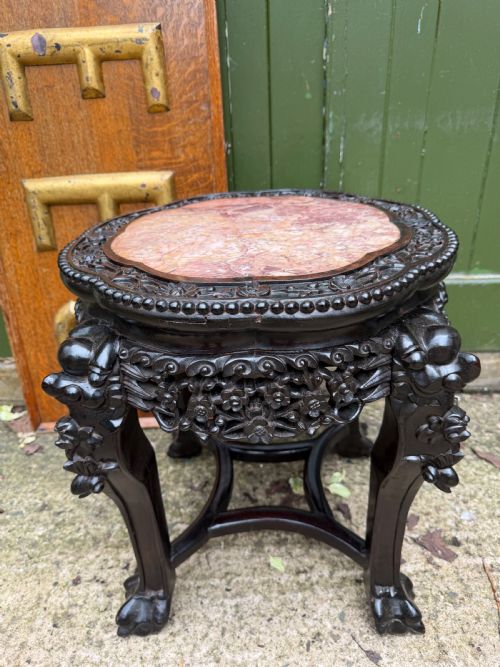


Oriental Carved Jardiniere Stand
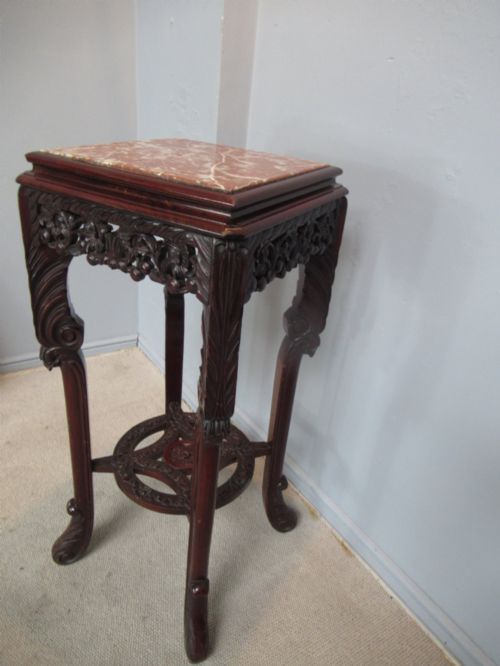
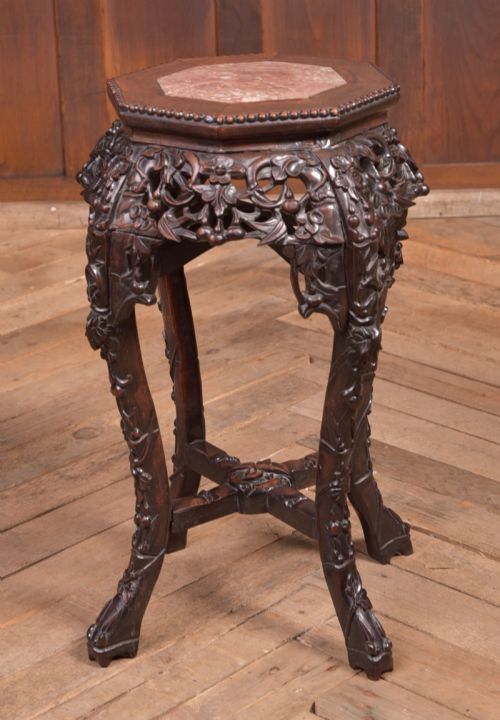
An oriental carved jardiniere stand elevates a heavy ceramic pot or bronze vessel, bringing intricate floral or geometric woodwork into a room.
Oriental Carved Jardiniere Stand
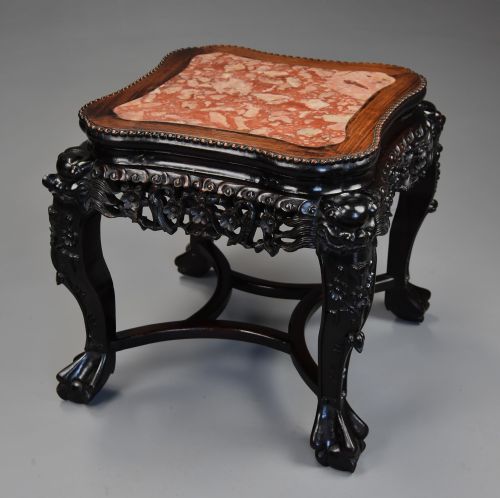
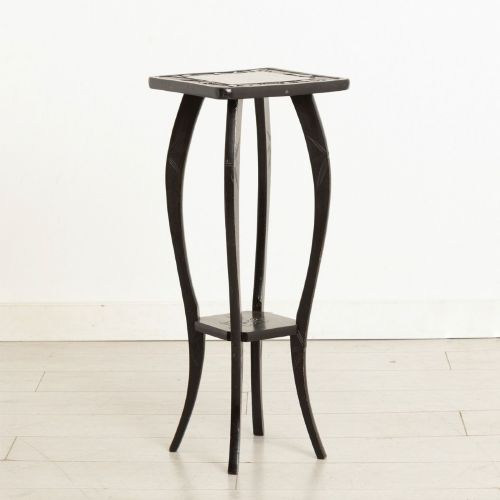
An oriental carved jardiniere stand serves primarily as a raised platform for indoor plants, decorative vases, or small urns, appearing across the nineteenth and early twentieth centuries in Chinese Export, Qing Dynasty, and Japanese Meiji styles. The pieces on this page include low pot stands, tall plant pedestals, and occasional side tables that double as display surfaces.
Most examples originate from Chinese workshops utilising dense tropical timbers, while Japanese interpretations employ ebonised wood or distinct decorative schemes. Buyers frequently encounter pieces featuring inset circular marble tops surrounded by pierced aprons and heavily carved cabriole or claw feet.
The domestic role of these stands extends beyond botany, frequently functioning as lamp tables or wine tables within Victorian and Edwardian interiors. Their sturdy construction accommodates both heavy stone vessels and delicate porcelain planters without tipping.
Materials and Construction
Carpenters constructed these tables using heavy, dense timbers such as padouk, rosewood, hongmu, and general hardwoods, selected for their ability to support substantial downward pressure without warping. Ebonised wood and lacquer also appear, giving certain Japanese and Victorian interpretations a smooth, dark surface finish.
Many stands incorporate inset slabs of variegated rouge or white marble, tightly fitted into the wooden frame to provide a cool, water-resistant surface for damp plant pots. Joinery relies on traditional mortise and tenon techniques, often reinforced by deeply undercut relief carving along the aprons and legs.
Listings feature items spanning the Victorian and Edwardian eras, alongside pieces dated to the nineteenth century, 1890, 1900, 1880, 1920, and 1860.
Craftsmanship and Material Depth
The depth and crispness of the hand carving dictate the quality of an oriental carved jardiniere stand, separating fluid, undercut floral motifs from flat, mechanical incisions. Superior examples display meticulous attention to detail in the joints, claw feet, and pierced friezes without relying on heavy fillers.
The selection and fit of the inset marble top further distinguish finer pieces, particularly when the stone exhibits striking natural veining and sits completely flush with the surrounding wooden moulding. Dense timbers like padouk and hongmu also indicate higher workshop standards compared to softer secondary woods.
Liberty of London
The Oriental Carved Jardiniere Stand Glossary
- Hongmu
- A dense, heavy Chinese hardwood often translated as red wood, frequently used for high-status Qing Dynasty furniture. It develops a rich patina over time.
- Padouk
- A durable tropical timber with a reddish hue used extensively in Chinese furniture making. Its natural strength suits heavy load-bearing stands.
- Jardiniere
- A large ornamental pot or container for plants or flowers. These stands were specifically built to elevate such vessels.
- Meiji Period
- The era of Japanese history spanning from 1868 to 1912, associated with craftsmanship exported to Western markets. Pieces from this time often show distinct aesthetic influences.
- Ebonised wood
- Timber treated with a chemical stain or finish to imitate ebony. This dark surface was popular during the Victorian period for Asian-inspired display pieces.
Oriental Carved Jardiniere Stand: Frequently Asked Questions
What is a jardiniere stand used for?
These pieces were originally designed to hold large ceramic plant pots, heavy bronze vessels, or decorative urns off the floor. Elevating the container protected floorboards from moisture and displayed the plant at a convenient height.
Over time, owners adapted them to serve as lamp tables, display surfaces for ornaments, or occasional side tables in sitting rooms. Their sturdy frames easily support varied household items.
How do I identify a Qing Dynasty stand?
Qing Dynasty stands typically feature dense tropical hardwoods like padouk or hongmu, accompanied by deep, undercut relief carvings of prunus, dragons, or auspicious symbols. They frequently incorporate inset marble tops and robust cabriole legs.
Closer inspection of the joinery reveals traditional hand-cut joinery rather than modern metal screws. The weight of the timber itself often points towards these earlier workshop origins.
Can these stands support heavy objects?
The dense hardwoods used in their construction make these stands remarkably strong and stable. They were engineered to bear the substantial weight of large ceramic planters filled with damp soil.
While robust, the protruding carved aprons and delicate feet require careful placement to avoid accidental impacts. Placing heavy lamps or vases on them poses no structural challenge.
How do I care for the marble top?
Marble inserts require simple dusting with a soft cloth and occasional wiping with a damp sponge to remove surface grime. Avoid harsh chemical cleaners or acidic substances that can etch the polished stone surface.
Using felt pads under heavy vases prevents scratching the marble and protects the surrounding wooden frame. Keeping the stand away from direct heat sources prevents the timber from shrinking around the stone inset.