




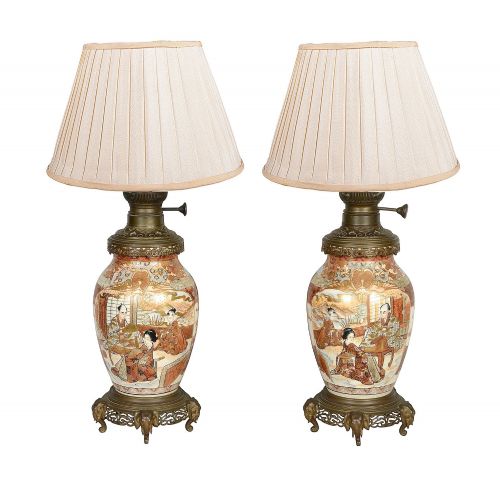
Oriental Bronze Table Lights
These oriental bronze table lights bring cast metal, porcelain, and enamel into domestic rooms through nineteenth and early twentieth century conversions.
Oriental Bronze Table Lights
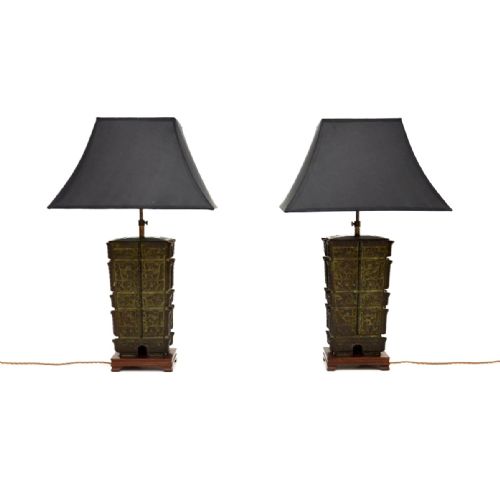
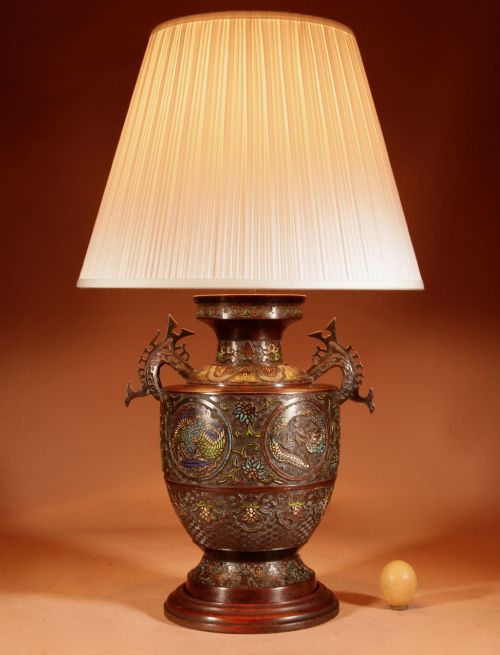
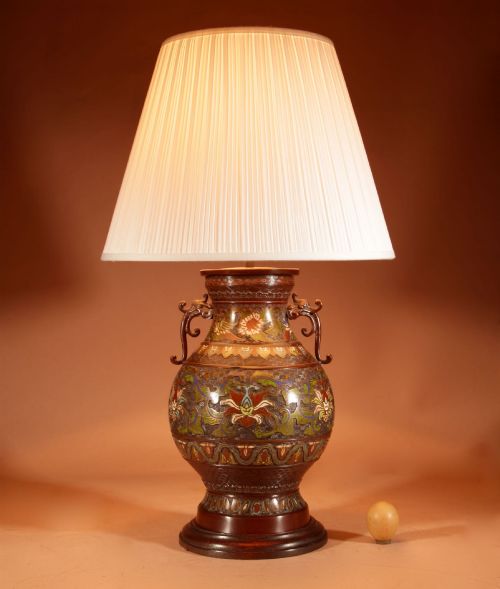
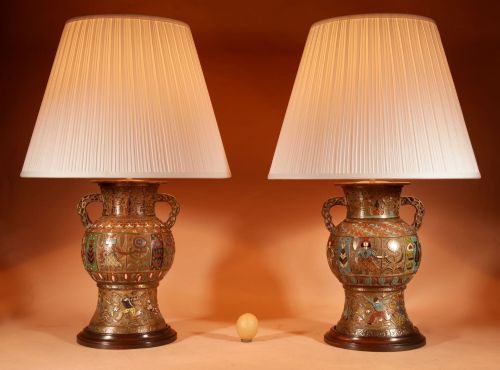
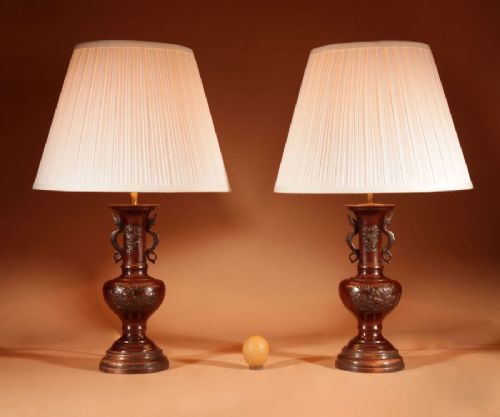
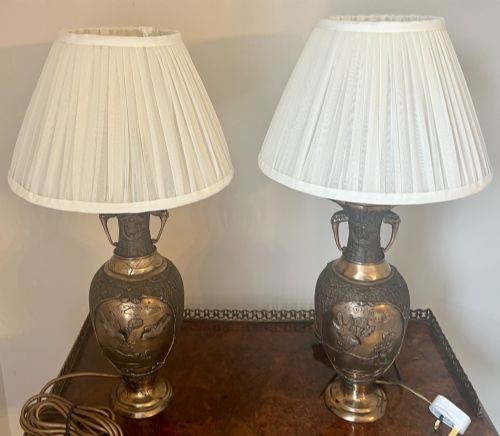
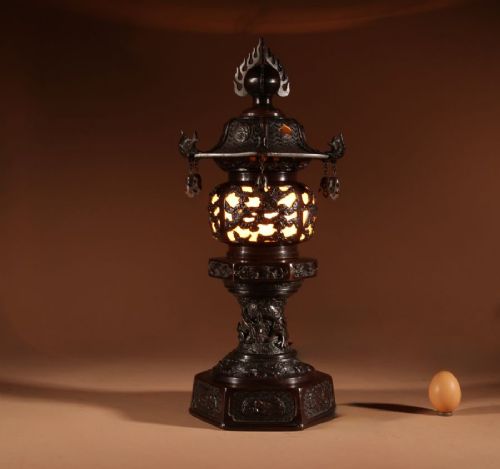
Oriental bronze table lights draw upon nineteenth and early twentieth century aesthetics, incorporating Japanese and Chinese metalwork, ceramics, and cloisonné into domestic lighting. These pieces emerge from periods such as the Meiji era and the Victorian age, often combining cast or patinated bronze with earlier vases and lanterns. Buyers seeking oriental bronze table lights will encounter table lamps formed from patinated vessels, lidded urns, and hanging lanterns mounted for electric illumination.
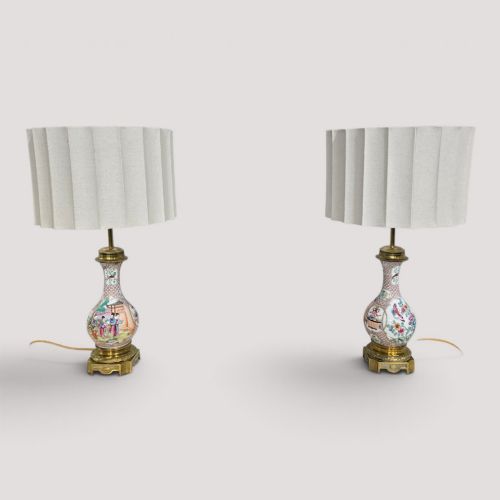
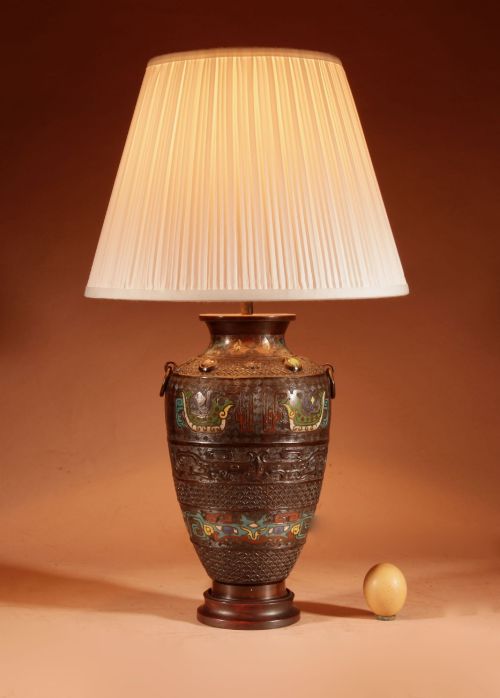
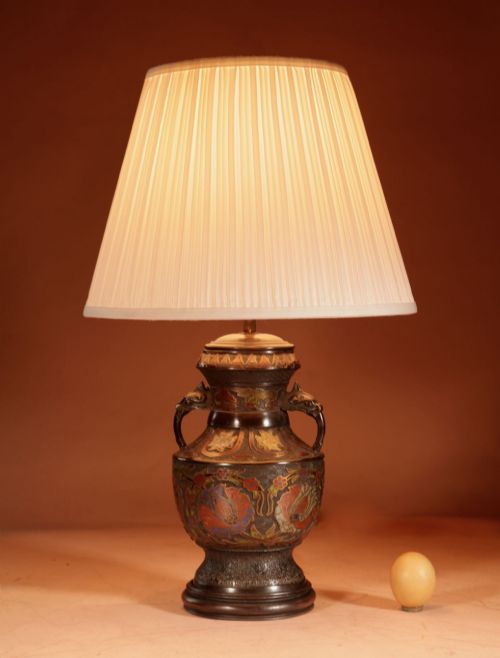
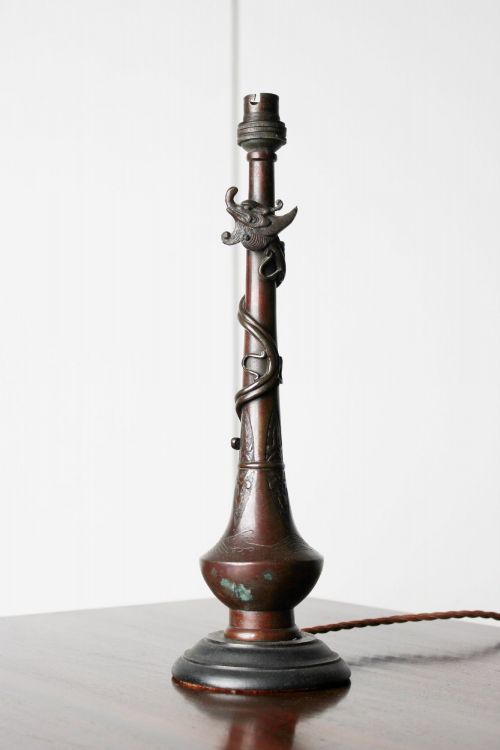
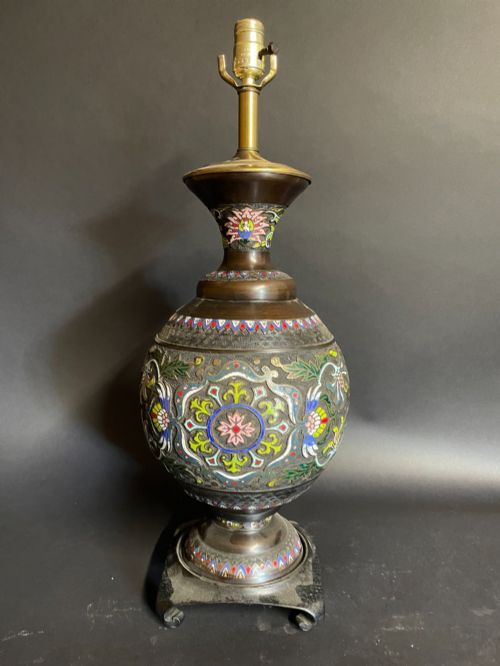
Japanese metalwork dominates the selection, particularly heavy bronze lamps from the Meiji period featuring dragons, elephants, or champlevé enamel decoration. Alongside these stands, Chinese porcelain bodies appear mounted in gilt bronze, ormolu, or brass. The forms range from simple patinated metal pillars to large lantern bases and converted vases created during the nineteenth and early twentieth centuries.
How they were made
Makers utilised traditional foundry methods to cast bronze, brass, and white metal into sculptural bases, animal figures, and structural mounts. Surface decoration relied on champlevé and cloisonné enamel work, alongside applied patination to achieve deep, dark tones on the metal. Ceramic components such as Satsuma, rose medallion, and celadon porcelain were incorporated into the designs, secured with gilt bronze or ormolu mounts.
The conversion of earlier vases, jars, and lanterns into lamps involved piercing or adapting the base and neck to accommodate electrical wiring while retaining the original vessel intact. Skilled metalworkers cast bespoke mounts and collars to stabilise the ceramic or bronze bodies upon wooden or metal plinths.
Oriental Bronze Table Lights Retail Price Guide 2026
Typical asking prices for oriental bronze table lights among the pieces listed under this phrase on Sellingantiques today, from the lower quarter to the upper quarter. They describe what is for sale here now, not the wider market.
Elephants and dragons hold up the nineteenth-century room with surprising domestic obedience.
What varies in quality
The quality of oriental bronze table lights rests upon the crispness of the bronze casting and the depth of the hand-applied patination. Superior examples display sharply defined details in animal motifs, foliage, and architectural elements without softening in the metalwork. The integration of mounts reveals the maker's hand, where gilt bronze or ormolu settings follow the contours of the ceramic body precisely.
Enamel work provides another measure of standard, with fine champlevé and cloisonné pieces exhibiting vibrant, evenly distributed colours held within clean wire cells or deep channels. The weight and stability of the base also indicate construction standards, as substantial bronze foundations support larger porcelain or metal bodies securely.
The Oriental Bronze Table Lights Glossary
- Champlevé
- Enamelling technique where shallow troughs are gouged into a bronze surface and filled with vitreous paste before firing. This method creates bold coloured patterns across Japanese bronze table lights.
- Cloisonné
- Decorative work where thin metal wires are soldered to a bronze body to form compartments, which are then filled with enamel. It produces intricate geometric and floral designs on antique lamp bases.
- Meiji Period
- Japanese historical era spanning from 1868 to 1912, noted for detailed metalwork and bronze production. Many decorative table lights originate from this specific timeframe.
- Ormolu
- Finely ground high-carat gold powder applied to a mercury-amalgam base on bronze mounts. This technique gives nineteenth-century French and English mounts a rich golden lustre.
- Rose Medallion
- Chinese porcelain decorated with panels of figures, birds, and flowers in enamels dominated by rose pink. These colourful vases frequently appear mounted as table lamps.
Oriental Bronze Table Lights: Frequently Asked Questions
What periods do these lamps come from?
The pieces span the nineteenth and early twentieth centuries, drawing heavily on the Victorian era and the Japanese Meiji period. Many items reflect later European adaptations of Chinese and Japanese decorative arts.
Dates range across the eighteen-eighties through to the nineteen-thirties, encompassing both original metalwork and period ceramic conversions.
Are these lamps converted from older vessels?
Many examples are created from nineteenth-century vases, jars, and hanging lanterns that were subsequently adapted for interior lighting. Manufacturers added mounts, bases, and wiring while preserving the original ceramic or bronze bodies.
This practice allowed decorative oriental vessels to serve practical domestic functions in European and British homes.
What materials are used in these lights?
Construction relies primarily on bronze, brass, and patinated white metal, often paired with fabrics, silk, and wood. Ceramic elements include celadon, blue and white porcelain, Satsuma, and rose medallion wares.
Surface enrichment is provided by champlevé enamel, cloisonné, and gilt bronze or ormolu mounts.
How do I identify Meiji period bronzes?
Meiji period bronzes generally feature cast motifs such as dragons, elephants, or naturalistic foliage executed with deep patination. They frequently incorporate champlevé enamel details and heavy, robust casting.
These pieces align with the Japanese imperial era spanning 1868 to 1912.