


Oriental Bird Carving
These oriental bird carving works span centuries of bronze, jade, wood, and porcelain craftsmanship from China and Japan.
Oriental Bird Carving
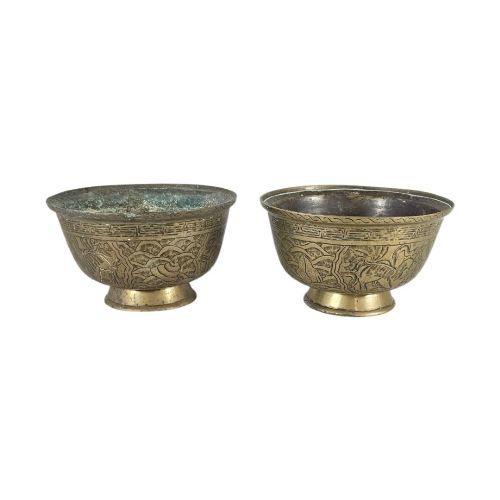
When you search for an oriental bird carving, you are looking at sculptural representations of avian forms originating predominantly from Chinese and Japanese artistic traditions. The selection on this page centres heavily on Meiji period Japanese bronzes and Qing dynasty Chinese works, moving from delicate scholar's jade pieces to robust jardinieres.
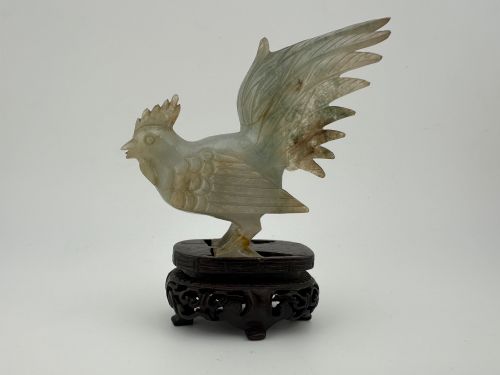
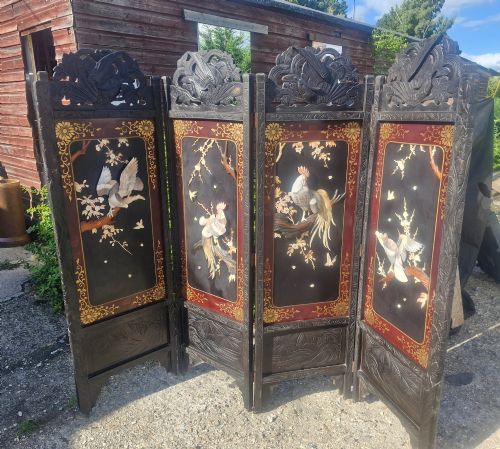
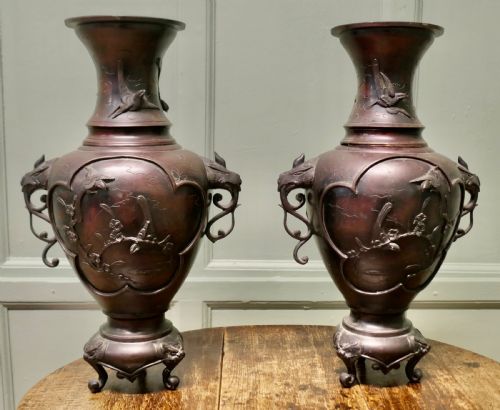
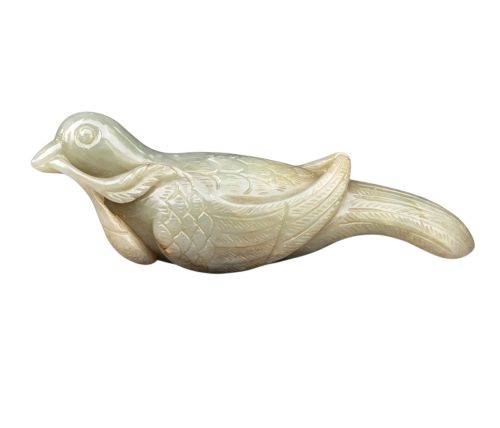
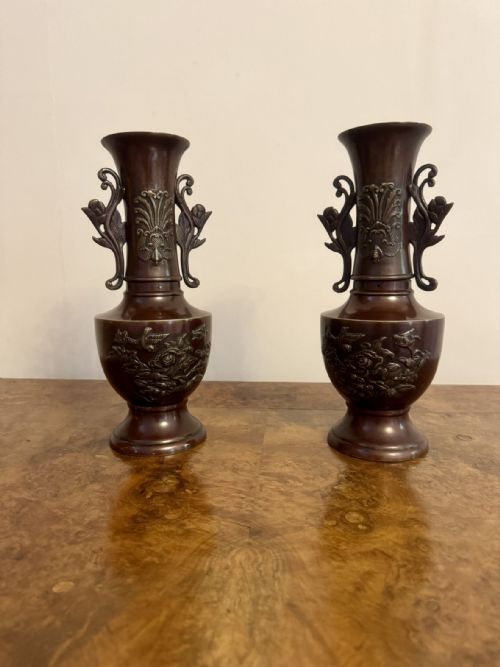
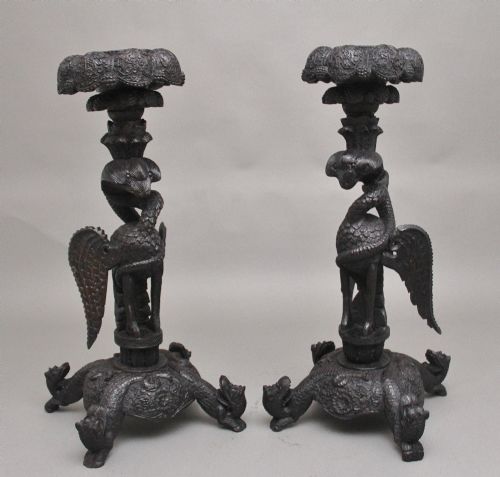
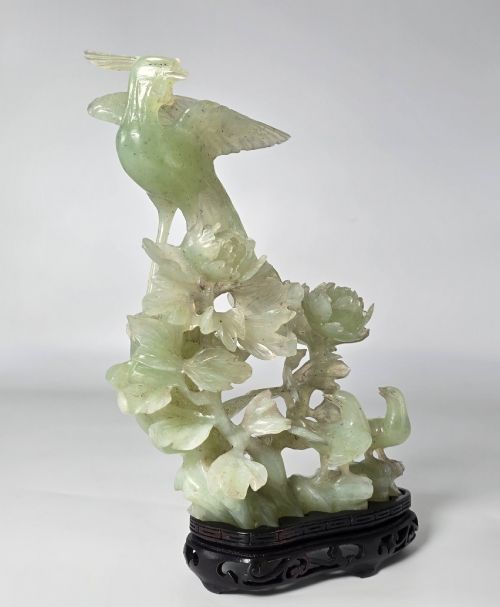
You will encounter various interpretations of birds integrated with natural motifs like blossoms, lotus, and foliage. Forms range from freestanding bronze models of birds of prey to carved stone groups, jade water birds, and inlaid lacquered panels depicting avian life in branches.
The objects serve primarily as decorative elements or scholar's desk items, appearing as vases, bowls, and panel inlays rather than standalone figures alone. These pieces showcase a deep cultural reverence for nature rendered through meticulous material manipulation.
Materials and techniques
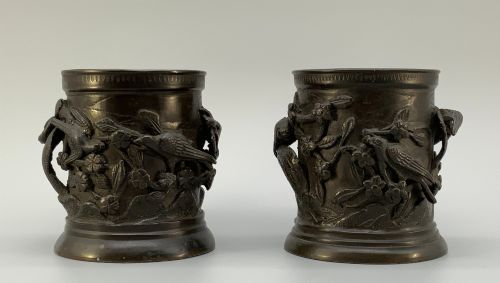
Bronze casting forms the backbone of the sculptural offerings, often utilising patinated finishes, silvering, or elaborate relief work to delineate feathers and botanical backgrounds. Craftsmen also employed hardstones such as celadon jade and pale green carved stone, shaping dense mineral matter into smooth scholar objects.
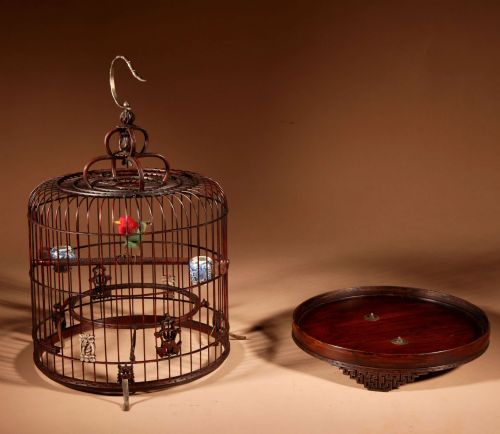
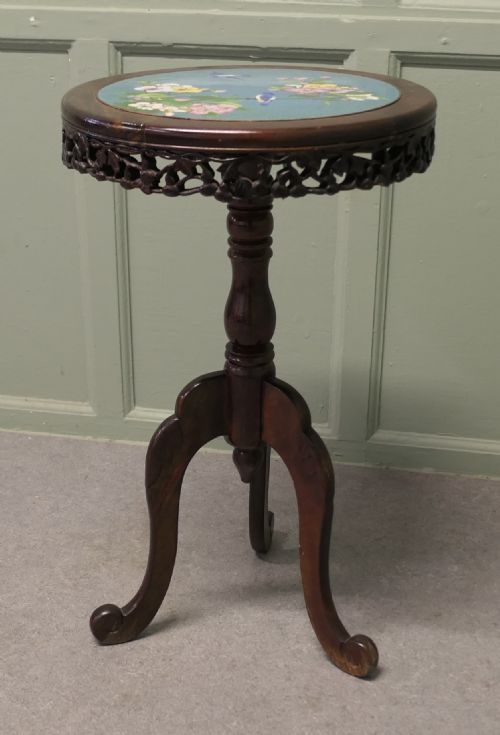
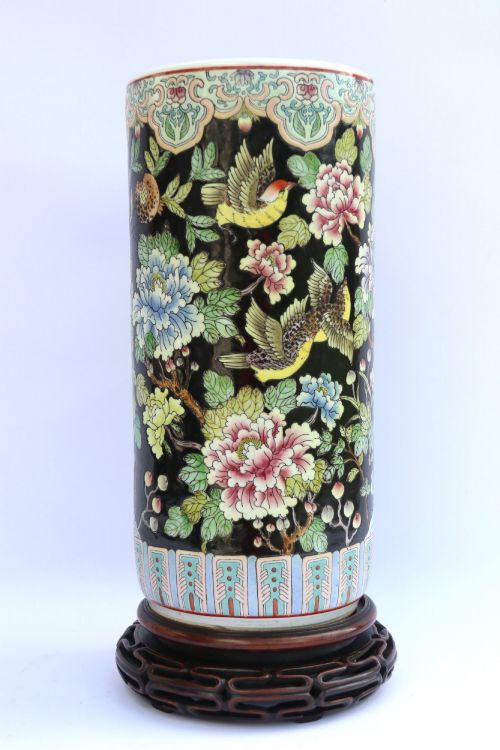
Organic mediums feature prominently through carved hardwood stands, bamboo bird cages, and intricate lacquer panels inlaid with mother-of-pearl, abalone, and foilage. Porcelain works utilise sancai glazes and famille noire palettes to colour avian subjects upon vases and decorative ducks.
The documented forms span functional vessels like jardinieres and vases alongside folding screens, panels, and scholar's jade water birds.
Distinctions in quality
The distinction between ordinary and exceptional pieces lies in the crispness of the chisel work and the depth of the casting relief. Superior bronze vessels display sharply defined feather patterns and balanced patination, whereas lesser examples show softer, smoothed details from worn moulds.
Inlaid and lacquered panels reveal quality through the precision of the joinery and the iridescence of the shell inlay used to render plumage. Masterworks maintain harmonious proportions between the avian subject and its vessel or background panel.
The Oriental Bird Carving Glossary
- Meiji Period
- The era in Japanese history spanning from 1868 to 1912, noted for a surge in highly detailed bronze casting and decorative arts exported to the West.
- Qing Dynasty
- The final imperial dynasty of China, ruling from 1644 to 1912, represented here through bronze bowls, jade carvings, and celadon works.
- Cloisonné
- A metalwork technique where compartments are created using wire welded to the base body and subsequently filled with coloured enamel paste.
- Jardiniere
- A large ornamental pot or planter, frequently cast in heavy bronze with bird and floral reliefs in the Meiji style.
- Celadon
- A term for ceramics denoting a pale green jade-like glaze, or the specific jade mineral utilised in scholarly carvings.
Oriental Bird Carving: Frequently Asked Questions
What is an oriental bird carving?
These items are decorative and scholarly objects from China and Japan featuring avian motifs executed in bronze, jade, wood, and porcelain. They encompass freestanding figures, vases with relief decoration, and inlaid panels.
Craftsmen utilised traditional methods like lost-wax bronze casting, stone carving, and lacquer inlay to render birds amongst natural foliage such as lotus and blossoms.
How were these pieces used historically?
Many bronze vessels and jardinieres functioned as ornamental planters or display urns within elite interiors during the nineteenth and early twentieth centuries. Scholar's objects like jade water birds were kept on desks for contemplation and writing.
Panels and screens served as architectural decorations or room dividers, bringing natural imagery indoors through meticulous carving and inlay techniques.
How do I date a Meiji bronze?
Japanese bronzes from the Meiji period typically date between 1868 and 1912, identifiable by deep relief work depicting birds, branches, and floral motifs. The weight, patination quality, and casting style offer clues to their exact period of manufacture.
Many bear distinct textural finishes or patinated surfaces that reflect the chemical treatments favoured by Japanese metalworkers of the late nineteenth century.
How should I care for jade and bronze?
Bronze pieces benefit from occasional dusting with a soft, dry cloth to protect the patinated surface from accumulating moisture and particulate matter. Avoid using harsh chemical cleaners that can strip the historic finish.
Jade and hardstone carvings require similarly gentle maintenance, keeping them away from direct heat sources and sudden temperature fluctuations to preserve the integrity of the mineral.