


Oriental Bamboo Furniture
Oriental bamboo furniture brings together the lightness of cane with the structured ornament of the Aesthetic Movement and Victorian Chinoiserie.
Oriental Bamboo Furniture
When you search for oriental bamboo furniture, you encounter practical household items shaped by nineteenth-century tastes and traditional Chinese craftsmanship. These pieces span from the late nineteenth century into the early decades of the twentieth, encompassing the Victorian and Edwardian eras. The selection on this page centres on tables, cabinets, stands, and seating.
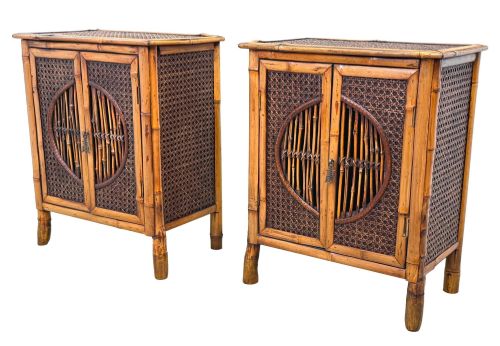
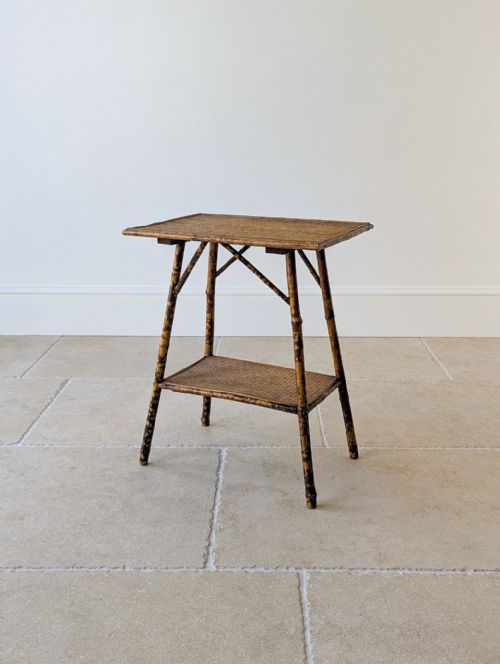
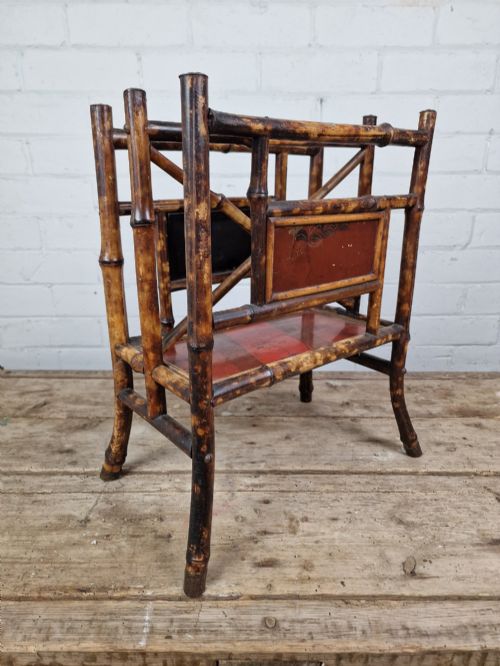
You are most likely to meet nests of tables, occasional tables, and side tables constructed during the Victorian period or around nineteen hundred. Many combine bamboo frames with lacquered panels, glass surfaces, or hardwood details. Alongside these, you find magazine racks, display cabinets, plant stands, and parlour suites that reflect both British aesthetic design and Chinese export traditions.
What varies in quality
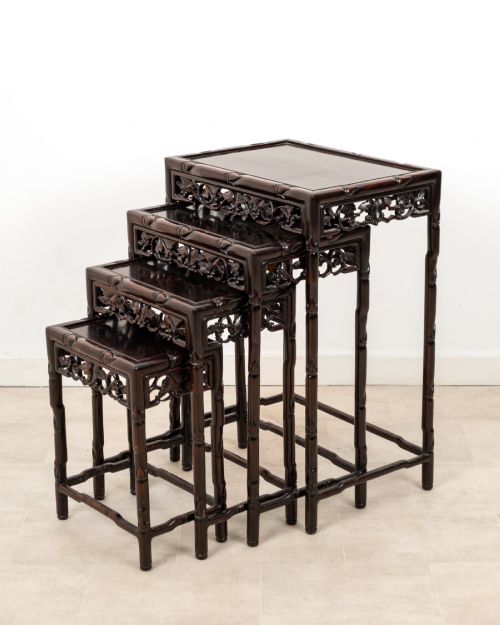
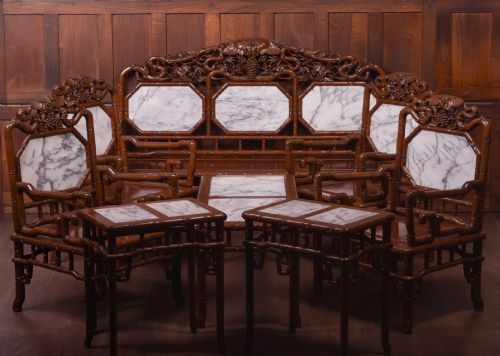
The refinement of the carving on hardwood components separates standard production from superior examples. Dense woods like hongmu and rosewood hold intricate details much sharper than softer timbers. The consistency of tiger bamboo figuring across a piece also marks out better construction.
Surface decoration indicates craftsmanship levels, particularly in lacquered panels and japanned finishes. Hand-painted or gilt details that retain their clarity and depth show greater skill than simple stencilled patterns. Furthermore, the stability of the bamboo joints and the tightness of the cane weaving determine how well a piece holds its structural integrity.
An early twentieth-century child carriage made from bamboo lets your most pampered doll travel in absolute Victorian style.
The Oriental Bamboo Furniture Glossary
- Aesthetic Movement
- A nineteenth-century design style that emphasised visual beauty over narrative meaning, heavily influenced by Japanese and Chinese art. It encouraged the use of bamboo and ebonised wood in domestic interiors.
- Hongmu
- A traditional Chinese term for dense, red-brown hardwoods used in fine furniture making. It translates literally to red wood and provides a heavy, durable frame.
- Canework
- A weaving technique using rattan peel to create breathable, patterned panels for seats and shelves. It adds texture and lightness to wooden and bamboo frames.
- Torchere Stand
- A tall, slender pedestal designed to hold a candle or a decorative plant. These stands often feature carved hardwood or bamboo shafts with circular tops.
- Quartetto
- A set of four graduated tables designed to slide neatly beneath one another. They became popular in late Victorian and Edwardian homes for serving tea and entertaining.
Oriental Bamboo Furniture: Frequently Asked Questions
What is oriental bamboo furniture?
Oriental bamboo furniture comprises household furnishings made from bamboo, cane, and exotic hardwoods during the nineteenth and early twentieth centuries. These items blend British aesthetic and Victorian tastes with Chinese export manufacturing.
You find forms ranging from nests of occasional tables and magazine racks to display cabinets, sewing tables, and children's carriages. They rely on natural materials like tiger bamboo and lacquered wood.
How do I date these pieces?
Dating relies on identifying stylistic markers such as the Aesthetic Movement influence, Victorian Chinoiserie motifs, or Edwardian manufacturing traits. Evidence points primarily to the late nineteenth century and the early nineteen hundreds.
Construction methods also help establish age, as earlier pieces often feature hand-carved hardwoods and traditional joinery. Examining the specific combination of bamboo, lacquer, and hardware provides further chronological clues.
How were these pieces used?
Victorian and Edwardian households utilised these items for daily entertaining, displaying decorative objects, and storing magazines or sewing supplies. Nests of tables offered flexible surfaces for tea service that could be tucked away when not in use.
Cabinets and stands provided designated spaces to exhibit prized porcelain and curiosities from the East. Bijouterie tables specifically showcased small personal treasures beneath glass lids.
How do I care for bamboo furniture?
Maintenance involves keeping pieces away from direct sunlight and moisture to prevent the bamboo and cane from drying out or splitting. Gentle dusting with a soft, dry cloth preserves the lacquer and wood finishes.
Avoid harsh chemical cleaners that can strip the original polish or damage delicate canework. Regular, careful handling ensures the lightweight frames remain stable.