

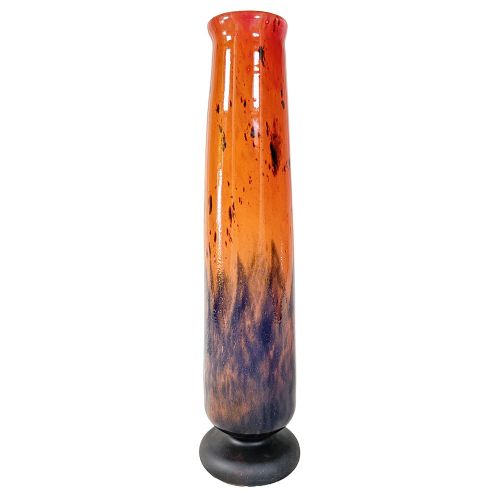
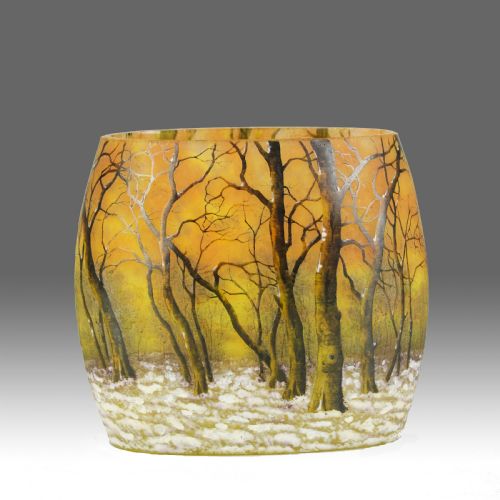


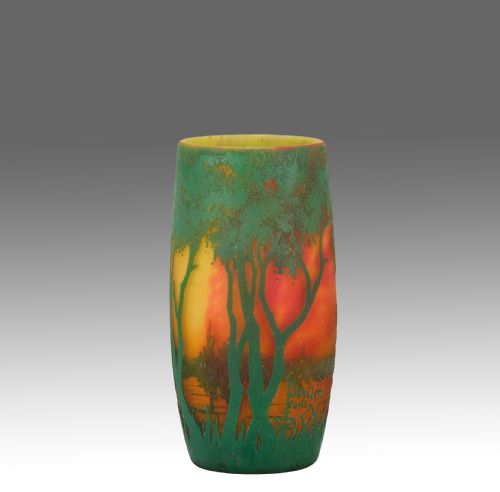


Orange Art Glass Vessel
These orange art glass vessel pieces bring vibrant twentieth century colour to a room through skilled glassmaking from the Art Nouveau and Art Deco periods.
Orange Art Glass Vessel
An orange art glass vessel takes the form of vases, decorative bowls, and decanters and jugs created during the early twentieth century. These pieces span the Art Nouveau and Art Deco styles, showing diverse silhouettes from large oviform bodies to aquatic and landscape designs.
The version most commonly met on this page is the cameo glass vase, frequently associated with makers working around nineteen hundred and nineteen twenty. Such vessels employ layered glass techniques to reveal striking orange tones against contrasting backgrounds.
Makers also produced simpler blown forms and specialised vessels such as the Monart glass bowl and Venini vases. Each object reflects the prevailing decorative tastes of its decade, utilising distinct glassworking methods.
How they were made
Glassmakers utilised hand-blown and blown glass techniques to form the basic vessel structure before applying surface decoration. Molten material was shaped manually, resulting in varied profiles across vases, bowls and jugs.
Cameo glass and acid-etched glass methods required layering different coloured glass and eating away the exterior to expose the orange design beneath. Enamel and powdered glass additions further enriched the surface texture and colour depth of the finished vessel.
Orange Art Glass Vessel Retail Price Guide 2026
Typical asking prices for orange art glass vessel among the pieces listed under this phrase on Sellingantiques today, from the lower quarter to the upper quarter. They describe what is for sale here now, not the wider market.
Listings feature pieces from the nineteen hundreds, nineteen tens, nineteen twenties and nineteen thirties across multiple glass styles.
What varies in quality
Depth and complexity of the cameo carving distinguish finer pieces from simpler productions, with multi-layered acid-etching demanding high technical precision. The crispness of landscape and floral motifs defines the artistic success of the vessel.
The reputation of the maker and the integration of original components, such as stoppers on jugs, influence the standing of an object. Superior examples display harmonious colour transitions, particularly in the rendering of orange hues against contrasting tones.
Daum Frères·Le Verre Francais·Schneider·Vittorio Zecchin for Venini·Monart Glass
The Orange Art Glass Vessel Glossary
- Cameo Glass
- Glass vessels created with multiple fused layers of differing colours that are carved or acid-etched to produce a raised design. This technique allows contrasting shades like orange to stand out against a lighter or darker background.
- Acid-Etched Glass
- Glass decorated by applying acid to eat away exposed surfaces and create textured patterns or layered designs. The method gives precise control over the depth of the motif.
- Enamel
- Opaque glass material applied to the surface of a vessel and fired to fuse with the body. It adds painted details and supplementary colour to the glass piece.
- Powdered Glass
- Finely ground glass fused into the body or surface during melting to create mottled or speckled colour effects. This method builds rich visual depth within the material.
- Art Nouveau
- A decorative style spanning the late nineteenth and early twentieth centuries characterised by organic and flowing natural lines. Pieces from this movement often feature floral and aquatic subjects.
Orange Art Glass Vessel: Frequently Asked Questions
What is cameo glass?
Cameo glass is made by fusing multiple layers of different coloured glass together before carving or etching the outer layer away.
This reveals contrasting colours underneath, producing a raised design that stands out sharply against the background.
How do I care for art glass?
Art glass should be dusted gently with a soft cloth and washed by hand in lukewarm water only when necessary.
Avoid using harsh chemical cleaners or placing vessels in direct sunlight for extended periods to protect the colours.
What distinguishes Art Deco glass?
Art Deco glass displays geometric forms, stylised patterns and cleaner lines compared to the organic shapes of the preceding movement.
Pieces from this era often embrace bold colours and simplified silhouettes typical of the nineteen twenties and thirties.