






Open Wall Hanging Rack
An open wall hanging rack frees up floor space while displaying your plates, books, and small possessions on the wall.
Open Wall Hanging Rack
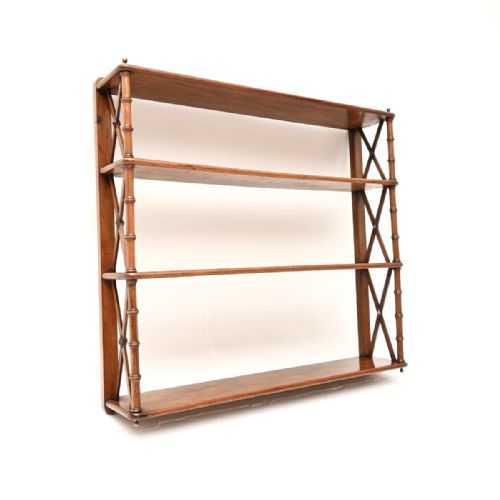
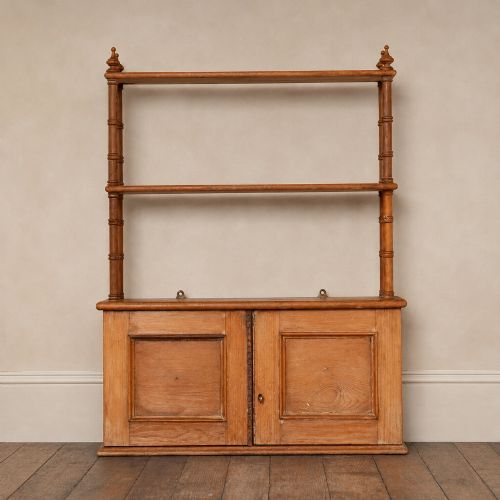
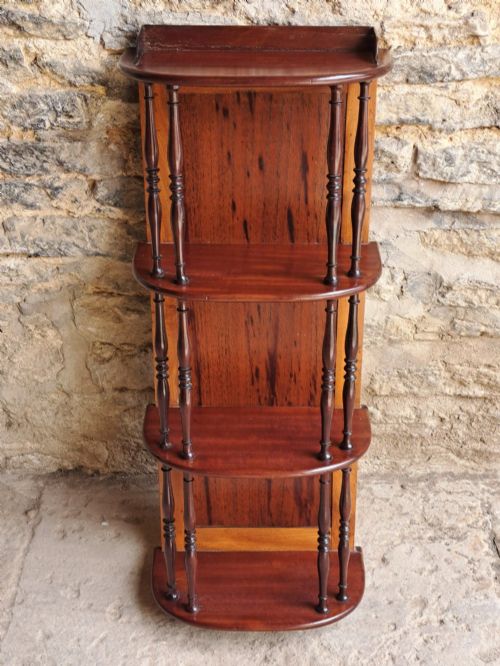
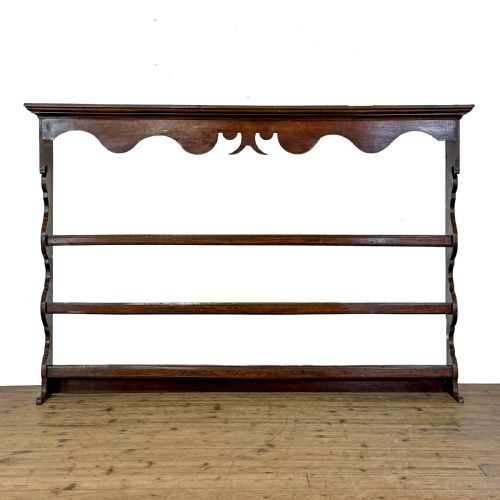
When you search for an open wall hanging rack, you encounter wall-mounted shelves, plate racks, and bookcases designed to attach directly to domestic walls. These pieces provide practical vertical storage without cluttering rooms with heavy floor-standing furniture.
The selections available here span multiple eras, including Georgian, Edwardian, and Arts and Crafts periods. You will frequently find mahogany and oak iterations alongside painted wood and cherry wood versions.
Most examples function as display spaces for books and decorative objects, utilising open shelving rather than enclosed doors. Their forms range from simple country pine units to finely detailed inlaid mahogany constructions.
How they were made
Cabinetmakers constructed these hanging racks using solid timbers such as mahogany, oak, walnut, and pine, often joined with traditional woodworking joints. Brass and iron fixtures provided structural support and hanging hardware.
Surfaces received various treatments depending on the period, ranging from clear polished finishes on figured mahogany to hand-painted decoration on folk art and country pieces.
Open Wall Hanging Rack Retail Price Guide 2026
Typical asking prices for open wall hanging rack among the pieces listed under this phrase on Sellingantiques today, from the lower quarter to the upper quarter. They describe what is for sale here now, not the wider market.
Some historic plate racks still carry the faint, ghostly outline where heavy Staffordshire platters rested for a century.
What varies in quality
Quality separates the standard utilitarian pine rack from the refined cabinetwork of a Georgian or Edwardian bookcase shelf. Superior pieces display thoughtful proportions, select timber grains, and delicate inlay work.
Simpler country items rely on sturdy construction and practical utility, whereas formal iterations exhibit sophisticated stylistic detailing appropriate for principal reception rooms.
The Open Wall Hanging Rack Glossary
- Plate rack
- A wall-mounted shelving unit specifically designed with grooves or rails to hold plates upright. These functional pieces originated in domestic kitchens and dining rooms.
- Inlay
- A decorative technique where contrasting woods or materials are inserted into recesses within the primary surface. Edwardian and Georgian pieces frequently utilise this method for visual refinement.
- Arts and Crafts
- A design movement valuing handcraftsmanship and simple forms over mass production. Pieces from this style prioritise honest construction and straightforward materials like oak.
- Wall mounting
- The method of securing a piece directly to a vertical surface using brackets or integrated hanging points. This structural feature keeps the furniture safely elevated.
Open Wall Hanging Rack: Frequently Asked Questions
How do I hang a heavy wooden wall rack safely?
Wall racks require secure attachment to wall studs or the use of appropriate heavy-duty wall anchors suited to your specific wall type.
Because these shelves often hold heavy books or ceramic plates, verifying the load-bearing capacity of both the fixings and the wall is essential before loading the shelves.
What rooms suit an open hanging rack best?
Kitchens, dining rooms, and studies provide natural homes for hanging shelves and plate racks. Kitchens benefit from accessible plate storage, while studies accommodate open bookcases.
Placing them away from direct heat sources helps protect older timbers from warping or drying out over time.
How do I identify a Georgian wall shelf?
Georgian pieces typically feature dense timbers like mahogany or walnut, often displaying classical proportions and restrained decorative moulding. The joinery methods and patination of the wood provide further clues to their eighteenth-century origin.
Examining the backboards and fixing points reveals the traditional construction techniques of the period.
Can these racks support heavy books?
Smaller racks are intended for light display items, decorative plates, or paperbacks, whereas larger hardwood bookcases safely hold heavier volumes. Assessing the thickness of the shelves and the strength of the side supports helps determine capacity.
Distributing weight evenly across the boards prevents sagging in older timber shelves.