
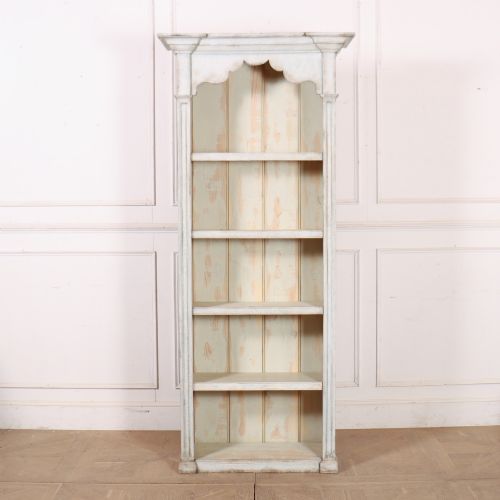
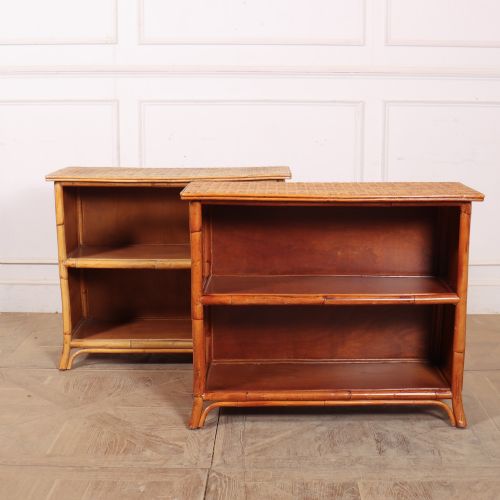
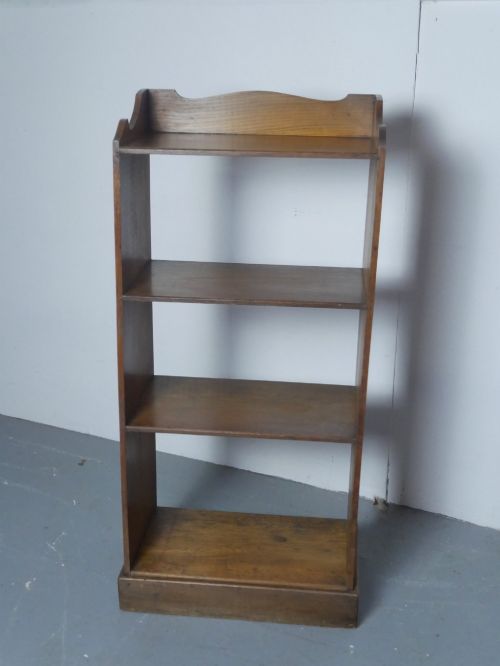
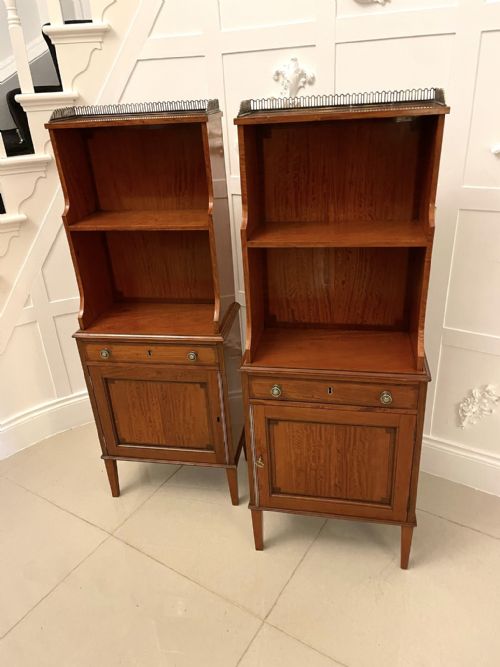
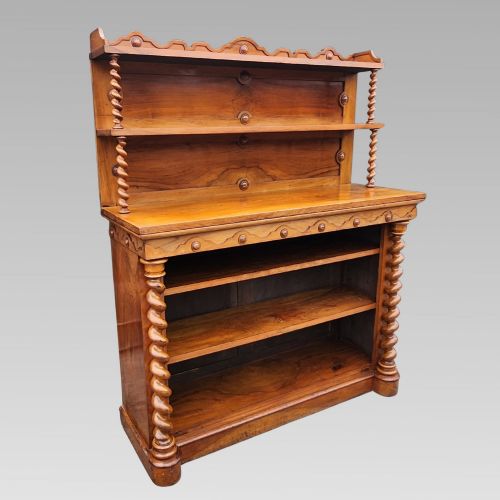


Open Top Bookcase
An open top bookcase brings accessible library storage and display into a room, offering immediate access to volumes while framing collections with architectural dignity.
Open Top Bookcase
An open top bookcase provides accessible shelving for books and decorative objects, frequently appearing across Georgian, Regency, Victorian, and Edwardian periods in both freestanding and fitted formats.
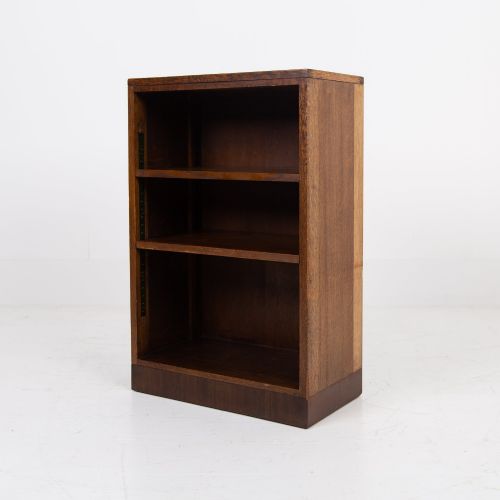
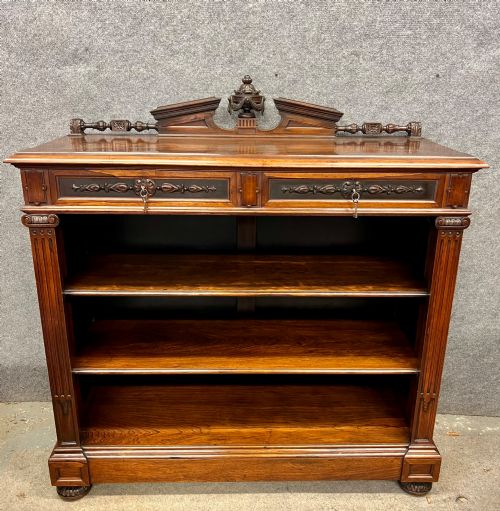
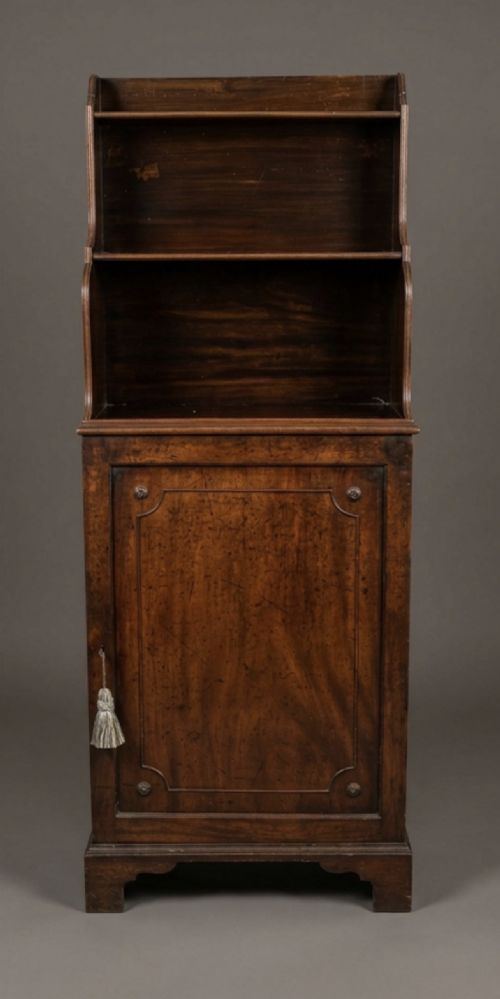
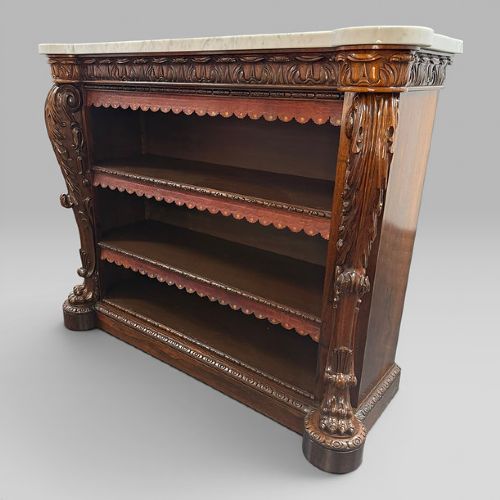
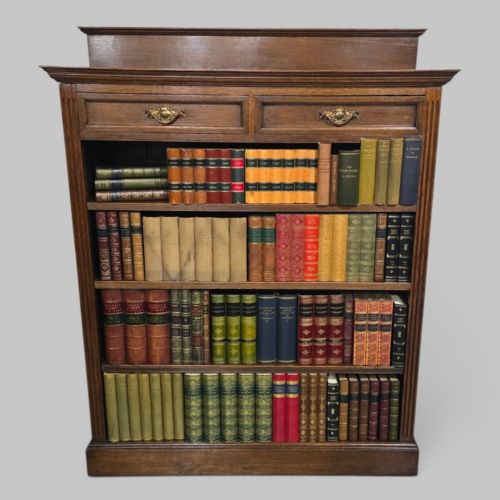
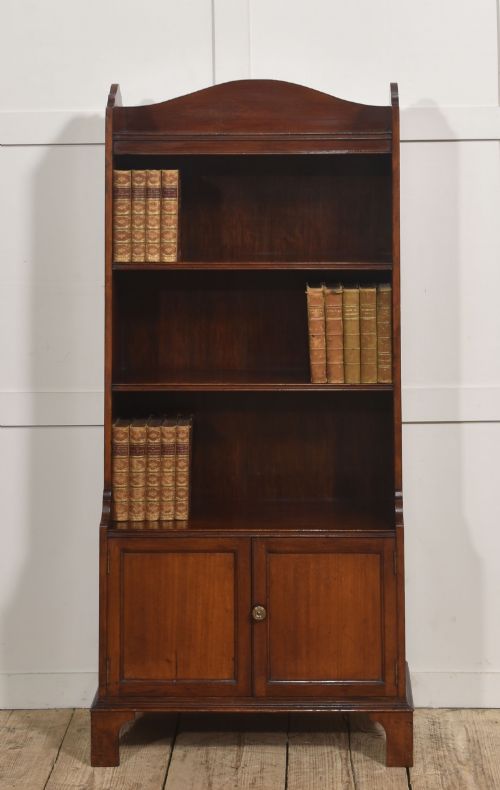
The pieces on this page range from modest oak library shelves to refined rosewood and mahogany cabinets featuring marble tops, leather-trimmed surfaces, and waterfall tiers.
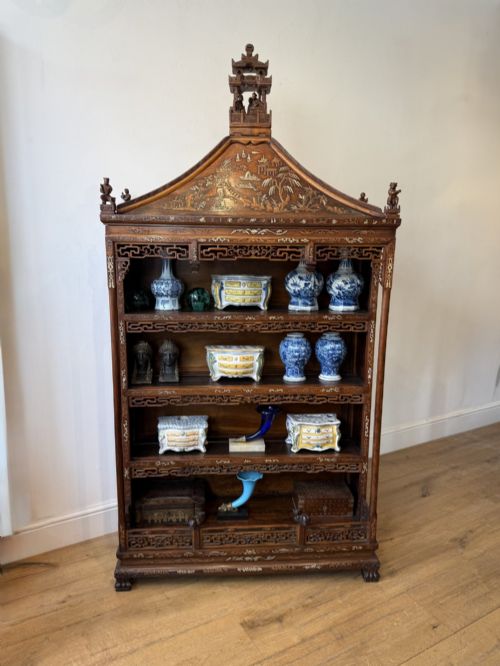
Originating largely from English and French workshops, these items serve as both functional library furniture and prominent decorative focal points within domestic interiors.
Materials and Construction
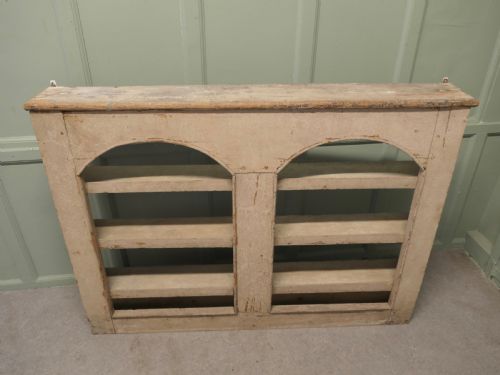
Cabinetmakers relied on dense timbers such as mahogany, oak, rosewood, and walnut, frequently applying fine veneers or decorative painted surfaces over secondary woods.
Higher specifications incorporate polished marble slabs, brass galleries, or ormolu mounts, combining structural timber with ornamental metalwork.
Shelving systems often utilise adjustable wooden supports, while specialised forms integrate leather writing inserts or glazed cabinet components below the open tiers.
Listings feature oak, mahogany, rosewood, and walnut pieces alongside marble-topped and leather-lined variants from the eighteenth through early twentieth centuries.
Standards of Execution
The distinction between standard utility pieces and exceptional commissions rests on timber selection, such as figured mahogany or matched rosewood veneers, alongside the crispness of carved or gilded enrichment.
Maker attribution elevates standing, with documented workshop output demonstrating superior joinery, thoughtful proportions, and refined integration of secondary materials like marble or ormolu.
The integrity of original surfaces, whether patinated polish or painted decoration, separates well-preserved examples from heavily restored alternatives.
Gillows·Collinson & Lock London·Sandberg & Co·Durand
The Open Top Bookcase Glossary
- Waterfall bookcase
- A tiered shelving unit where each successive shelf steps back from the one below it, creating a cascading profile popular in the nineteenth century.
- Ormolu
- Gilded bronze mounts applied to furniture as decorative ornament, frequently found on French and Regency examples.
- Vitrine top
- A glazed display compartment situated above or upon the open shelving section for the protection of delicate items.
- Dummy books
- Fictional book spines mounted onto doors or concealing storage compartments, often executed in leather with gilt tooling.
- Breakfront
- A cabinet design where the central section projects forward from the flanking wings, adding architectural depth to large bookcases.
Open Top Bookcase: Frequently Asked Questions
What is an open top bookcase?
An open top bookcase is a piece of furniture featuring accessible, unglazed shelving designed primarily for housing libraries and displaying decorative objects.
These pieces typically range from low, waist-height library units to tall architectural bookcases spanning multiple shelves.
How do I date an open bookcase?
Dating relies on identifying characteristic timber choices, construction methods, and stylistic details associated with periods like the Georgian, Regency, and Victorian eras.
Secondary woods, backboard construction, and decorative motifs such as ormolu mounts or brass galleries provide reliable chronological indicators.
Did these bookcases always have marble tops?
Marble tops appear frequently on nineteenth-century examples, particularly those influenced by French design or produced during the Regency and Victorian periods.
Many English library bookcases retain solid timber tops, while others incorporate inset leather panels or plain wooden surfaces suited to active study environments.
How do I care for a vintage bookcase?
Preserving these pieces involves maintaining stable room humidity to protect aged timbers, veneers, and applied leather surfaces from shrinking or cracking.
Routine dusting with a soft cloth and occasional application of appropriate furniture wax keeps polished wood surfaces nourished without building up residue.