
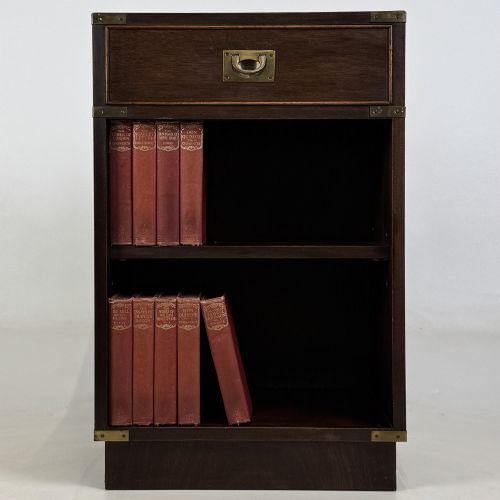
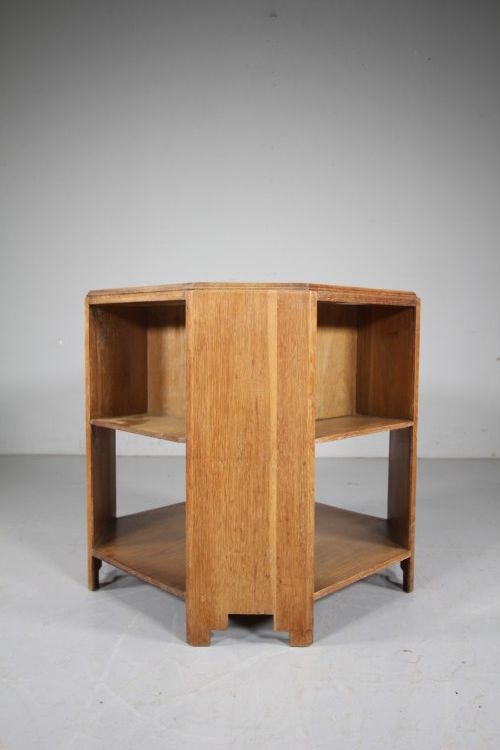


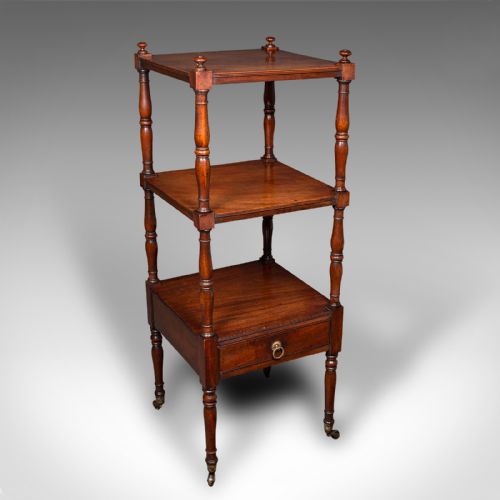

Open Shelf Bookcase Table
These open shelf bookcase table designs combine storage and display across varied woods like mahogany, oak, and walnut.
Open Shelf Bookcase Table
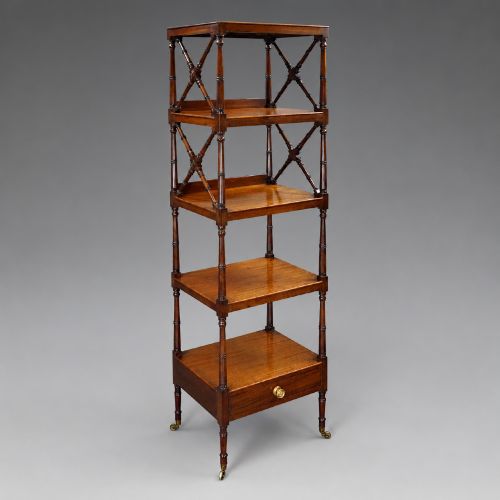
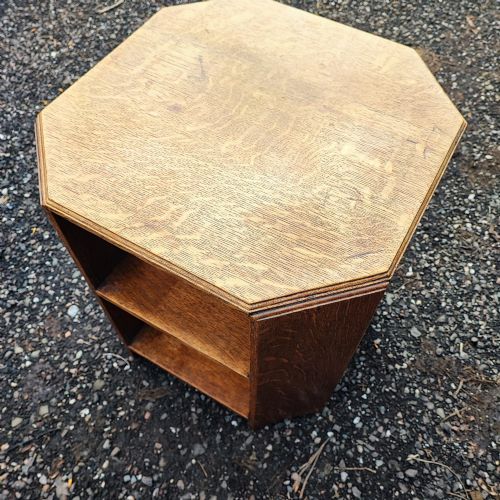
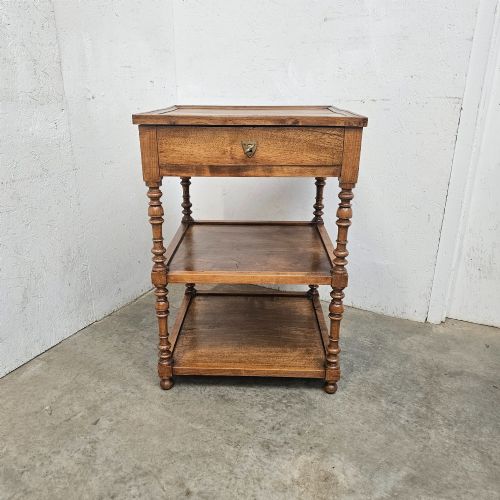
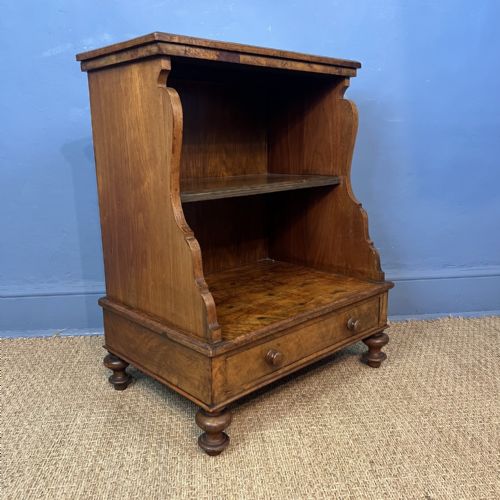
An open shelf bookcase table brings together book storage and surface utility in a single footprint. When you search for an open shelf bookcase table, you encounter diverse forms ranging from multi-tiered whatnots and etageres to compact bedside tables and low bookcases.
The selection spans several periods, with Victorian and Georgian examples appearing alongside Arts and Crafts, Regency, and 1930s pieces. Walnut, oak, and mahogany dominate the construction, often utilising figured timbers or burr veneers for visual depth.
Makers such as Heals and Waring and Gillows surface in the record, showing both workshop craft and commercial production. These hybrid pieces function equally well as display stands and functional book repositories in traditional or modern interiors.
How they were made
Cabinet makers utilised dense hardwoods like mahogany, oak, walnut, and rosewood, frequently selecting figured walnut and burr walnut for decorative impact. Secondary timbers provided internal stability while brass hardware added functional detailing.
Construction methods involved pegged joints, turned legs, and adjustable shelf mechanisms to accommodate varying volumes. Timber preparation relied on traditional hand-sawing and planing before polishing.
The archive includes adjustable shelf mechanisms in Victorian oak bookcases and campaign style pieces.
What varies in quality
The choice of timber underpins the hierarchy, distinguishing plain utility pieces from those utilising highly figured burr walnut, rosewood, or partridge wood. Cabinetmaking finesse appears in the crispness of turned legs, the precision of shelf adjustments, and the integration of drawers.
Proportion and architectural balance separate standard items from pieces of unusual design. Maker attributions or stamps also elevate specific examples above unmarked workshop production.
Heals·Waring and Gillows
The Open Shelf Bookcase Table Glossary
- Etagere
- A piece of furniture consisting of a set of open shelves for displaying small objects. These multi-tiered stands frequently appear in rosewood or walnut.
- Whatnot
- An open stand with multiple tiers used for books or ornaments. These pieces date across Georgian and Victorian periods.
- Burr walnut
- A veneer taken from the warted excrescences of a walnut tree, prized for its swirling grain patterns. Cabinet makers utilised this timber on high-status cabinets and bookcases.
- Campaign style
- Furniture designed to dismantle or fold for military travel, typically featuring brass corners and flush handles. Edwardian examples maintain this utilitarian aesthetic.
Open Shelf Bookcase Table: Frequently Asked Questions
How do I date a wooden bookcase table?
Dating relies on timber selection, construction techniques, and stylistic markers associated with periods like the Georgian era, Victorian times, or the 1930s. Georgian pieces often show hand-cut joinery, while Victorian examples frequently utilise rich rosewood and burr walnut.
Later 1930s items reflect Arts and Crafts or early modern influences through simpler lines and oak construction.
Where were these pieces used historically?
Historically, these items served in sitting rooms, libraries, and bedrooms to hold circulating literature and decorative ornaments. Their open shelves kept frequently read volumes immediately accessible.
Compact versions functioned beside beds as low tables, while taller multi-tiered etageres stood in parlours for visual display.
How do I care for antique walnut furniture?
Antique walnut requires protection from direct sunlight and dramatic humidity changes to prevent timber movement and veneer lifting. Regular dusting with a dry cloth maintains the polished surface.
Occasional application of appropriate wax nourishes the grain without building up heavy residues.
What distinguishes a whatnot from an etagere?
Both terms describe multi-tiered open shelving units, though whatnot traditionally refers to English display stands with three or more tiers. Etageres often denote pieces of French influence with lighter turned legs.
Both forms accommodate books and decorative objects within domestic interiors.