
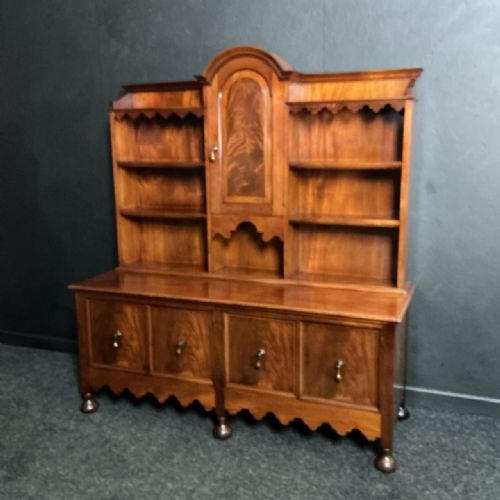
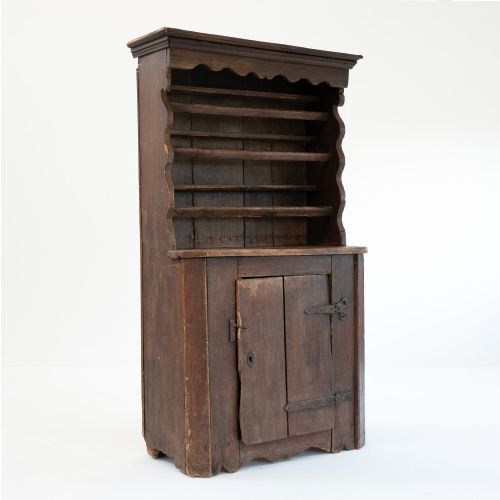
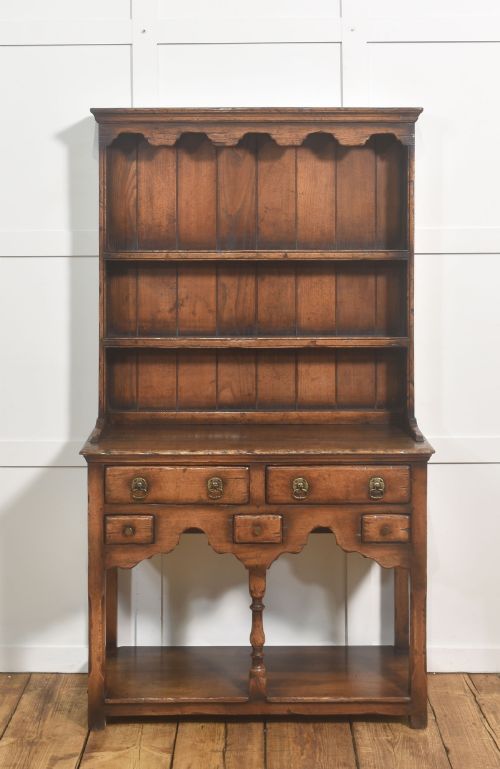
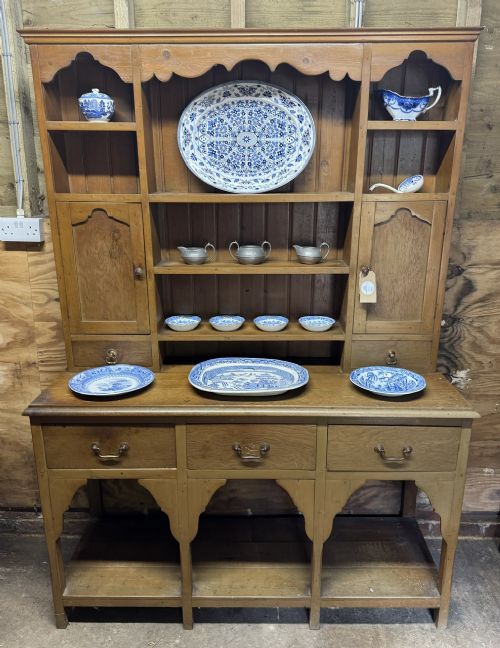
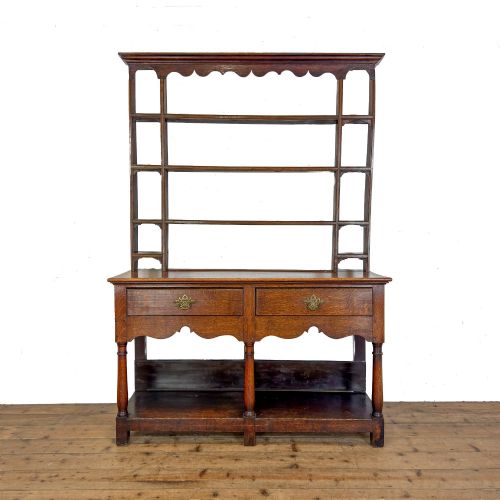
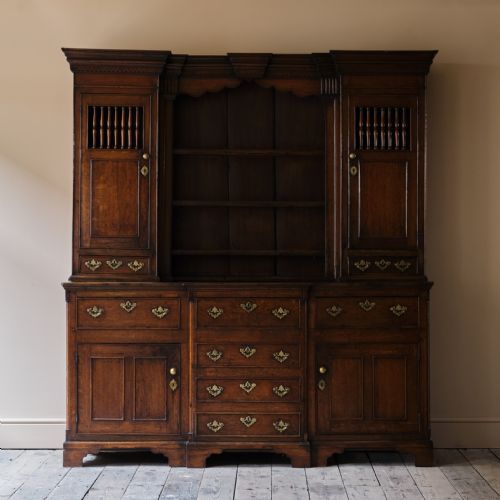
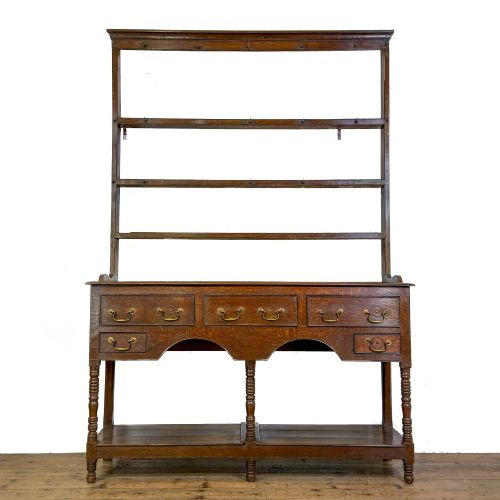
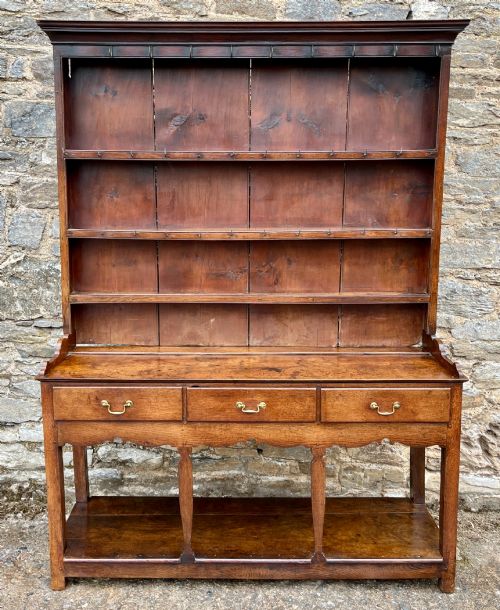
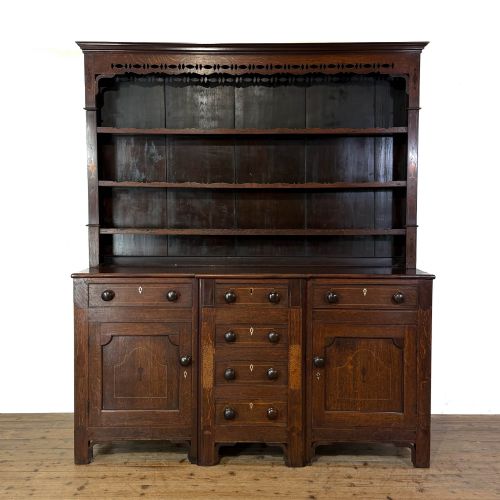


Open Rack Welsh Dresser
An open rack welsh dresser brings centuries of practical storage and regional character into a modern dining room or kitchen.
Open Rack Welsh Dresser
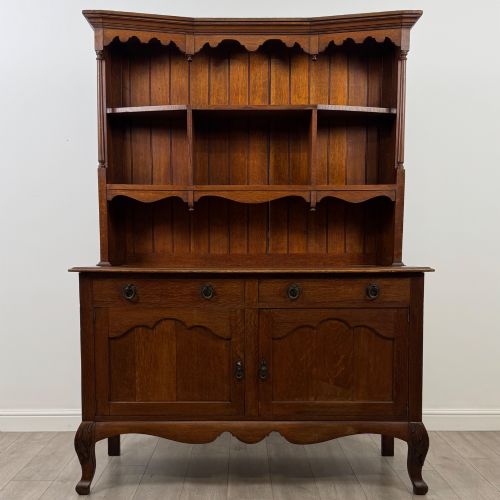
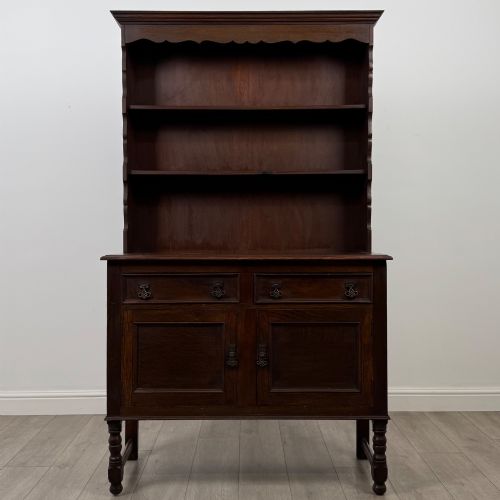
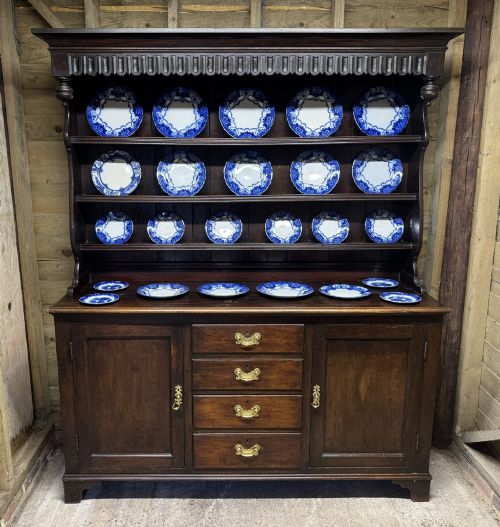
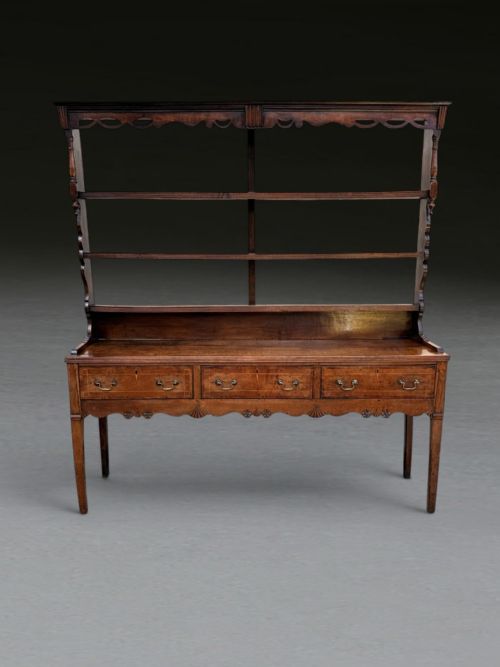
An open rack welsh dresser combines a lower base of drawers and cupboards with an upper plate rack designed to display ceramics and kitchenware. These pieces emerge primarily from regional British workshops across the eighteenth and nineteenth centuries, spanning Georgian and Victorian periods.
Most examples found here utilise native timbers like oak, pine, and elm, often shaped by local vernacular traditions found in Wales, Ireland, and the English provinces. Regional variations include potboard bases, belly racks, and specific configurations such as the Llanrwst bread and cheese design.
Buyers encounter forms ranging from substantial country house pieces to small proportions suitable for modest cottage interiors. The upper open shelves remain integral to the identity of an open rack welsh dresser, serving both utility and display functions.
How they were made
Joiners built these pieces using solid native timbers, predominantly oak and pine, supplemented by elm, walnut, and mahogany in later or high-status variants. Boards were joined with traditional methods, often retaining visible tool marks and pegged joints that speak of regional workshop practices.
Surfaces received various finishes depending on date and origin, from unpainted waxed timber showing original patina to historical painted coatings. Iron and brass hardware, including period drawer pulls and hanging hooks, completed the functional construction of the base and the upper rack.
Listings feature oak, pine, and elm timbers across Georgian, Victorian, and Edwardian periods.
What varies in quality
The integrity of the timber and the preservation of original surfaces dictate the standing of any given example. Pieces retaining their original plate rack and unblemished potboard bases hold greater historical weight than those assembled from mismatched parts.
The Open Rack Welsh Dresser Glossary
- Potboard
- A low slatted shelf fitted between the lower legs of a dresser base, traditionally used for storing pots and pans. This feature distinguishes many eighteenth-century country examples.
- Plate rack
- The upper tiered shelving unit attached to the back of a dresser, featuring vertical slats or grooved boards to hold plates upright. Original racks match the timber and wear of the base.
- Belly rack
- A regional variation in the lower cupboard or drawer section featuring a bulging or convex profile. This style appears on specific eighteenth-century Welsh iterations.
- Vernacular
- Architecture and furniture made by local craftsmen using traditional regional methods and native materials, rather than following metropolitan academic designs. These pieces reflect local domestic needs.
Open Rack Welsh Dresser: Frequently Asked Questions
How do I style an open rack welsh dresser?
Use the upper shelves to display ceramics, everyday tableware, and vintage jugs where they remain easily accessible. Balance heavier platters on the lower tiers and keep decorative items grouped to maintain visual clarity.
Incorporate textiles or small framed pictures alongside pottery to add depth to the display. Leave some space between objects so the backboards and timber grain remain visible.
Where were these dressers originally used?
These pieces served as central storage and display units in domestic kitchens and sculleries of country houses, farmhouses, and cottages. Families kept everyday crockery, baking supplies, and dry foods within arm reach.
The lower cupboards and drawers held linens, heavy pots, and dry goods, while the open shelves displayed the household best ceramics for daily use or viewing.
How do I date an antique dresser?
Examine the construction methods, timber choice, and hardware to determine the likely period of manufacture. Eighteenth-century examples often feature hand- cleft oak boards, pegged joints, and primitive drawer construction.
Later nineteenth-century and Edwardian pieces frequently utilise machine-sawn pine or mahogany, machine-cut screws, and lighter scantlings. Regional styles and historical patina also provide clues to age.
Can I store heavy items on the shelves?
Solid timber plate racks on these dressers were built to support substantial collections of earthenware and ceramic plates during daily use. Ensure the dresser is properly secured to the wall if you intend to load the upper shelves with heavy stoneware.
Distribute weight evenly across the tiers and check that the fixing batten joining the rack to the base remains sound and stable.