

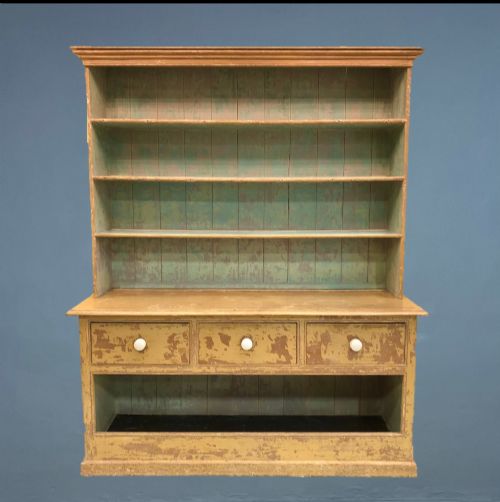
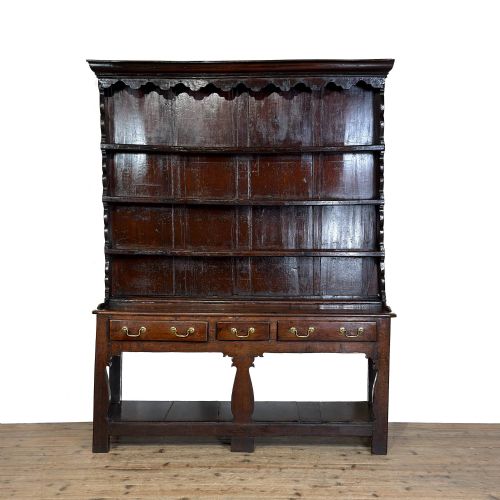
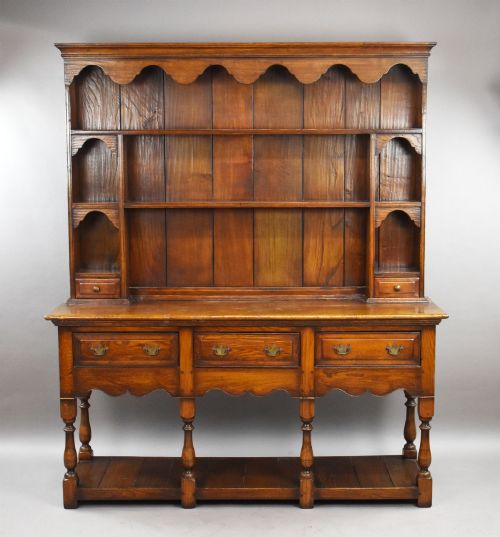


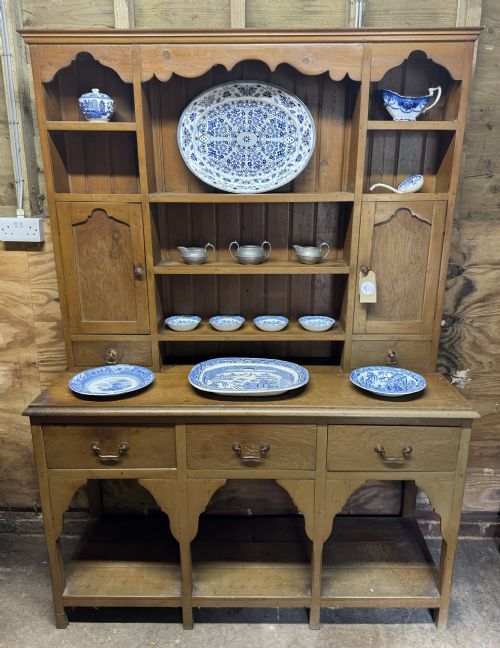


Open Potboard Dresser
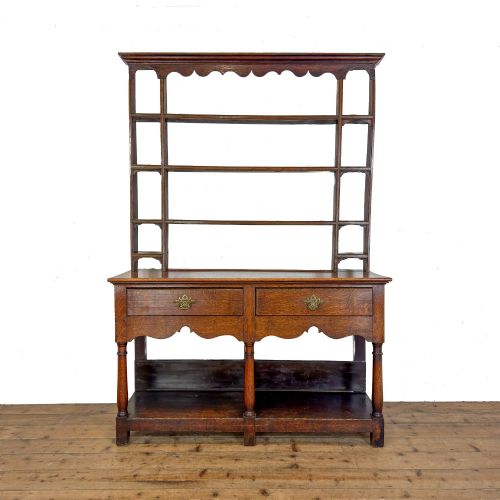
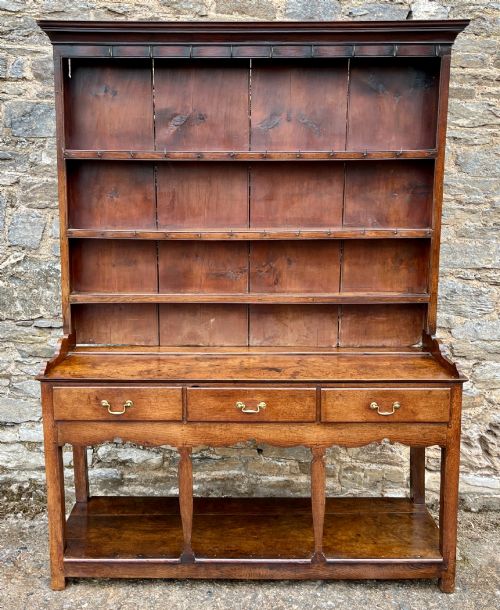
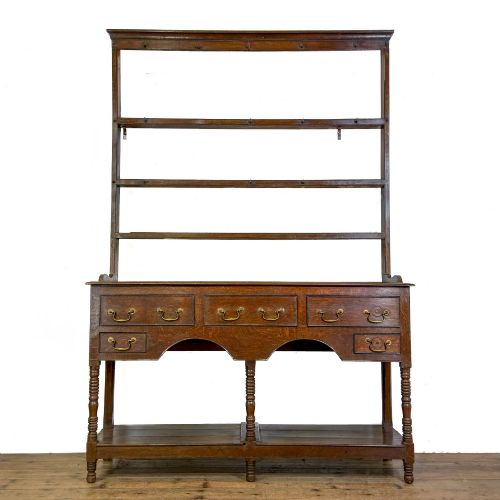
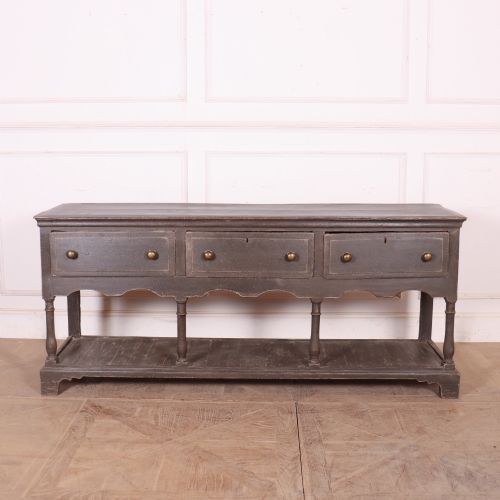
An open potboard dresser grounds a room with timber weight, offering a broad lower shelf for display alongside generous storage drawers.
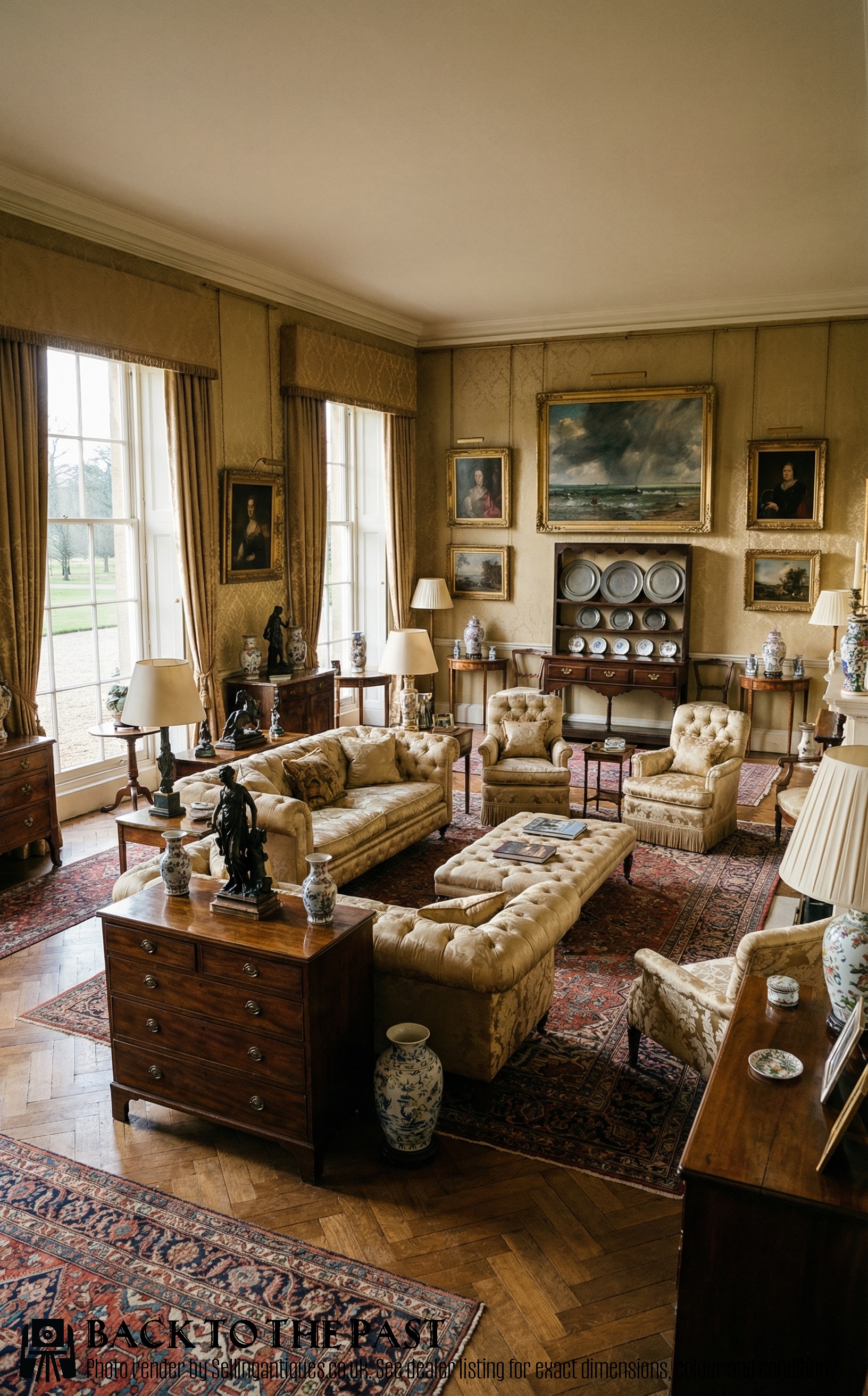
Open Potboard Dresser
An open potboard dresser combines a sturdy base fitted with a low slatted lower shelf, known as a potboard, with either a flat top or an upper plate rack. These traditional forms originate primarily from Welsh and English regional workshops, reflecting rural domestic utility.
The version most commonly encountered on this page is the oak or pine base dating from the eighteenth or nineteenth century, often retaining an original plate rack or presenting as a low sideboard base. Regional variants emerge frequently from Welsh counties such as Carmarthenshire and Glamorgan, alongside English country workshops.
Makers built these heavy kitchen and dining pieces to hold pottery, cookware, and everyday provisions, utilising native hardwoods and softwoods that developed deep surfaces over generations.
Materials and construction
Joiners relied on native oak and pine for the main carcass construction, shaping thick boards for tabletops, drawer fronts, and the characteristic low potboard shelves. Secondary timbers such as elm or walnut appear selectively in specific regional pieces.
Iron and brass hardware, including period handles and hinges, fasten doors and drawers built with traditional pegged mortise and tenon joints. Painted timber and painted wood surfaces also occur alongside bare timber cleaned to show original patination.
Open Potboard Dresser Retail Price Guide 2026
Typical asking prices for open potboard dresser among the pieces listed under this phrase on Sellingantiques today, from the lower quarter to the upper quarter. They describe what is for sale here now, not the wider market.
Generations of kitchen maids polished these potboards so often that the oak boards developed gentle hollows where heavy pots rested.
Judging proportion and timber surface
Quality rests heavily on proportion and scale, distinguishing smaller or diminutive examples from standard utility furniture. Pieces maintaining original surface patination, untouched timber colour, and synchronous upper racks command greater consideration among collectors.
Construction integrity, including the survival of the original lower potboard tier and unreplaced drawer linings, separates well-preserved rural examples from heavily restored or altered furniture.
The Open Potboard Dresser Glossary
- Potboard
- A low slatted shelf positioned near the floor between the lower legs of a dresser. Carpenters designed this platform for storing heavy pots and pans.
- Plate rack
- An open wooden superstructure fixed to the top of a dresser base. These shelves display ceramic plates upright against grooved wooden backs.
- Patina
- The surface sheen and colour acquired by wood over decades of handling, cleaning, and light exposure. Original patination indicates minimal harsh stripping.
- Vernacular
- Furniture built by regional craftsmen following local traditions rather than metropolitan pattern books. These pieces reflect specific county building habits.
- Carcass
- The main structural body or framework of the dresser, excluding removable drawers and loose racks. It provides the foundational support for the entire piece.
Open Potboard Dresser: Frequently Asked Questions
What is a potboard on a dresser?
A potboard is the low bottom shelf positioned just above the floor on traditional kitchen dressers. It provides open storage space for heavy earthenware pots and domestic utensils.
In older Welsh and English vernacular pieces, this board sits on sturdy stretchers connecting the legs, forming an integral part of the structural frame.
How do I date an antique dresser?
Dating relies on examining construction methods, timber species, and overall design proportions. Eighteenth-century examples often feature hand-planed boards, pegged joints, and native oak timbers.
Later nineteenth-century pieces frequently utilise pine or machine-sawn elements alongside different hardware styles. Comparing regional characteristics helps narrow the decade of production.
Did all dressers come with plate racks?
Many dressers were manufactured as base units only, while others paired with matching open plate racks from the outset. Surviving pieces sometimes show evidence of racks being added or removed over time.
Both base-only formats and complete dresser-and-rack combinations appear frequently across regional English and Welsh workshops.
Where were these dressers made?
Regional workshops across England and Wales produced these utility dressers for farmhouse and country house kitchens. Specific counties such as Carmarthenshire and Glamorgan developed distinct regional characteristics in their joinery.
Local craftsmen utilised whatever native timber grew nearby, primarily oak and pine, shaping furniture to suit rural domestic needs.