
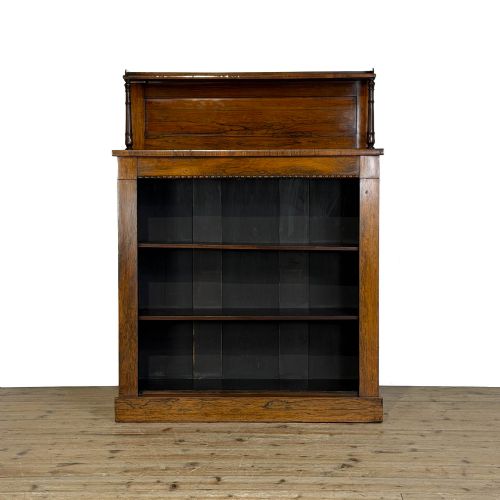
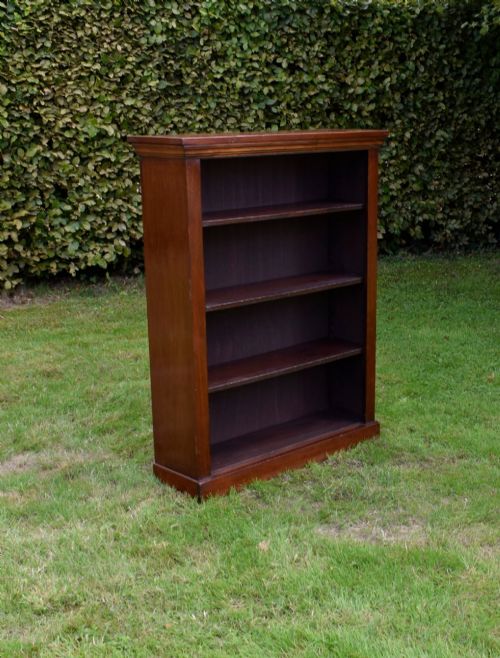
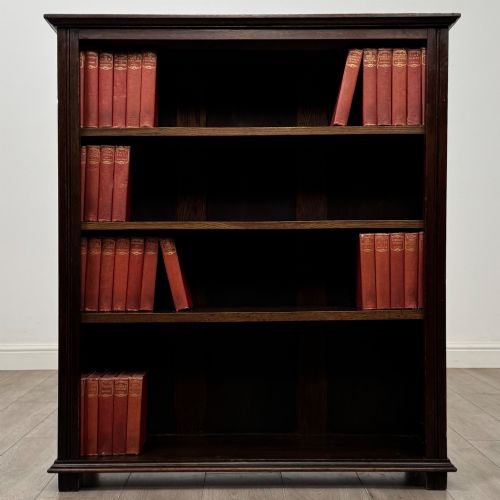
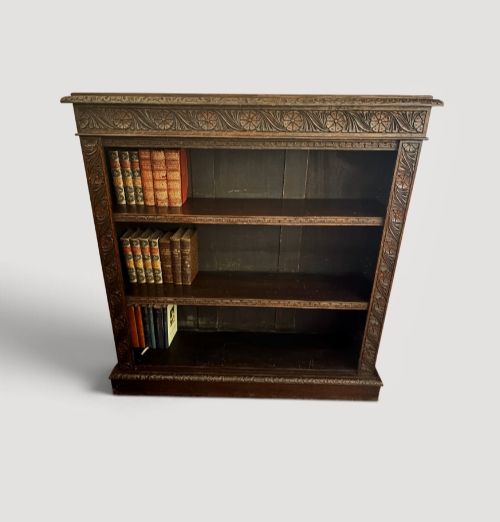
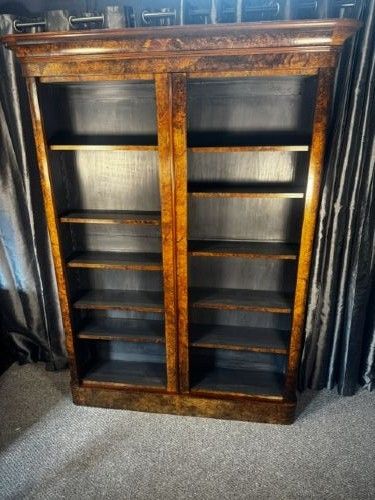
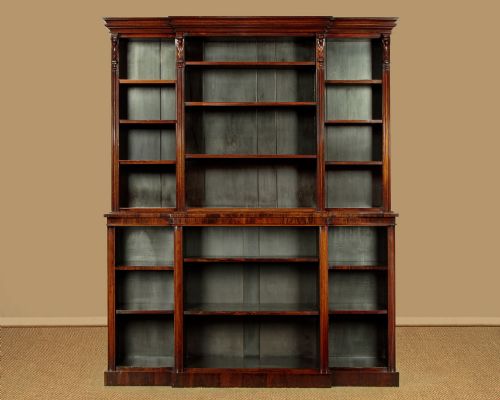
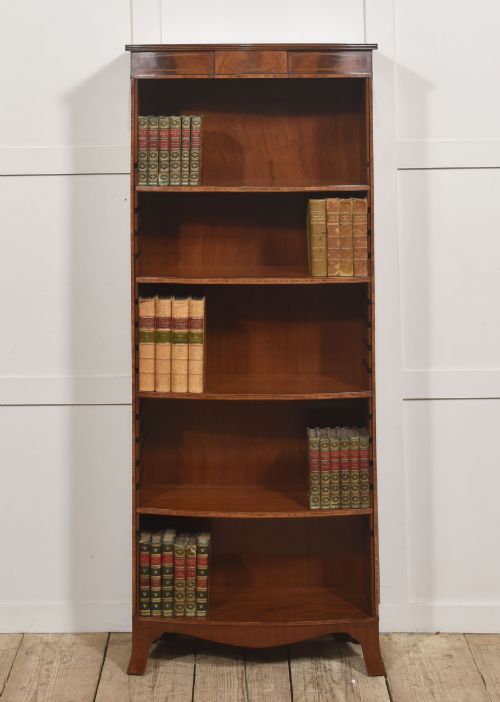
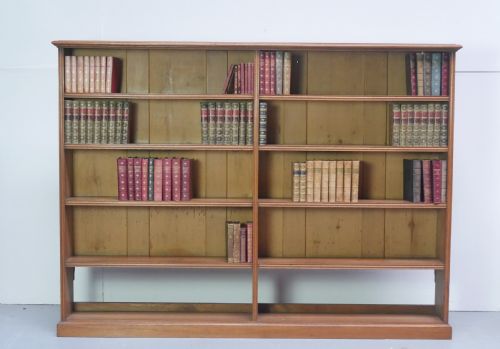


Open Front Library Cabinet
An open front library cabinet provides accessible shelf space for volumes, appearing frequently in mahogany, oak, and walnut from the nineteenth and early twentieth centuries.
Open Front Library Cabinet
An open front library cabinet is a bookcase designed without doors to allow immediate access to books and papers. The examples here span periods from the nineteenth century through the Edwardian era up to the nineteen-thirties, reflecting diverse domestic interiors.
Most pieces encountered on this page belong to the Victorian and Edwardian periods, constructed in forms ranging from straightforward upright shelving to large breakfront configurations. Standard variations include adjustable shelves, lower drawers, and occasionally drop-front secraire compartments.
The materials utilised for these cabinets demonstrate traditional cabinet-making priorities, favouring solid hardwoods and decorative veneers. Timbers such as mahogany, oak, walnut, rosewood, and satinwood dominate the construction across both standard and breakfront designs.
What varies in quality
Quality in an open front library cabinet rests upon the selection of timber and the sophistication of its surface grain, such as figured walnut or Spanish mahogany. Superior pieces exhibit harmonious proportions, careful timber matching across breakfront sections, and crisp carving on details like friezes and columns.
The integration of functional elements also separates standard workshop output from finer country house examples. Adjustable shelving mechanisms that operate smoothly and secondary timbers that match the primary wood indicate a higher standard of original manufacture.
Design styles recorded across the inventory include Victorian, Edwardian, Regency, and Arts and Crafts.
The Open Front Library Cabinet Glossary
- Breakfront
- A cabinet design where the central section projects forward from the flanking wings. This configuration creates visual depth and is common in larger library bookcases.
- Frieze
- The flat or decorated horizontal band situated just below the top cornice of a piece of furniture. Carved or inlaid examples often define the stylistic period of a cabinet.
- Crossbanding
- A decorative border technique where strips of veneer are laid perpendicular to the grain of the primary surface. This frames shelves or drawer fronts with contrasting timber grain.
- Secraire
- A writing drawer or compartment concealed within the furniture body, often featuring a drop-front mechanism. It combines the storage of a bookcase with a compact desk facility.
- Spanish Mahogany
- A dense, richly figured hardwood imported from the West Indies and favoured by nineteenth-century cabinet-makers for high-status furniture. Its grain takes a deep, lustrous polish.
Open Front Library Cabinet: Frequently Asked Questions
What is an open front library cabinet?
An open front library cabinet is a tall piece of furniture designed specifically for holding books without the barrier of glass or wooden doors. These units provide unhindered access to shelving.
Most variations found on this page date from the nineteenth and early twentieth centuries, constructed in timbers such as mahogany, oak, and walnut.
How do I adjust the shelves?
Many period bookcases feature adjustable shelving systems that rely on wooden support strips or brass shelf-studs fitted inside the cabinet sides. These allow shelves to be repositioned for different book heights.
Original mechanisms should be checked for smooth movement to ensure the shelf supports remain secure under weight.
Where were these cabinets used?
These cabinets served primarily in domestic libraries, studies, and drawing rooms of nineteenth and early twentieth-century homes. Their open format kept working volumes close at hand.
Larger breakfront and multi-part examples were typically commissioned for substantial country houses with extensive book collections.
How do I identify Victorian pieces?
Victorian open bookcases often feature heavier timbers like Spanish mahogany or carved oak, sometimes incorporating decorative elements such as barley twist columns. The proportions tend to be substantial and sturdy.
Construction details like hand-cut joints and timber backboards help confirm the nineteenth-century origin.