
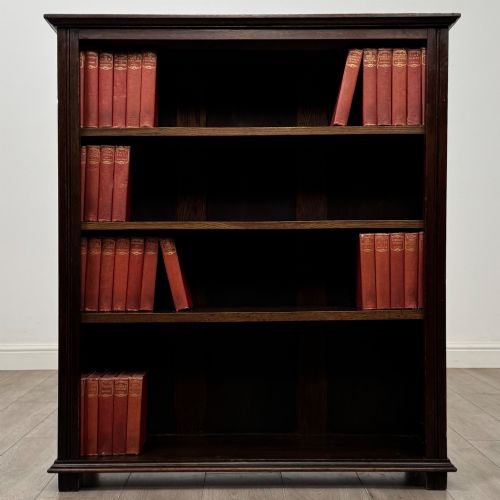
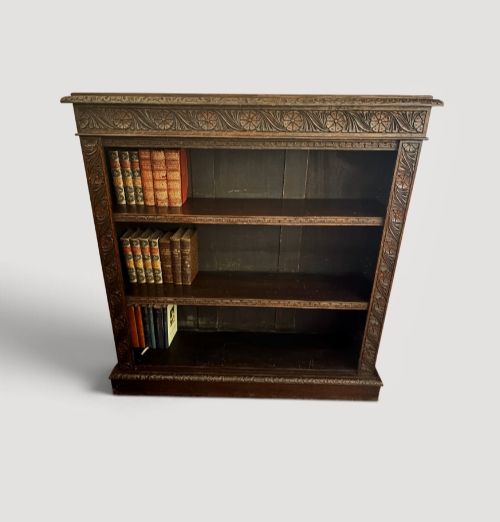
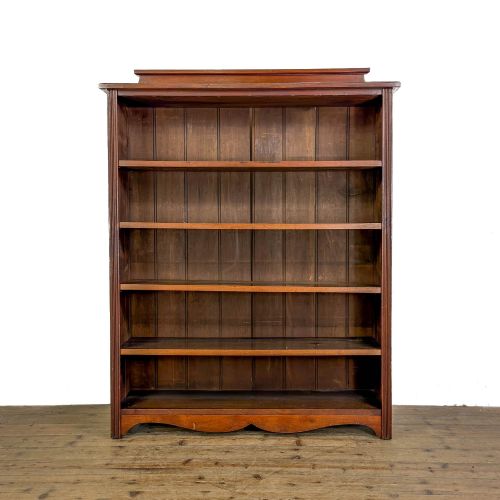
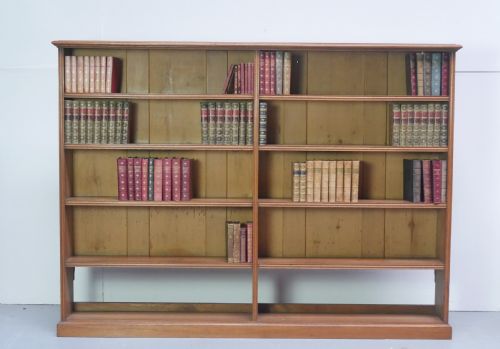


Open Front Book Shelf
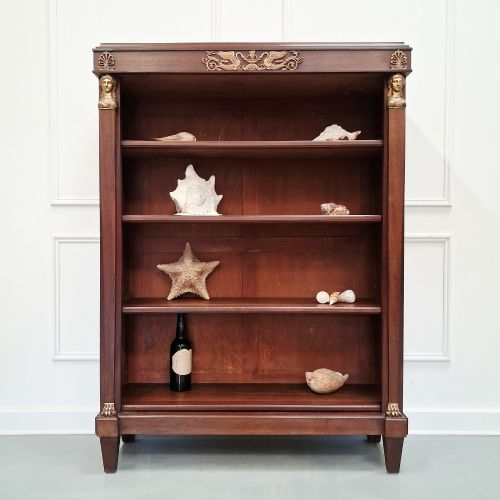
An open front book shelf gives immediate, wall-mounted or freestanding access to working libraries, spanning the Georgian period through the Edwardian years.
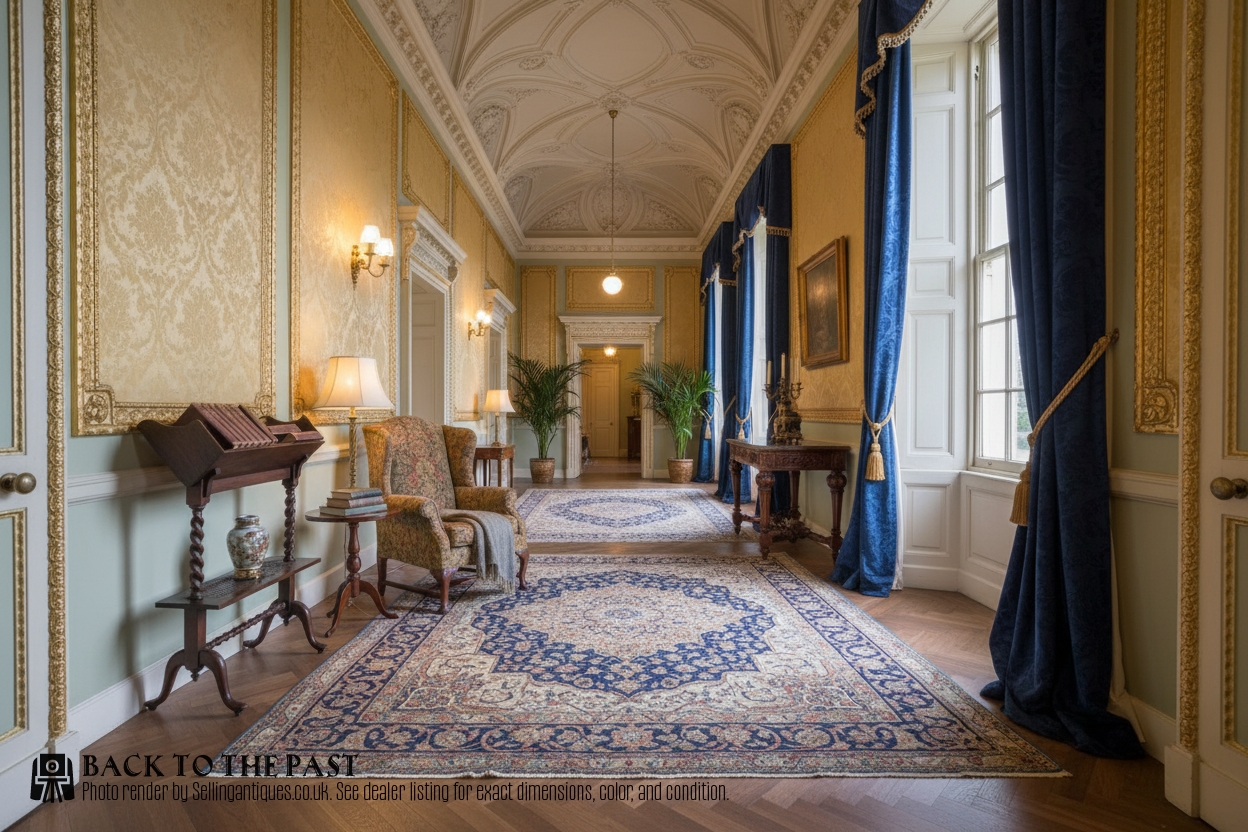
Open Front Book Shelf
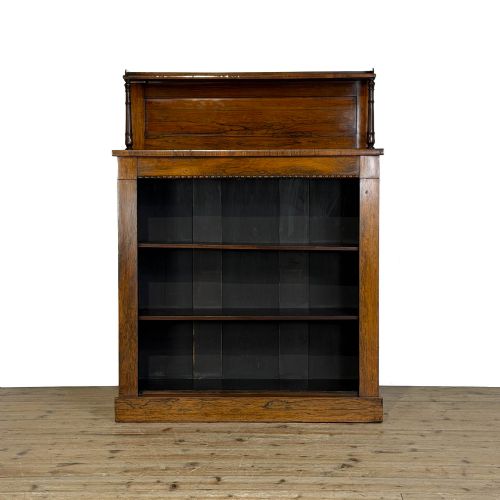
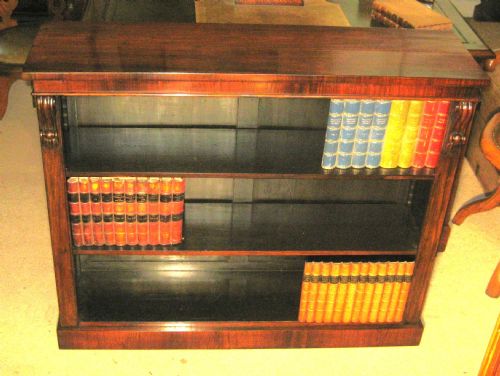
An open front book shelf offers direct access to volumes without doors or glazing, designed for everyday utility in libraries and living spaces. The examples found here range from modest Victorian and Edwardian household pieces to larger breakfront library furniture.
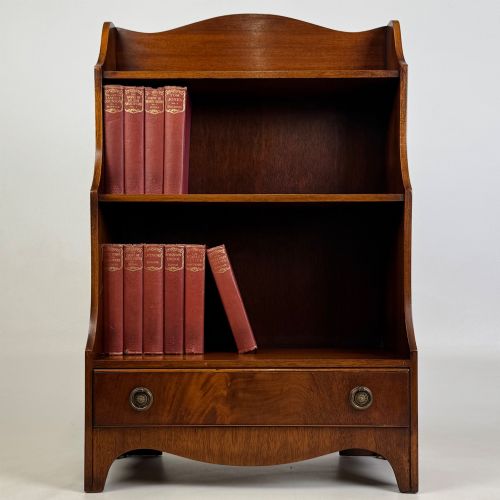
Most pieces encountered on this page date from the nineteenth century into the early twentieth century, spanning Victorian, Edwardian, and Arts and Crafts eras. Formats include standard upright bookcases, tiered waterfall shelves, slope-shelf troughs, and low dwarf variants.
Materials and construction methods
Cabinet makers utilised a palette of solid timbers and veneers, predominantly mahogany, oak, rosewood, and walnut, complemented by secondary woods like pine. Surfaces often feature inlaid details, carved mouldings, beaded edges, or plain polished timber finishes.
Many larger library examples incorporate adjustable shelving mechanisms supported by brass fittings. Construction relies on traditional joinery techniques appropriate to each period, from Georgian proportions to robust Arts and Crafts framing.
Slope-shelf troughs kept fireside reading materials close at hand without requiring a full library trip.
Judging quality and proportion
Quality rests in the choice of timber figure, such as highly grained rosewood or figured walnut, and the crispness of mouldings and inlay work. Better pieces display balanced proportions and refined architectural detailing rather than purely utilitarian construction.
The sophistication of the internal shelving system also distinguishes standard items from superior library furniture. Smoothly functioning adjustable shelf supports and well-executed back panels indicate higher workshop standards.
The Open Front Book Shelf Glossary
- Break-Fronted
- A cabinet design where the central section projects forward from the flanking wings. This configuration creates visual depth and is frequently seen on larger nineteenth century bookcases.
- Waterfall
- A shelving format where each tier steps back progressively from bottom to top, creating a cascading profile. These pieces are often encountered in compact oak or mahogany forms.
- Dwarf
- A term describing a low-standing bookcase designed to sit beneath dado height. These pieces allow for display surfaces on top while keeping books within easy reach.
- Slope-Shelf
- An angled lower tier or desk-like surface integrated into the shelving unit. This feature appears notably in Arts and Crafts and fireside designs.
- Goncalo Alves
- A dense, highly figured exotic timber known as zebrawood, utilised in select nineteenth century cabinet work. Its distinctive grain offers a striking visual contrast to standard mahogany or oak.
Open Front Book Shelf: Frequently Asked Questions
How do I style an open bookcase?
Arrange books by height or colour alongside framed photographs, ceramics, or small decorative objects to break up solid rows of text. Leaving small pockets of empty space prevents the shelves from feeling cluttered.
Ensure heavy volumes sit on lower shelves for stability while lighter paperboards occupy upper tiers. This keeps the visual weight balanced across the entire unit.
Are shelves usually adjustable?
Many library bookcases feature adjustable shelves supported by wooden ratchets, brass pegs, or metal strips. This allows you to accommodate varying book heights from pocket editions to large folios.
Simpler household pieces often feature fixed shelving secured directly into the side panels. Check the description to confirm whether the interior configuration can be altered.
Where should I place these shelves?
Position your bookcase against interior walls away from direct sunlight and radiators to protect dry wood and book bindings from heat damage. Freestanding variants benefit from being anchored to the wall for added stability.
Low dwarf formats work well beneath windows or as room dividers in larger spaces. Taller library editions anchor study walls and traditional sitting rooms.
How do I identify a Victorian piece?
Victorian bookcases often utilise rich timbers like mahogany and rosewood, frequently featuring carved oak, beaded edges, or heavy plinth bases. Construction is solid and substantial, reflecting the domestic priorities of the nineteenth century.
Look for period-specific joinery techniques and hardware associated with the reign, such as brass adjustable shelf brackets. Comparing the timber grain and secondary woods helps confirm the era.