
Open Arm Carved Chairs
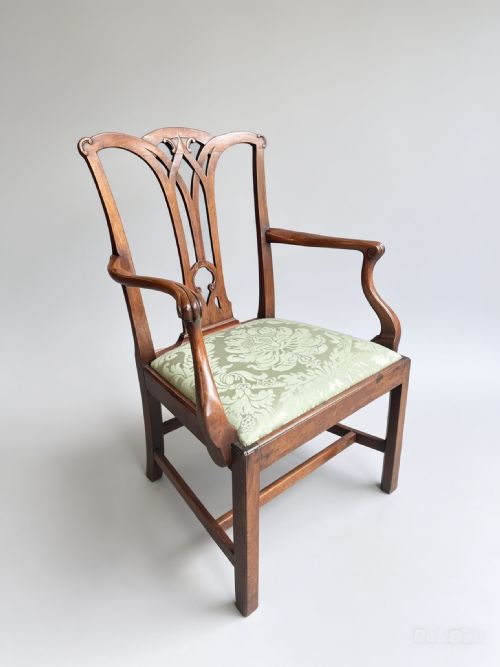
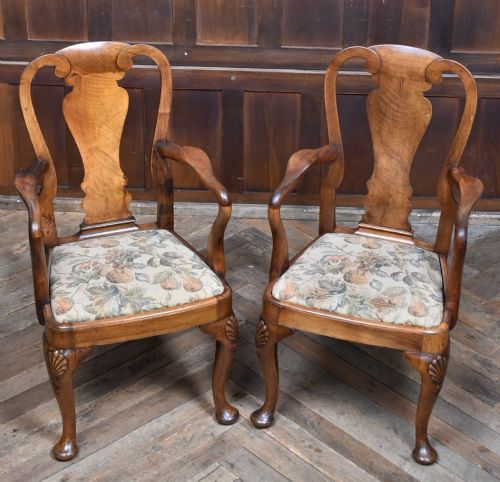
When you search for open arm carved chairs, you look for seating that combines structural timber with decorative joinery and upholstered comfort.
Open Arm Carved Chairs
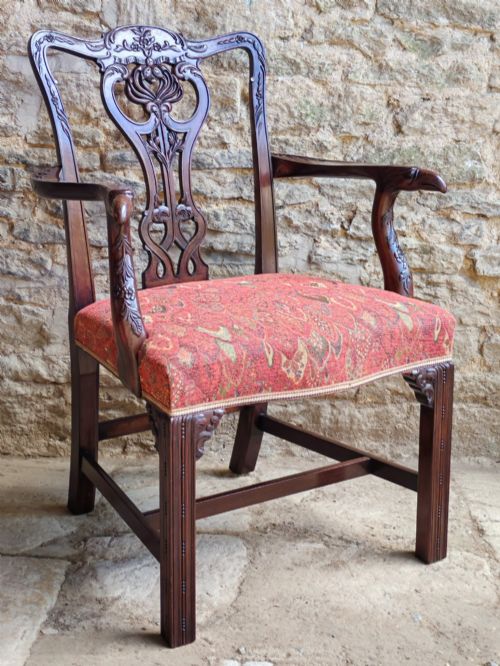
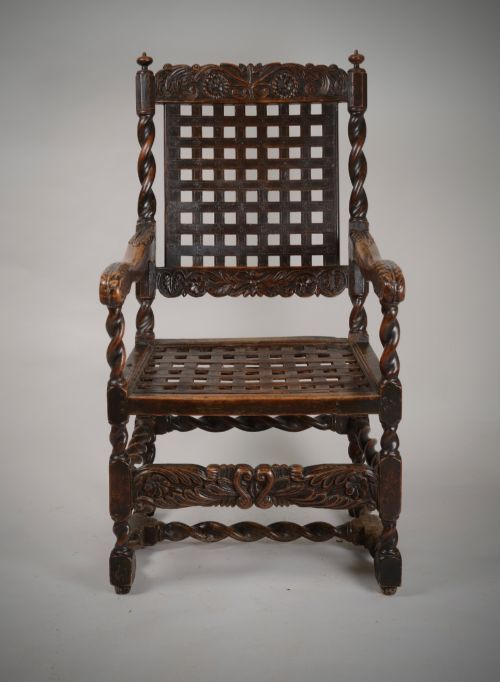
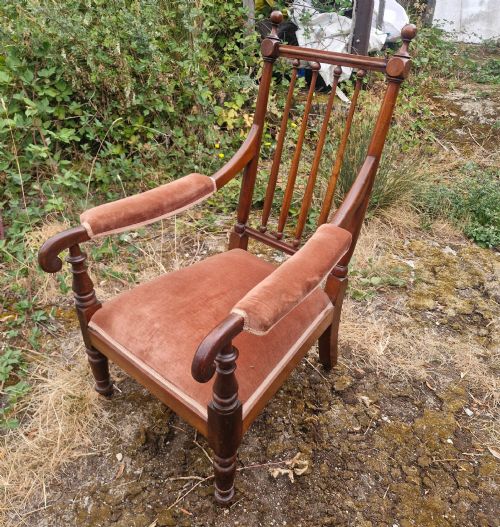
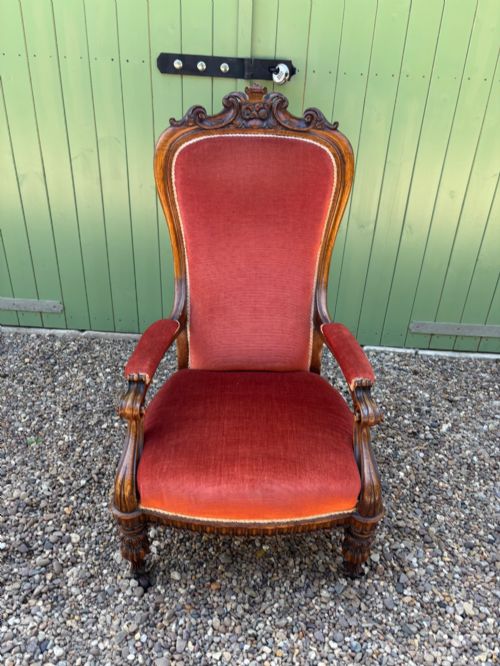
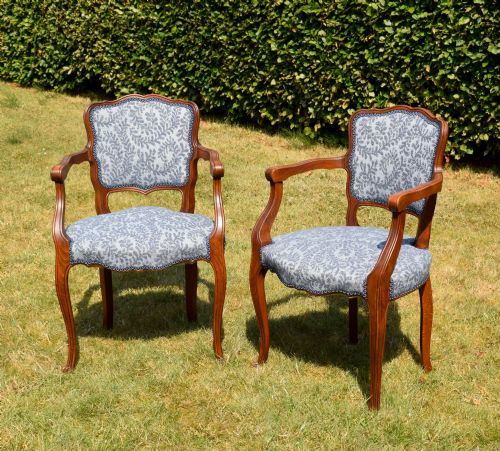
Open arm carved chairs span centuries of design, encompassing formats from heavy seventeenth-century wainscot constructions to lighter eighteenth-century library seating and nineteenth-century revival styles. These pieces provide seated support with exposed wooden arms, frequently set with padded elbows or entirely carved timber rails.
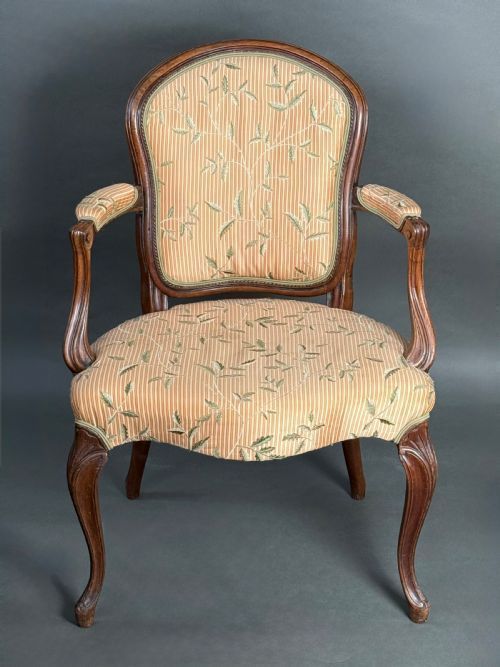
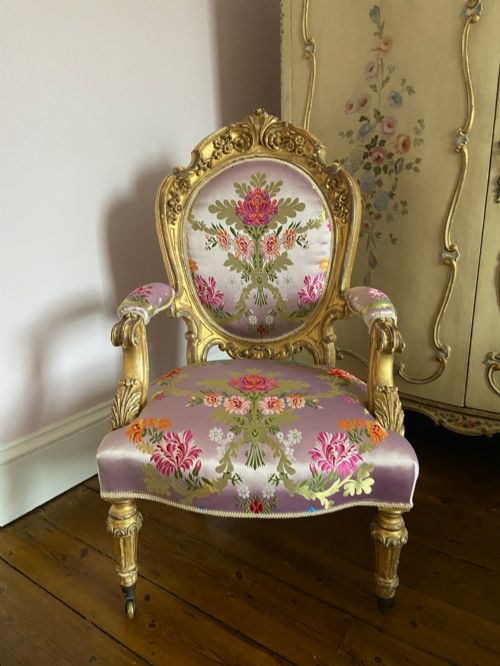
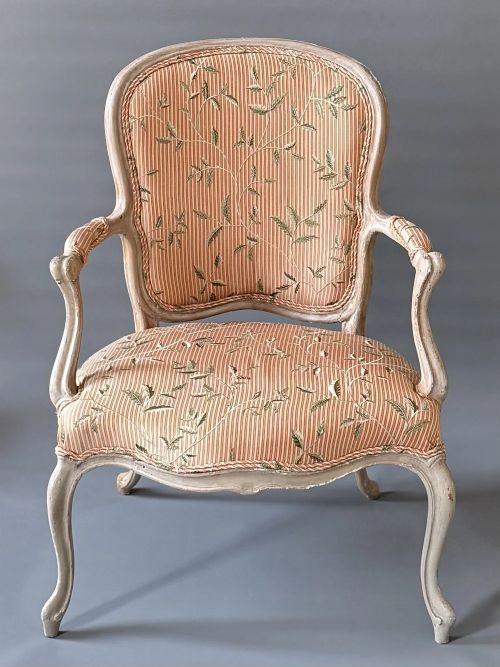
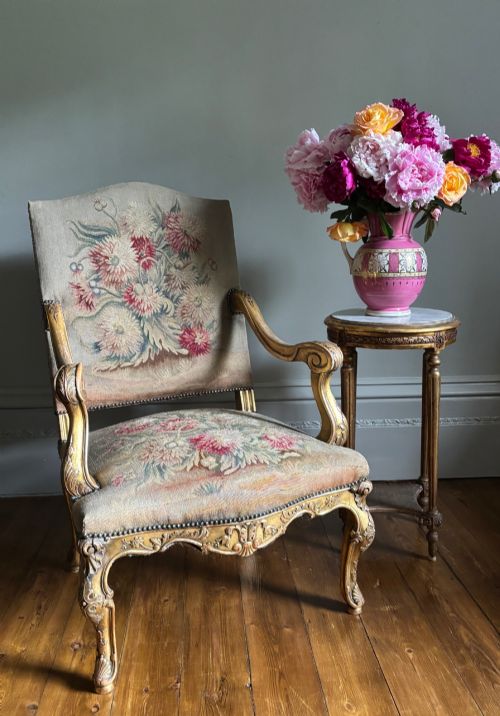
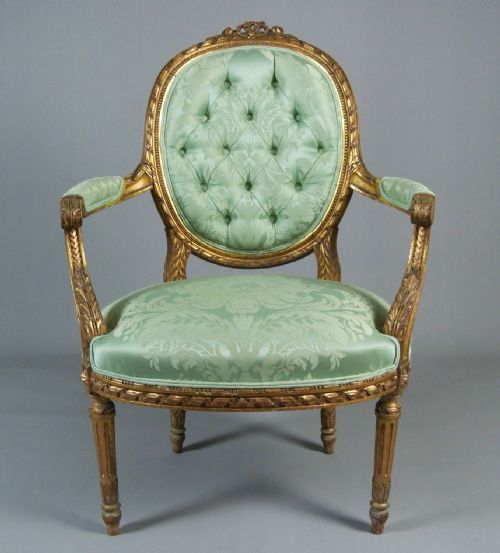
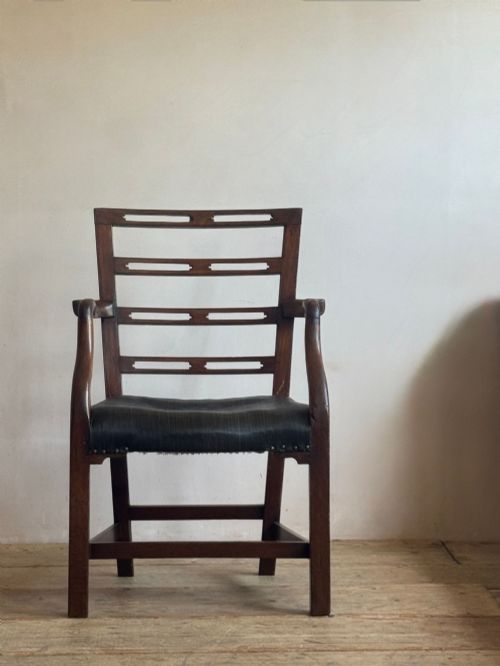
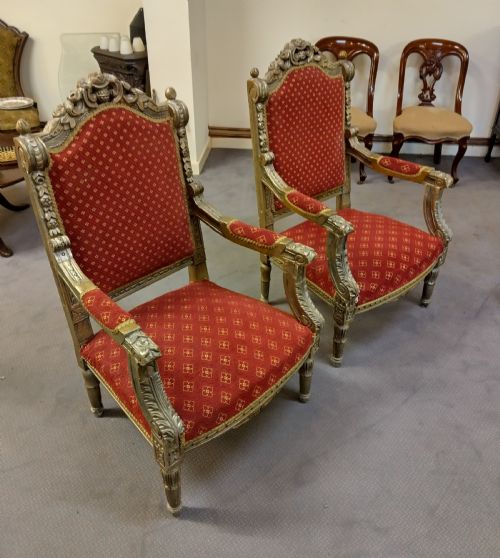
The selection on this page relies heavily on mahogany, oak, and walnut frames, accompanied by French giltwood examples bearing elaborate ornamentation. Buyers encounter distinct regional interpretations, including English Georgian library models alongside French fauteuils and provincial provincial pieces.
Object types stretch from single armchairs and pairs to library seating and fireside chairs, originating across the eighteenth, nineteenth, and early twentieth centuries.
Materials and construction methods
Makers constructed these frames from hardwoods such as mahogany, oak, and walnut, employing traditional mortise and tenon joinery to sustain daily weight. Giltwood and painted finishes appear on continental forms, applying gold leaf or paint over carved gesso and softwoods.
Upholstery materials range from silk and velvet to leather, needlepoint panels, and standard upholstery fabric held by brass studs. Carving is executed directly into the solid timber frame, detailing arms, rails, and cabriole or spindle legs.
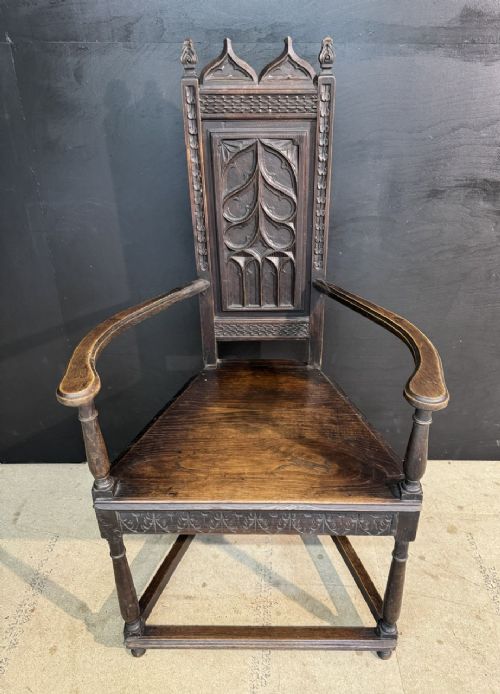
Early wainscot chairs were so heavy they doubled as household security.
Distinguishing quality in craftsmanship
The standard of carving dictates much of the distinction between ordinary production and high-end output, separating crisp, deep relief work from shallow or mechanically smoothed detailing. Timber selection also governs the tier of the piece, with dense, well-figured mahogany or walnut commanding greater regard than plain utility woods.
Structural integrity depends upon the tightness of the original joints and the preservation of the carved elements without excessive timber replacement. Original surface patination and authentic period upholstery methods further elevate the standing of an individual chair.
Howard and Sons·Thomas Chippendale
The Open Arm Carved Chairs Glossary
- Fauteuil
- An open-arm armchair of French origin, typically featuring an exposed wooden frame with upholstered seat and back. These chairs emerged prominently during the seventeenth and eighteenth centuries.
- Gainsborough
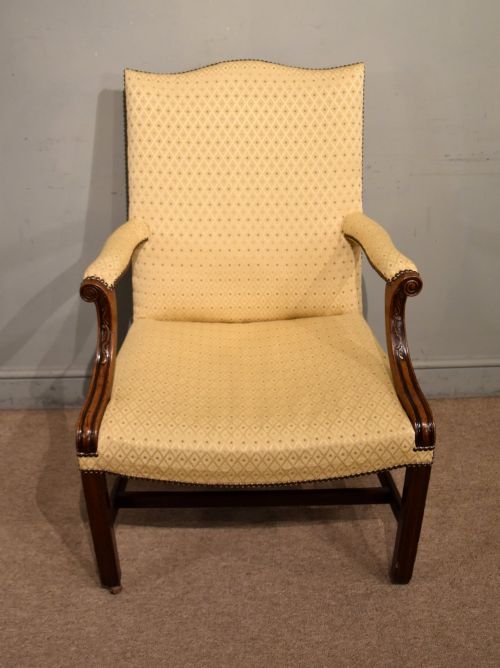
- A type of eighteenth-century English armchair featuring an upholstered back and seat with open padded arms. They were traditionally designed for libraries and writing rooms.
- Wainscot
- An early wooden armchair constructed predominantly from solid oak with panelled backrests and heavy turned supports. These pieces date primarily to the seventeenth century.
- Giltwood
- Timber coated with gold leaf over a prepared gesso ground. This finish appears frequently on elaborate eighteenth and nineteenth-century continental seating.
- Carver
- A term applied to an armchair designed to match a set of dining chairs, usually positioned at the head of a table. They feature open arms to accommodate wider garments.
Open Arm Carved Chairs: Frequently Asked Questions
What defines an open arm carved chair?
These pieces feature exposed wooden arms combined with carved detailing on the frame, differentiating them from fully upholstered armchairs.
They appear across multiple centuries in forms ranging from heavy oak wainscot seats to refined mahogany library chairs.
Where were French fauteuils used?
French fauteuils served as salon and drawing-room seating in domestic interiors, offering formal comfort with exposed carved frames.
Their open arms accommodated the bulky fashion of period clothing while displaying intricate giltwood or walnut carving.
How should I care for antique timber frames?
Maintain antique timber and gilt surfaces by keeping them away from direct heat sources and strong sunlight, which dries out the wood.
Dust regularly with a soft, dry cloth and avoid applying modern silicone polishes that damage historic finishes.