


Opalescent Glass Light
Opalescent glass light pieces are luminous ceiling and wall fixtures that bring soft, diffused radiance to a room.
What an opalescent glass light is
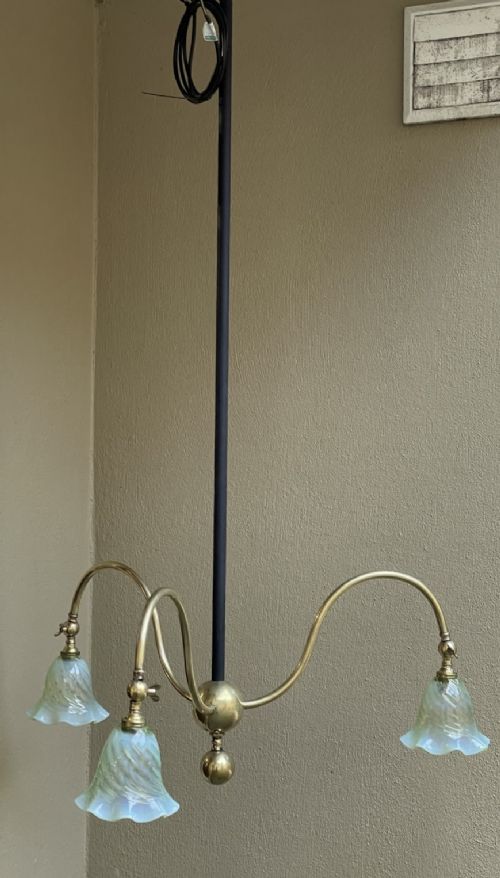
An opalescent glass light combines translucent moulded glass with metal hardware to illuminate domestic spaces. When buyers search for an opalescent glass light, they encounter ceiling lights, pendant lights, wall lights, and individual shades from the nineteenth century, Edwardian era, Art Nouveau period, and Art Deco era.
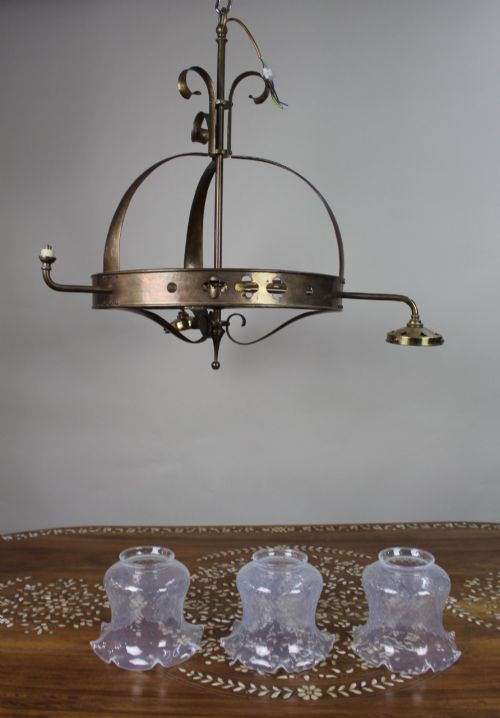
The most typical forms found here are ceiling lights and pendant lights featuring brass, copper, chrome, or ormolu mounts paired with glass shades. These fixtures originate from British and continental workshops, capturing distinct decorative movements from historical design periods.
How they were made
Maker's workshops combined hot-worked or moulded opalescent glass with metal components such as brass, copper, chrome, and ormolu. Glass was shaped into shades and bowls, sometimes with etched surface details or distinct milk-and-opal colouration.
Metal fitments like rise and fall mechanisms, wall brackets, and hanging frames were engineered to support the heavy glass shades safely. Wiring methods evolved over time, transitioning from early fabric cord setups to later electrical configurations.
Listings feature items spanning the nineteenth century, Edwardian era, and Art Deco period, incorporating brass, copper, glass, and fabric cord.
What varies in quality
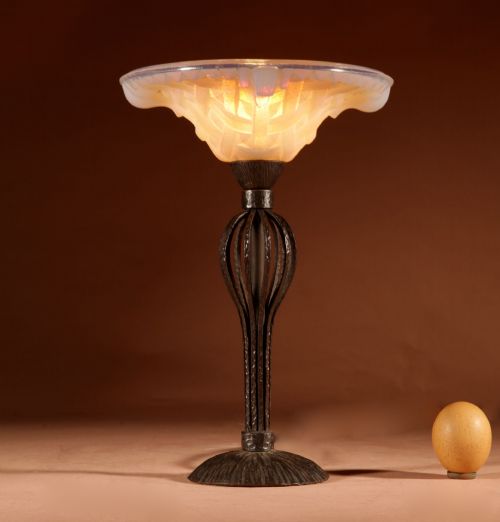
Quality rests in the depth of the glass opalescence and the crispness of the moulding. Superior pieces display a rich, shifting milky blue or fire-opal glow when illuminated, whereas lesser examples appear flat and opaque.
The refinement of the metalwork further distinguishes the range. Heavy cast brass, chased ormolu, and hand-finished copper mounts demonstrate a higher standard of manufacture than simple stamped hardware.
Sabino·Lalique·P Maynadier·Ezan
The Opalescent Glass Light Glossary
- Opalescent glass
- A type of translucent glass that diffuses light and exhibits a milky or bluish shimmer resembling an opal. It scatters shorter wavelengths of light to create a soft glow.
- Ormolu
- Gilded bronze mounts and decorative fittings used on high-end light fixtures. The technique involves applying a gold amalgam to bronze.
- Rise and fall
- A mechanical pulley system using a weighted weight or counterweight to adjust the height of a hanging ceiling light. This allows the user to raise or lower the illumination level.
- Pendant light
- A solitary light fixture suspended from the ceiling by a cord, chain, or metal rod. These usually hang over tables or in hallways.
Frequently Asked Questions
What is an opalescent glass light?
An opalescent glass light is a lighting fixture featuring a milky, translucent glass shade that diffuses illumination softly across a room.
These pieces typically date from the nineteenth, Edwardian, and Art Deco periods, utilising brass, copper, or chrome fittings.
How do I hang a pendant light?
Pendant lights hang directly from ceilings using fabric cords, metal chains, or rigid rods connected to secure ceiling brackets.
Some Edwardian variants use rise and fall mechanisms to let you adjust the height manually.
Where were these lights used?
Original period homes used these fixtures in hallways, dining rooms, and parlours to provide ambient overhead illumination.
Wall lights were commonly placed in pairs beside mirrors or doorways for balanced decorative lighting.
How do I identify Art Nouveau styles?
Art Nouveau light fittings feature organic motifs, flowing floral lines, and brass or copper hardware inspired by natural forms.
This aesthetic flourished around the Edwardian era and often incorporates delicate etched glass.